AI is disappearing entry-level office jobs as NC blue-collar training gets boost

I’m Brian Gordon, tech reporter for The News & Observer, and this is Open Source, a weekly newsletter on business, labor and technology in North Carolina.
Many foresee a dire future for entry-level white-collar work. In May, the CEO of the AI startup Anthropic warned artificial intelligence could erase half of these opportunities by 2031. Ford’s CEO made a similar projection this summer.
AI is already reducing openings, says Laura Ullrich, economic director at the employment website Indeed. “I don’t think there’s any question that if you’re searching for an entry-level job in software development or (in the) financial activity sector or professional business services, that it’s a lot harder right now than it was two years ago,” she said in a phone interview Thursday.
Ullrich, who lives in Charlotte, said job postings with the term “data analytics” are down 40% from before the COVID-19 outbreak. While she believes today’s “low hiring, low firing” market is in part a response to pandemic-era overstaffing and current economic uncertainties, employers have also deployed generative AI to do tasks only recently performed by workers. And emerging AI industry jobs, she noted, are too few and too advanced to fill the early-career shortfall.
So, which sectors are hiring? Nursing, early childhood education and civil engineering. “Roles requiring more physical presence and human interaction, including nursing, are likely to be less impacted,” Indeed researchers wrote in a post last month.
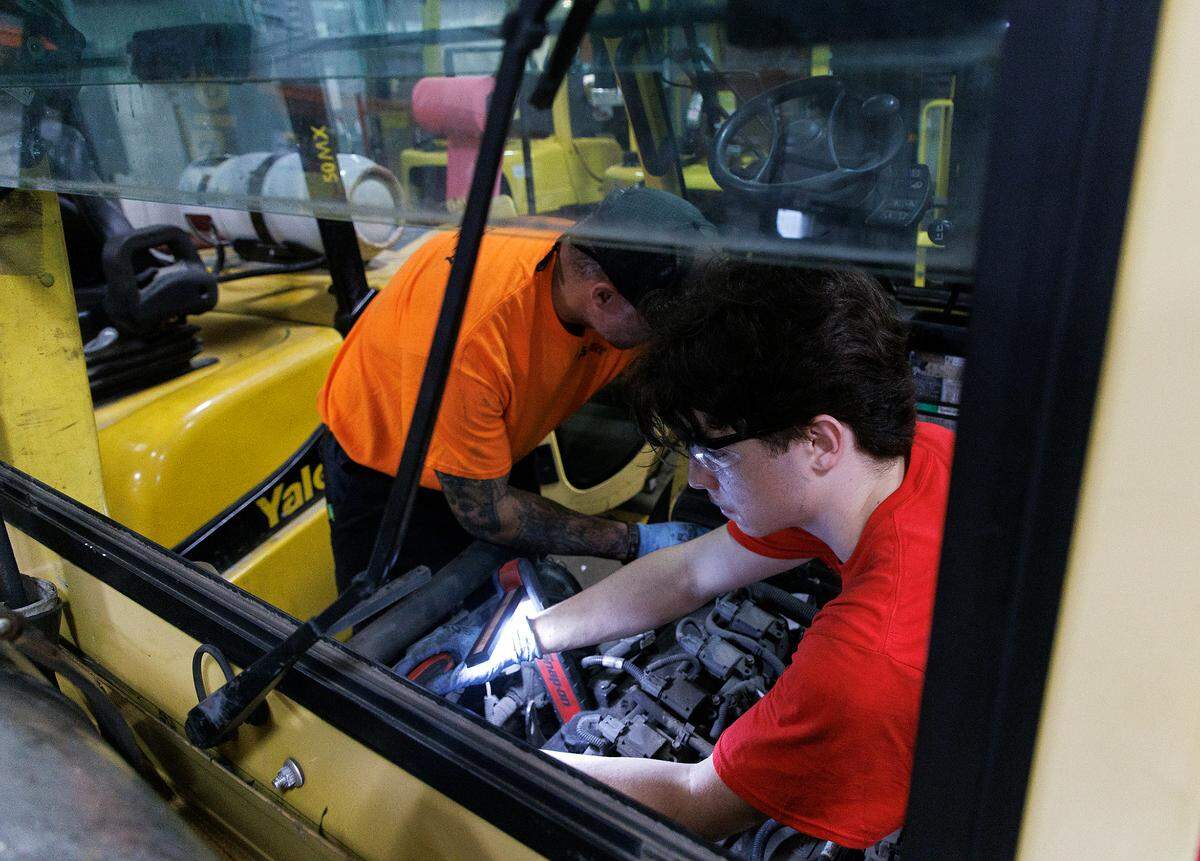
Ullrich said this trend has encouraged policymakers to rethink postsecondary education, particularly the role community colleges and job certification programs have in preparing young workers for increasingly well-paying blue-collar careers. She mentioned technician roles at the new Toyota battery plant near Greensboro as an example.
Access to job certification should grow next July as a provision of the One Big Beautiful Bill Act allows students in workforce training programs to receive need-based federal Pell Grants for the first time. Eligible programs must last eight to 15 weeks; previously, only students enrolled in 15 week-plus programs could receive grants, which last academic year were worth up to $7,395. (Most Pell Grant changes under the One Big Beautiful Bill reduce how much students receive.)
“This landmark expansion of Pell eligibility helps more North Carolinians quickly gain skills, earn credentials, and connect to opportunity,” said Jeff Cox, president of the North Carolina Community College System, in a news release this summer. “It’s a win for students, employers, and communities across our state.”
Of course, this doesn’t mean all software developers will become welders. Especially in the Research Triangle, demand for specialized tech workers coming out of our local universities will survive AI’s near-term advances, Ullrich said. “No need to go home to say a prayer for Chapel Hill or Wake Forest tonight, right?” she said. “There are higher ed institutions that are doing very, very well. They’re getting record enrollments every year.”
But AI job displacement is no longer hypothetical. Only the extent remains to be realized.
If we can’t put data centers on the moon...
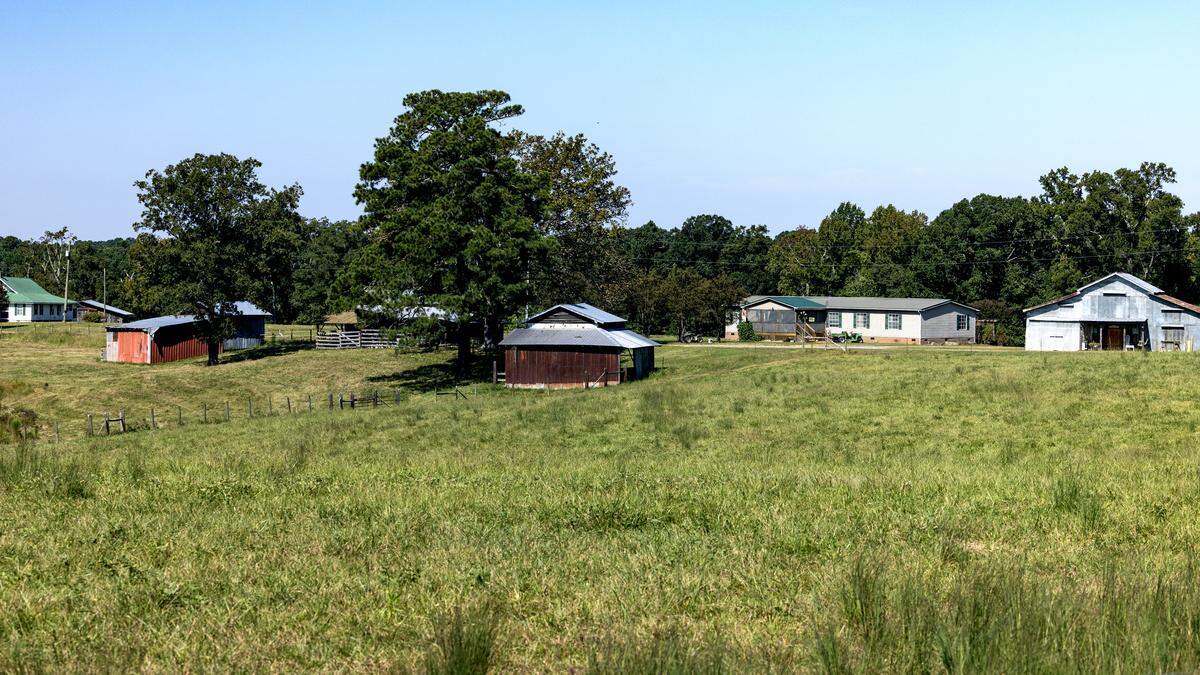
If artificial intelligence indeed makes new massive data centers inevitable, and many local communities object to having these energy-intensive, low-employment (but property tax-paying) hulking facilities in their backyards, then perhaps the solution lies in outer space.
Tech leaders like Sam Altman and Jeff Bezos have discussed shooting data centers into orbit. Startups are pursuing the possibility. But for now, the question of where to put data centers is earthbound and hyperlocal. Like others across the country, North Carolina residents have fought facilities being built in Tarboro, Matthews, Mooresville and Statesville. Richmond County recently approved a large data center project from Amazon.
Last week, I spoke with the developer proposing to construct a 300-megawatt data center in the Wake County town of Apex. “If you’re not going to do a data center here, I don’t know where else you do one,” he said. “And I recognize that despite me feeling that, people are not going to want it no matter what.”
For context, 300-megawatt is giant. A 12MW data center uses electricity roughly equivalent to about 10,000 U.S. homes annually, according to Congressional Research Service. Do the math.
Developer Michael Natelli is right that some feel no data center of this magnitude belongs in greater Raleigh. “I do not think the town of Apex, or any major town in Wake County, should be entertaining any type of hyperscale data center development,” said Michelle Hoffner O’Connor, who lives near the proposed site.
Last week, Natelli spent over an hour answering questions during the project’s first public hearing. Neighbors still have doubts, even if Natelli believes he’s given details. “We need to figure out if Duke (Energy) is going to be creating extra infrastructure to power these guys,” said Sarav Arunachalam of Apex. “Where does it come from, and who’s going to pay for it? Those questions have not been very clearly answered.”
A curious hire at NIH, some say
JD Vance is such a close friend that the future vice president officiated at his wedding. Is this why Duke professor Kyle Walsh was recently named director of the National Institute of Environmental Health Sciences in Durham?
The question suggests cronyism, which isn’t an implication made lightly. Former NIH directors told me Walsh’s surprise appointment was not the byproduct of a standard candidate search. “I’ve been tracking all the vacancies among institute directors and NIEHS was not among them,” said Jeremy Berg, former director of the National Institute of General Medical Sciences.
“I don’t see any significant managerial experience (on Walsh’s resume),” former NIEHS director Linda Birnbaum said. “Most institute directors have run significant programs. That’s part of the leadership and management that is important in running a close to billion-dollar organization.”
.jpg "IMG_7177 (1).jpg")
Clearing my cache
- IBM has moved most of its local workforce out of Research Triangle Park in a relocation that is tiny in distance but quite significant for the future of RTP.
- Fast-growing digital bank SoFi received state and local incentives to hire 225 workers at a new Charlotte office.
- Durham semiconductor Wolfspeed has ended plans to build a $3 billion factory in Germany and expects to shut its device plant near RTP by year’s end. The company is scheduled to release its first earnings post-bankruptcy on Oct. 29.
- Step aside Milan: The biannual High Point furniture market kicks off tomorrow in the “Home Furniture Capital of the World.”
- Widespread EPA furloughs hit Triangle workers at the agency’s biggest physical campus. Republicans and Democrats sparred over who is at fault for the ongoing government shutdown: The Trump-led EPA says Congressional Democrats seek “to inflict as much pain on the American people as possible,” while U.S. Rep. Deborah Ross, a Democrat, countered that, “If Republicans are looking for someone to blame for the harms being inflicted on the American people during this shutdown, they should look in the mirror.”
National Tech Happenings
- A massive Amazon Web Services cloud outage Monday disrupted platforms like ChatGPT, HBO, Hulu, Hinge, Reddit, Lyft, Xbox, (Cary’s) Fortnite, Zoom, Microsoft Teams, FanDuel, Venmo and many more.
- Wikipedia says its web traffic is falling due to generative AI chatbots that were trained on the free online encyclopedia.
- Is it time to pay attention to private credit? Collapses of the auto parts supplier First Brands and sub-prime auto lender Tricolor has sparked concerns over lax lending standards in corners of the private credit market.
Thanks for reading!
This story was originally published October 24, 2025 at 9:29 AM with the headline "AI is disappearing entry-level office jobs as NC blue-collar training gets boost."