Amid shutdown, Chantal flood victims left stranded waiting for FEMA aid, buyout
AI-generated summary reviewed by our newsroom.
- Shutdown stalls FEMA services, leaving Chantal victims awaiting federal aid.
- Undervalidated flood maps and insurer gaps expose millions to underinsurance.
- Denial of mitigation funds and slow grants force distressed property sales.
In 2017, when Rebecca and Ryan Blough paid $350,000 for their two-story transitional home in Pittsboro’s outskirts, they thought they’d found a “diamond in the rough.”
Nestled in the woods on a 1.2-acre lot, it backed up to a creek and boasted a “nature lover’s paradise” and low taxes.
Then Tropical Storm Chantal struck on July 6.
Flash floods swept through this small pocket neighborhood in northern Chatham County, pushing five-foot walls of water through several homes, including the Bloughs’. It destroyed their home’s foundation.
Three months later, the family is among dozens still displaced after the storm. Even though they had basic flood insurance, it’s insufficient to cover their losses. They estimate $300,000 in damages and repairs, more than half the value of their home.
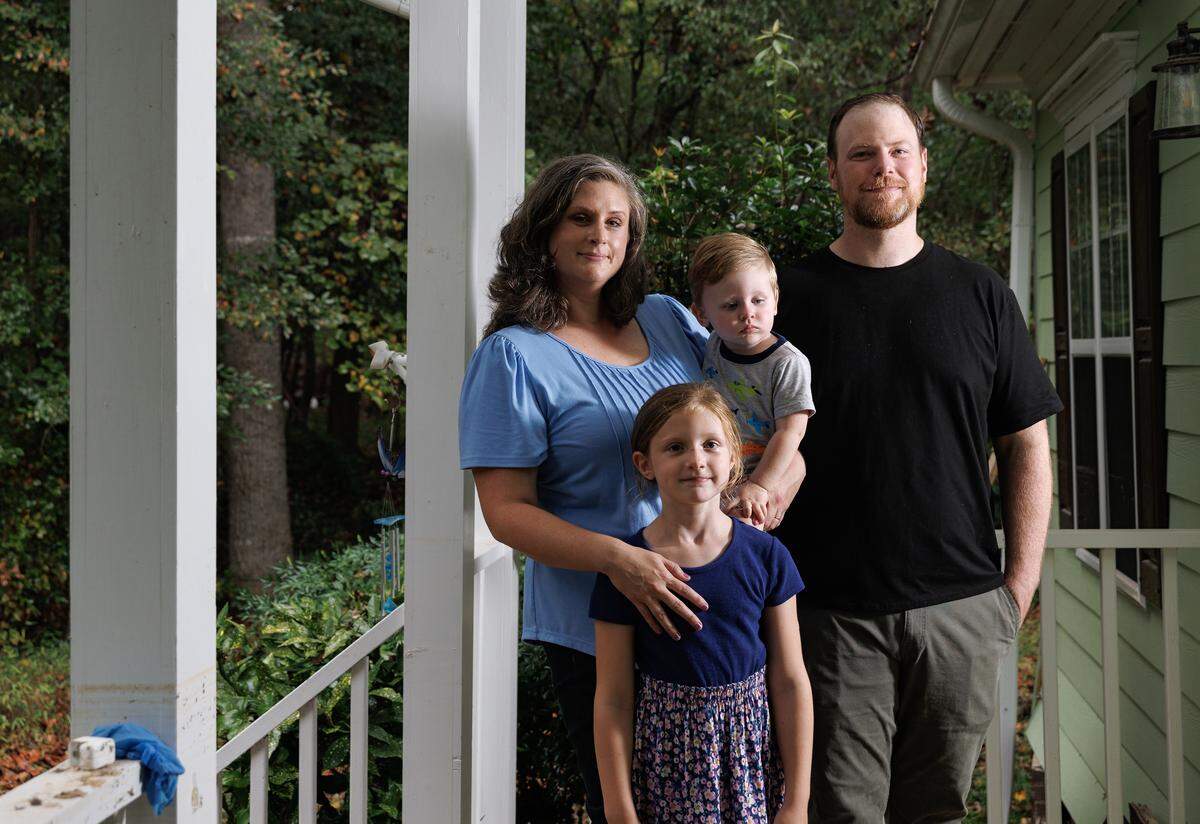
“We’ve got a huge mortgage on a house we can’t live in or afford to fix,” said Rebecca Blough, 41, a stay-at-home mother with two children, ages 1 and 7. Her husband, Ryan Blough, 41, is a U.S. Army veteran and software engineer for a local data company.
Amid an ongoing U.S. government shutdown, they remain in limbo, waiting for state and federal disaster aid. The Federal Emergency Management Agency is operating under contingency plans with many non-critical services delayed or suspended. The National Flood Insurance Program, which accounts for more than 88% of the nation’s flood insurance, has also expired, slowing down claims and adding to their uncertainty.
“We did everything ‘right,’“ Rebecca Blough added, “yet we’ve lost our history, our home and potentially our future.”
In large part, they blame FEMA for misleading them about the risks. In 2017, the agency re-validated the subdivision’s flood maps, issuing a Letter of Map Amendment that declared their property was not in a special flood hazard area, with a 1% or greater annual chance of flooding, where insurance is required — even though it appears on FEMA’s Flood Insurance Map.
Those actions, the Bloughs say, bypassed protections designed to safeguard them, leaving them dangerously exposed and underinsured as climate-related risks mount. They’re now staring down bankruptcy with $260,000 remaining on their mortgage, they said.
“I’ve reached out to every legislator I can find, but no one has responded,” she said. “It feels like we’re getting lost.”
Due to gaps in FEMA’s flood modeling and limited regulatory enforcement, New York-based research firm First Street estimates 13 million high-risk properties are underinsured or uninsured, including 10 million properties outside FEMA’s designated hazard areas.
In North Carolina, almost 654,000 properties, about 12% of the state’s total properties, are in 100-year flood zones, based on First Street’s modeling. That’s almost three times higher than FEMA’s latest analysis.
On Friday, Oct. 10, marking Day 10 of the shutdown, FEMA was unavailable for comment.
When contacted, it offered an automated reply, attributing delays to the ongoing funding lapse. It expected to respond to the request “once the issue is resolved,” it said.
Chantal’s disaster response
When Chantal hit Central North Carolina, it dumped as much as 9 to 12 inches of rain in some parts, devastating neighborhoods like Pittsboro’s Settlement, Carrboro’s Weatherhill Pointe, Chapel Hill’s Eastgate Mall and Camelot Village, all within miles of each other. It caused six deaths and over $42 million in public infrastructure damage.
On Aug. 5, Gov. Josh Stein declared Chantal a Type I State Disaster, activating state-funded individual assistance for affected residents in eight counties, including Chatham.
But FEMA has denied his request for hazard mitigation funds, including home buyouts and other projects, like elevating homes and reinforcing critical infrastructure. The decision comes as FEMA faces over $22.5 billion in debt and bipartisan calls to restructure the agency, though full dismantling remains contested.
Flood victims have been left with few options. In some hard-hit areas, many are rushing to cut their losses, selling their damaged properties to investors or cash buyers at steep discounts. A three-bedroom 1,560-square-foot home in Weatherhill Pointe sold “as is” for $267,500 on Oct. 1, roughly $200,000 below market value. It’s currently estimated to be worth $427,300 on Zillow.
The Bloughs have applied for state individual assistance, but it maxes out at $43,600 for personal property. They’ve also petitioned for FEMA’s Hazard Mitigation Grant Program declared under Tropical Storm Helene, which can be applied to other eligible parts of the state. But the process is slow and complex, often taking years with no guarantees.
The tragedy of smaller-scale disasters such as Chantal is that they often fail to trigger the response people expect or need, said Chatham County Emergency Management director Steve Newton, who is assisting the family with their application.
The shutdown and FEMA’s operational challenges add further headwinds. “I don’t know if FEMA is still reviewing cases. I don’t have a good way of getting an answer for that,” Newton said Friday.
In the meantime, the Bloughs are biding their time, paying $1,700 per month for a short-term two-bedroom rental and renting storage units for their belongings. They’re pinning their hopes on a buyout, where FEMA would provide funding to Chatham County to purchase their home. The goal is to permanently remove people and structures from high-risk areas.
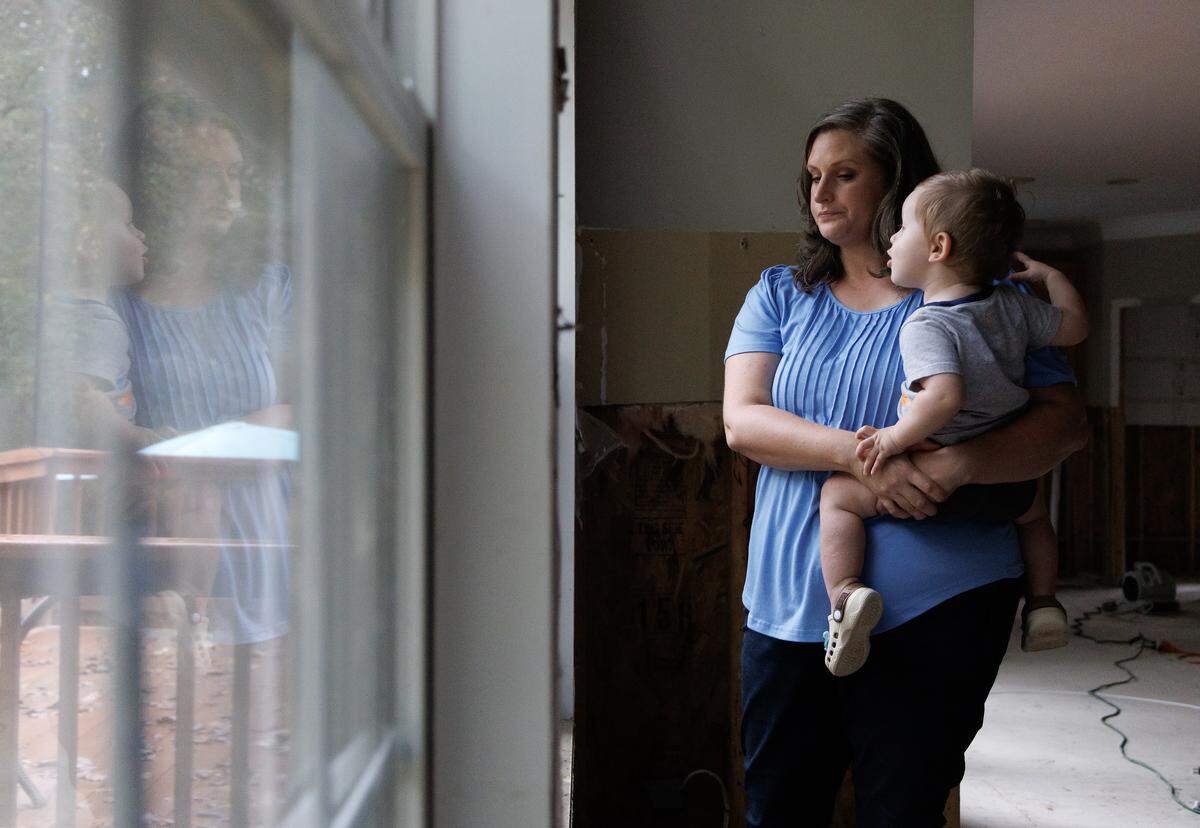
On a recent Friday afternoon, Rebecca Blough stood in her empty home, gutted to the bones, cradling her 1-year-old son Henry. Volunteers helped secure the foundation and remove waterlogged drywall and flooring to prevent mold. But work is now at a standstill.
At this point, they’re desperate for accountability. “Errors were made, and the damage is real,” Rebecca Blough said. “FEMA should never have revalidated the property’s flood risk. We need support.”
She also wants to raise awareness. “I don’t want other families to be put in this position.”
This story was originally published October 13, 2025 at 5:00 AM with the headline "Amid shutdown, Chantal flood victims left stranded waiting for FEMA aid, buyout."