Chatham County reflects on VinFast, Wolfspeed promises three years later
I’m Brian Gordon, tech reporter for The News & Observer, and this is Open Source, a weekly newsletter on business, labor and technology in North Carolina.
Three years ago this week, on the lawn of the governor’s mansion, Chatham County economic development leaders handed out safety pins with a celebratory code: $9B/9K/22.
The last number referenced the year, 2022. The first two figures marked the combined investment and jobs commitments Chatham had secured from a pair of major projects. That March, the new Vietnamese electric vehicle company VinFast promised to build its first U.S. facility near the unincorporated community of Moncure, about 30 miles southwest of Raleigh, where it would hire 7,500 workers and spend $4 billion.
Then, in early September, political and economic leaders gathered at the governor’s mansion in Raleigh to trumpet the Durham semiconductor Wolfspeed pledging a $5 billion, 1,800-worker materials plant near Siler City in western Chatham County.
Michael Smith, president of the Chatham County Economic Development Corporation, remembers the safety pin. “I’m looking at one now,” he said during a recent phone interview. Smith then stated the obvious: that neither project is where local officials had hoped they’d be three years later.
Wolfspeed constructed its Siler City plant remarkably quickly and has been growing silicon carbide crystals at the site for over a year. But the company remains bankrupt for at least a few more weeks. On Monday, a Texas bankruptcy court approved Wolfspeed’s reorganization plan, which the company says will enable it to emerge from Chapter 11 with $4.6 billion less debt. Creating 1,800 jobs in Chatham appears a ways off, though, as the company decreased its total headcount in the past year from 5,000 to 3,400 workers.
At least Wolfspeed has a building. VinFast’s megasite in southeast Chatham remains undeveloped since the company postponed its opening until at least 2028. Is the carmaker still serious about North Carolina?
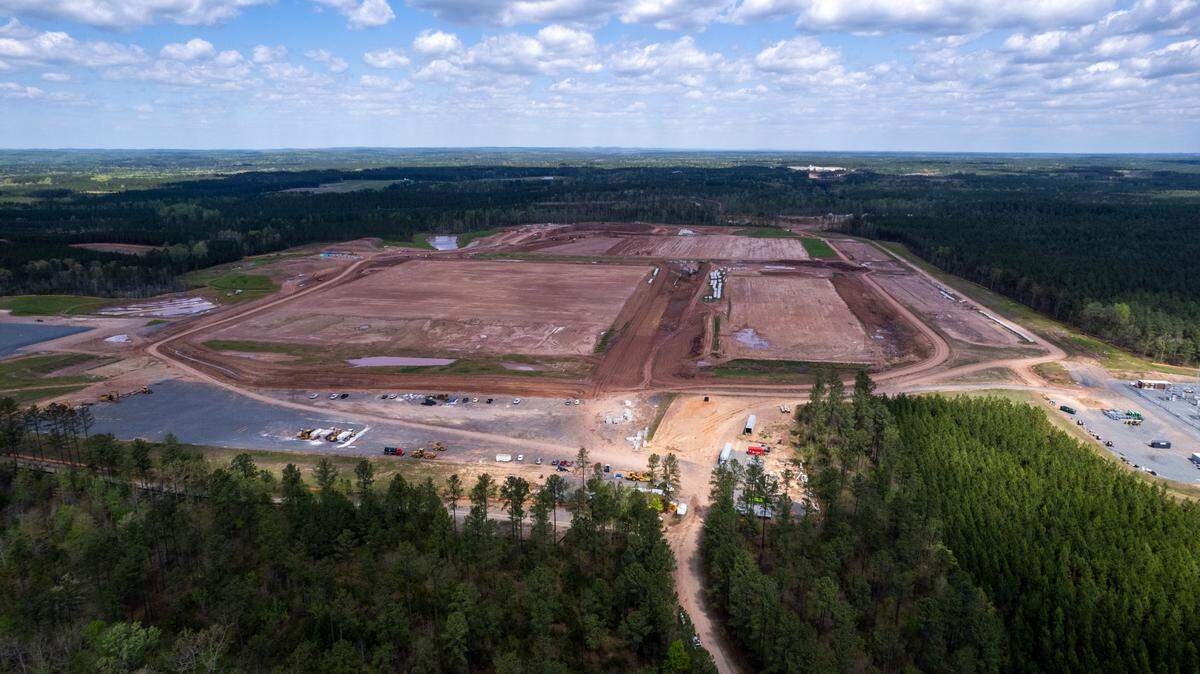
Smith said he remains in contact with VinFast representatives, with one recent conversation occurring in July. And this week, VinFast Chairwoman Le Thi Thu Thuy told Bloomberg, “We continue with the plan for the factory in North Carolina to be opened in 2028.”
“Now that I think the tariff dust has started settling, I think we can go back to pushing forward with the plan,” she said.
However, VinFast postponed its Chatham factory last year — before President Donald Trump’s tariffs. And Thuy this week acknowledged U.S. sales are “not as fast as we would have wanted.”
Thuy did not mention the North Carolina site during VinFast’s Sept. 4 earnings call. The News & Observer has also requested to speak with the local VinFast representative, Brook Taylor, about the company’s commitment to Chatham and its thoughts on the state’s approaching option to buy back the site.
Where does this all leave Chatham County? The central North Carolina community continues to see considerable population growth as it spans the region between the Triangle and Greensboro. Disney is building a community near the county seat of Pittsboro, and the surrounding Chatham Park complex promises to add 60,000 residents, 22,000-plus homes and 22 million square feet of commercial space.
And Michael Smith still views the safety pin message as a success, even if $9 billion and 9,000 jobs is never realized.
“We’re on the map,” he said. “The entire world knows where we are. And in 2022 that wasn’t the case. So, there’s a huge value to all that excitement.”

Duke sees good federal funding news in quantum
In a departure from most of 2025, Duke University made headlines this week for getting federal funding after the National Science Foundation awarded $4 million to the Duke Quantum Center to design a 256-qubit quantum computer in Durham.
“Going to 256, that’s a big deal,” the center’s director, Chris Monroe, told me. “There’s no way any (classical) computer will ever approach that.”
Quantum computing eschews binary 1s and 0s of classical computers to produce nearly endless, entangled possible outcomes represented by quantum bits, or qubits. Duke’s award is the second of three funding stages under an NSF program designed to accelerate U.S. quantum computer technology. And while the Trump administration has slashed academic science and health research in other areas, it maintains artificial intelligence and quantum computing funding levels in its budget plan.
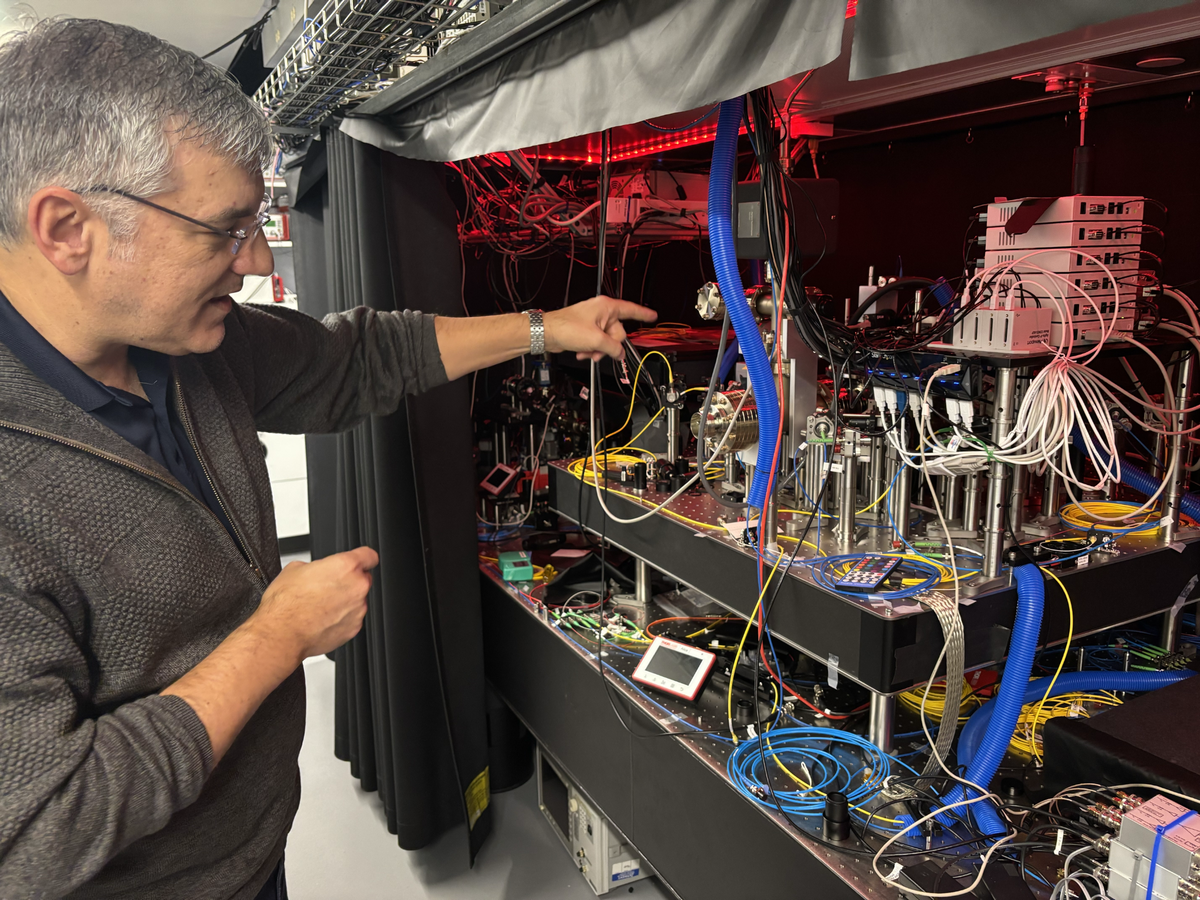
Ken Brown, who leads Duke’s project, said his team expects to have a design for an initial quantum computer by April and to apply for a $10 million “implementation” grant next year. “We’re basically producing our first plan for this machine,” he said. “And the National Science Foundation will decide if that plan is sufficiently good to actually build it.”
Housed inside the Chesterfield building downtown, the Duke Quantum Center studies a type of computer called trapped-ion, which levitates individual atoms in an airless vacuum over a gold-plate chip before researchers poke the atoms with lasers. Elsewhere in the Triangle, NC State scientists focus on an alternative quantum computer called superconductors, which look like ornate chandeliers.
Neither are science fiction. Today’s quantum computers can compute; they just aren’t accurate enough when scaled to replace regular computers. But a future where quantum computers achieve true “quantum advantage” and transform industries like chemistry, finance, cybersecurity and logistics has kept investors — and the government — intrigued.

‘Novo was kind of asleep at the wheel’
Why is Novo Nordisk, the maker of trendy weight-loss treatments Ozempic and Wegovy, struggling? On Wednesday, the Danish pharmaceutical company announced 11% job reductions across the board, with around 5,000 layoffs in its home country and 4,000 cuts to be made… elsewhere.
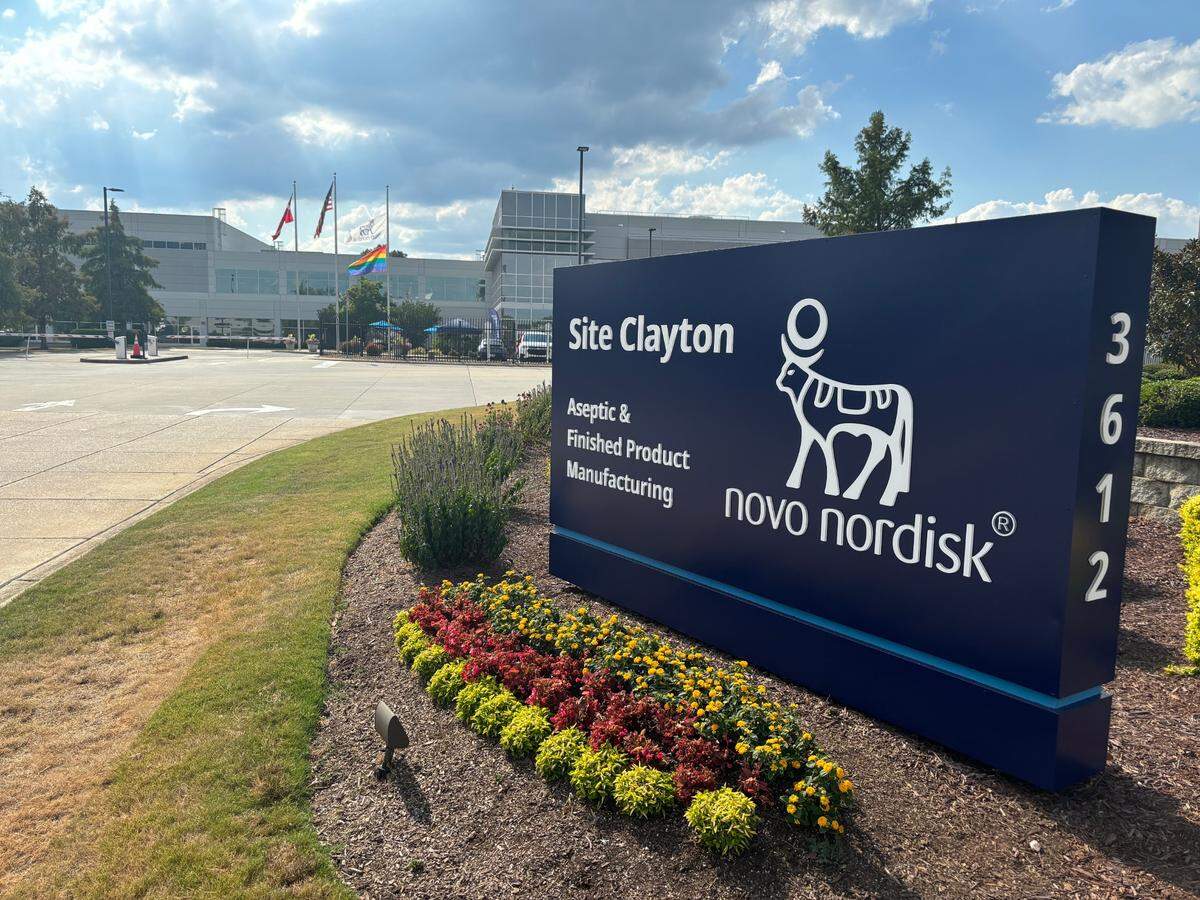
Those layoffs could hit Novo Nordisk’s sizable North Carolina workforce, which is meant to be expanding following last year’s record local investment announcement. The drugmaker opened its first U.S. manufacturing site in Johnston County, just southeast of Raleigh, in 1993, and today, this campus is the company’s largest U.S. production footprint.
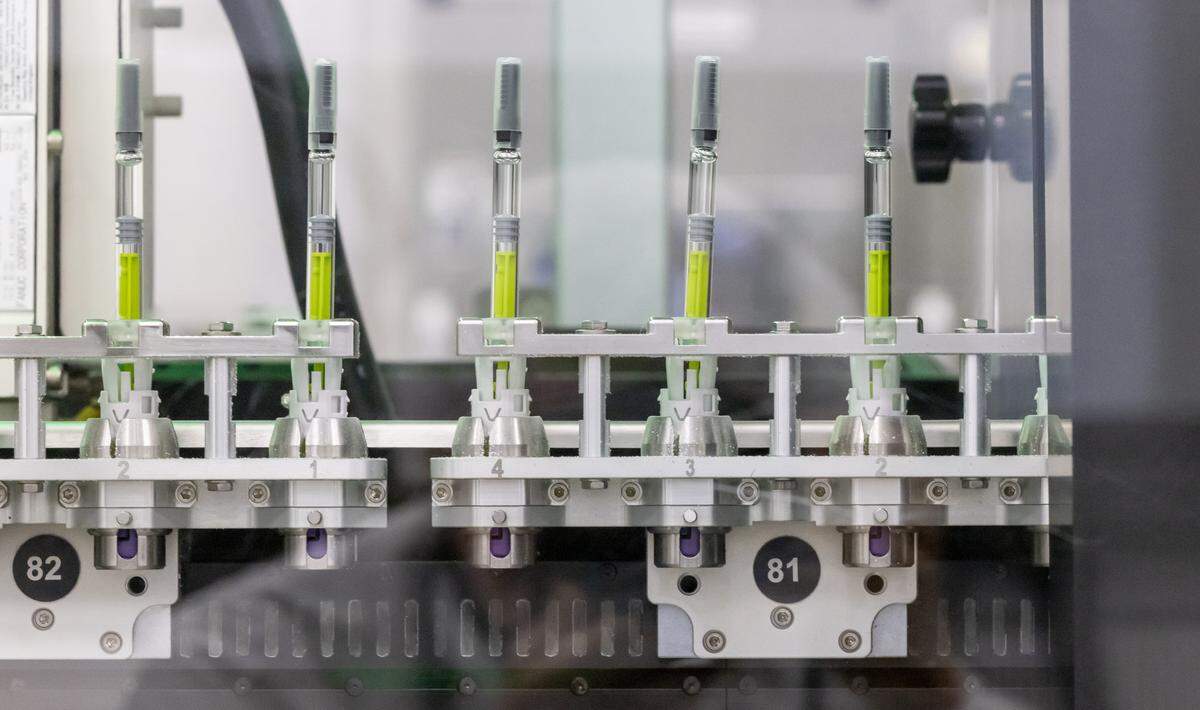
Novo is the biggest private employer in the fast-growing county, where it fills and packages Wegovy and Ozempic injection pens. Yet while those GLP-1s drove the company’s share price into the stratosphere last year, Novo Nordisk’s stock has dropped 60% in the past 12 months.
Aren’t weight-loss drugs still really popular? Yes, but experts identify a few reasons for the company’s headwinds. First, Novo Nordisk’s only real competitor in the GLP-1 space has made a more effective obesity treatment.
“People remember (Ozempic) on the Tiktok shows, but they don’t know Zepbound is much better,” said Dr. Sarah Ro, medical director of the UNC Physicians Network Weight Management Program, referring to the weight-loss drug from Eli Lilly, which makes Zepbound and Mounjaro at a newer Research Triangle Park plant.
Eli Lilly and Novo Nordisk are “two of the 800 pound gorillas” in the industry, says Michael DiFiore, an analyst at the New York City investment firm Evercore. And to different degrees, each underestimated the wild demand its traditional diabetes medications would generate as obesity treatments.
Novo Nordisk, in particular, has battled supply issues. This opened the door for compound alternatives of semaglutides, the active ingredient in Wegovy and Ozempic, to flourish. And though there’s no longer a shortage of semaglutides, which means compounds are no longer legally allowed, Novo Nordisk has complained of their persistence in the marketplace.
“Novo was kind of asleep at the wheel,” said Evan Seigerman, an analyst at BMO who covers both companies. And as Eli Lilly and Novo each work on their next-generation weight-loss treatments, both companies’ recent trial results, Seigerman said, have fallen below analyst expectations.
Despite the layoffs, Novo Nordisk says it is committed to moving forward with all its major projects. And it changed CEOs last month. But for it to achieve its promised $4.1 billion expansion and 1,000 new hires, the company must stem its slide.
Clearing my cache
- Can the town of Tarboro defeat a $6 billion data center? Despite its local council rejecting the data center’s permit in a 6-1 vote this week — and despite some vehement resident objections to the project — the matter isn’t settled. The data center developer says he’ll sue, and the Tarboro mayor (who wasn’t allowed to discuss this case with constituents, including his wife) isn’t confident the town will win. Tarboro’s is a particular legal zoning situation, but one worth tracking as more data center projects and local protests emerge statewide.
- Wake County’s lone landfill is running out of room, and officials are weighing options for handling its future trash. One idea is to create a waste-to-energy facility, common in Europe and Asia, which burns trash to make electricity.
- Sibelco workers at the company’s very important Western North Carolina quartz mines have voted not to unionize.
- We’ve got newsletter competition: North Carolina State Treasurer Brad Briner has been releasing “Finance Fridays” each month to explain financial literacy topics like insurance and compound interest. His latest edition centered on cryptocurrency, which Briner and House Republicans have backed as an investment asset in the state pension.
- U.S. Treasury Department has proposed making Community Development Financial Institution grant applicants submit supplemental applications detailing any DEI or climate-related uses they have for the money. Meanwhile, the Office of Management and Budget continues to withhold nearly $300 million in appropriated CDFI funds over bipartisan objections.
National Tech Happenings
- The South Korean workers detained last week in an Immigration and Customs Enforcement raid on a Hyundai plant outside Savannah, Georgia, have been flown home. North Carolina actually competed for Hyundai to build this massive electric vehicle and battery plant in Chatham County, on the site VinFast now occupies.
- Apple introduced its iPhone 17. It’s the first model to come in orange, and the first with a $2,000 price option.
- Oracle is the toast of Wall Street this week, with the data software company seeing its share price rise more than 30% on the back of multiple large AI-related contracts.
Thanks for reading!
This story was originally published September 12, 2025 at 9:43 AM with the headline "Chatham County reflects on VinFast, Wolfspeed promises three years later."