Why Raleigh’s apartment pipeline just took a 44% hit
AI-generated summary reviewed by our newsroom.
- Raleigh-Cary pipeline dropped 44% from 2024, reflecting national slowdown.
- Higher interest rates, tariffs, and labor shortages stall new construction.
- Developers like Mungo Homes still expand amid steady South housing demand.
The Raleigh-Cary metro area still ranks among the nation’s biggest builders — with 5,884 new rental apartments expected by the year’s end.
But it’s also seeing some of the steepest declines, according to a new report from the listing service RentCafe.
After a post-pandemic construction boom not seen since the 1970s, outpacing metros like Boston and Los Angeles, the area’s pipeline is down 44% compared to 2024, when it delivered more than 10,500 apartments, the report said.
That’s the 12th largest drop out of 369 metros analyzed. The region still ranked 20th overall, up four spots.
The downturn reflects the “broader national cooldown,” said RentCafe research analyst Veronica Grecu.
Nationwide, new apartment construction is below last year’s record high, but still above annual averages since 2015, with more than 500,000 units expected this year.
The South accounts for more than half of all new U.S. rentals, likely due to the region’s status as a “migration magnet” supported by job growth and economic expansion in the last decade, the report said.
At the city level, Raleigh is adding 2,150 units, also a decrease from previous years, the report said.
In Cary, the new offerings include Meridian East Chatham, a five-story 220-unit apartment building at 255 East Chatham St., which opened this month; and Meridan Cary, a 195-unit building at 119 S. Harrison Ave., which is slated for later this year. Both are in downtown Cary.
Among other Triangle localities, Knightdale is adding 1,289 units, Holly Springs is adding 593 units, Apex is adding 525 units and Morrisville is adding 450 units.
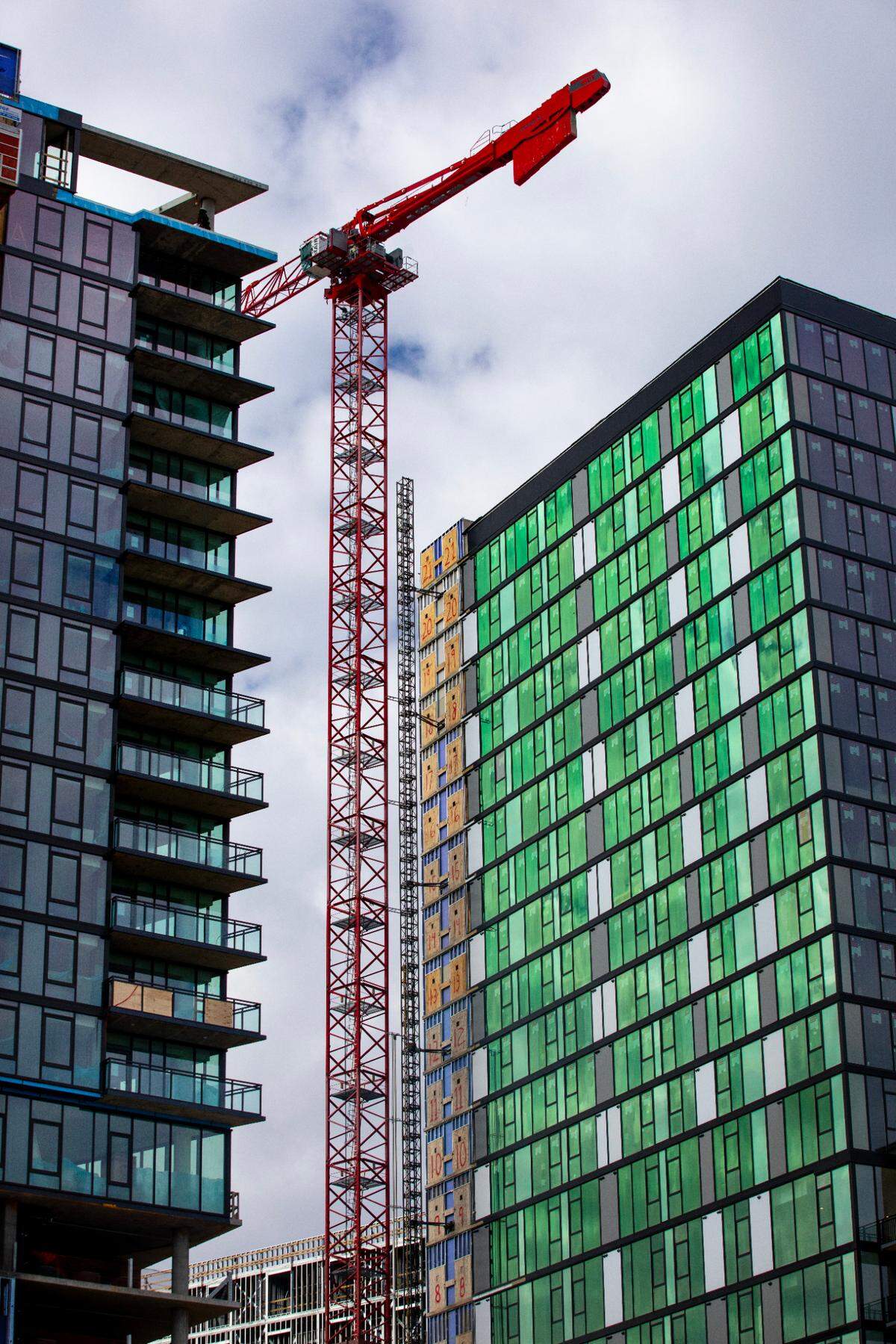
What’s behind the construction slowdown?
Experts say the construction slowdown is a result of higher interest rates, rising material costs, labor shortages and zoning regulations.
Among the biggest drags, President Donald Trump’s tariffs on steel, aluminum and lumber, including a 50% tariff imposed in June, which have push costs to spiral, according to analysis by the Associated General Contractors of America (AGCA).
In August, the price for aluminum jumped 5.5% month over month and 22.8% year over year. Steel rose 1.5% month over month and 13.1% year over year. Lumber and plywood increased .5% month over month and 4.8% year over year, based on their estimates.
The higher costs have resulted in projects being “canceled, postponed or scaled back,” said Jeffrey D. Shoaf, AGCA’s chief executive. “There’s a limit to how many price increases the market can absorb before owners put projects on hold.”
The multifamily market (apartments, condos, townhomes) remains stronger than single-family home construction, which posted declines in nearly every geographic region in the second quarter of 2025, with the largest drop, 3.8%, occurring in large metros and suburban counties where most permit activity occurs, according to the latest data from National Association of Home Builders (NAHB).
This submarket lags due to housing affordability challenges, including persistently high mortgage rates, the skilled labor shortage and regulatory costs, said NAHB chairman Buddy Hughes, a home builder and developer from Lexington, N.C.
Despite these challenges, developers like Mungo Homes, a subsidiary of Clayton Properties Group, remain committed to the Triangle market.
The South Carolina-based builder is acquiring land and pushing into high-growth areas across Wake County, Matt Kaufmann, the firm’s vice president of sales, told The N&O in a phone call.
“The demand outweighs some of those headwinds,” he said.
Mungo Homes has at least 10 active or planned communities, including the new 600-home Ovation at Sweetbrier subdivision in Southeast Durham and 1,850-home Banks 20 near the Neuse River in Knightdale.
Another nine projects are in the pipeline, he said, including both single-family homes and townhomes. “There’s definitely bumps in the road, ebbs and flows with housing demand. But overall, we love it here.”
This story was originally published September 12, 2025 at 2:20 PM with the headline "Why Raleigh’s apartment pipeline just took a 44% hit."