Boom Supersonic cheers Trump lifting air speed ban, updates NC factory start
AI-generated summary reviewed by our newsroom.
- Trump ended a 52-year ban on overland supersonic flight via executive order.
- Boom Supersonic plans to begin jet production at its NC superfactory in 2026.
- The FAA must draft new supersonic noise standards within the next 18 months.
Boom Supersonic, the Colorado startup that aims to assemble passenger jets in North Carolina, celebrated President Donald Trump’s executive order Friday ending a 52-year-old ban on overland civilian supersonic flight.
“Legalizing supersonic flight makes a renaissance in supersonic passenger travel inevitable,” Boom Supersonic CEO Blake Scholl said in a statement. “We’re grateful to President Trump for his leadership — this important step allows us to accelerate development of our Overture supersonic airliner.”
Since 1973, the Federal Aviation Administration has barred nonmilitary aircraft from exceeding Mach 1, or the speed of sound, when cruising above the United States. The agency made this rule after residents complained passing test flights caused thunderous booms that shook windows.
Some aviation experts say this regulation hampered the commercial success of the Concorde, an inaugural supersonic airliner which flew between 1976 and 2003. While the Concorde shuttled passengers across oceans at 1,300 mph, it had to slow over land.
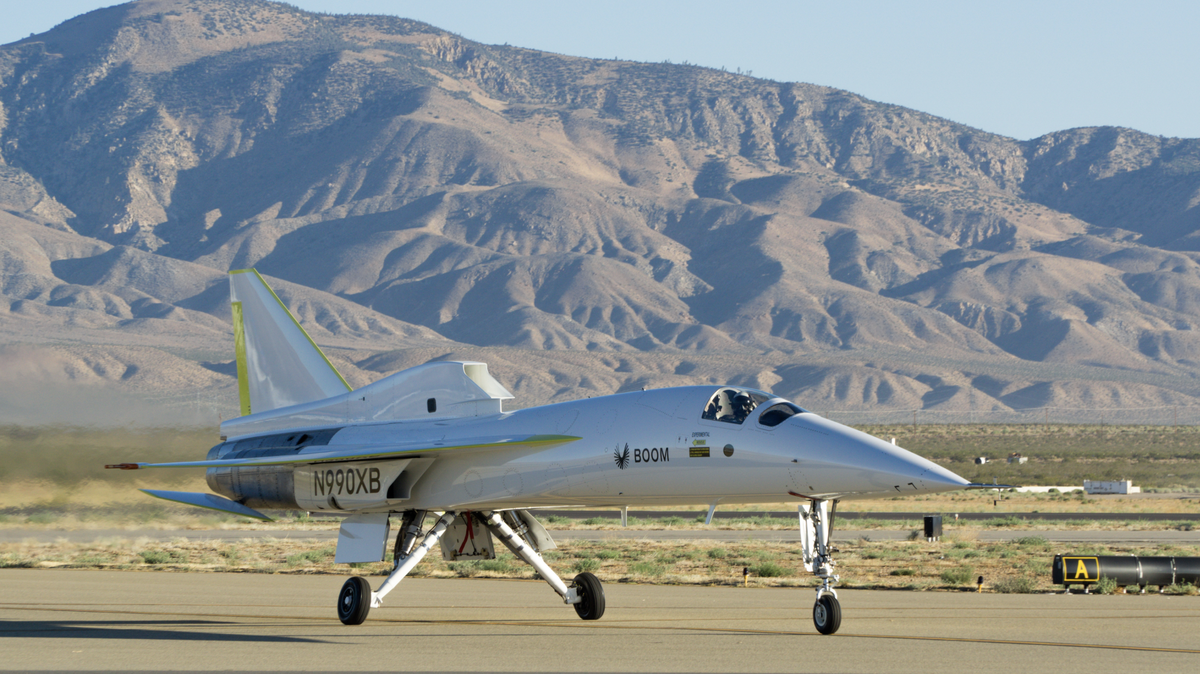
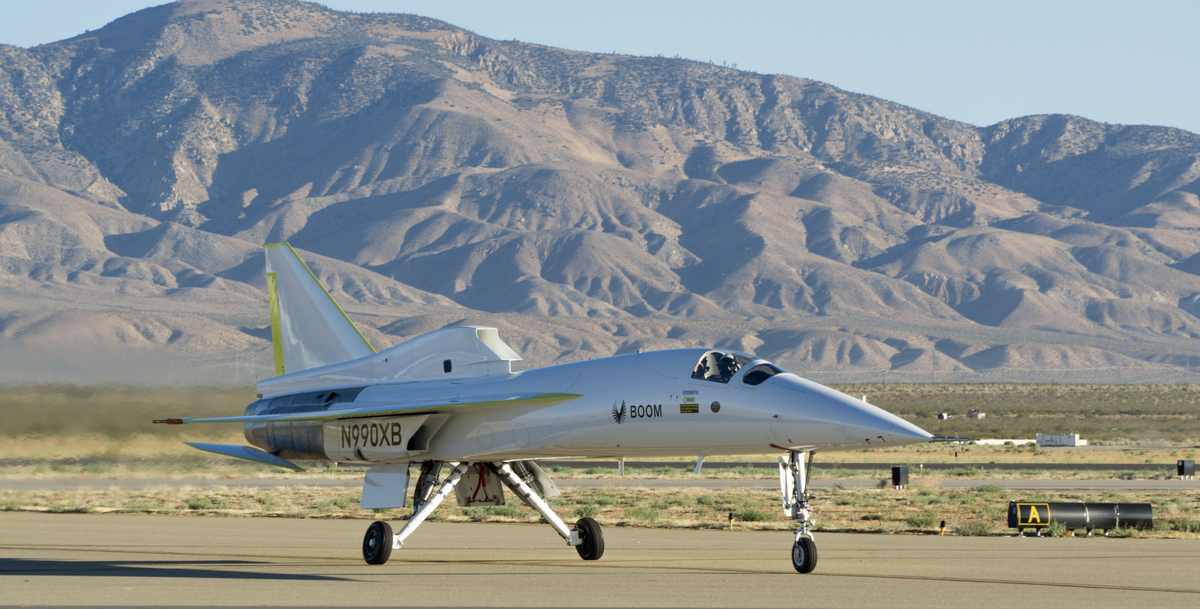
Scholl has lobbied lawmakers to rescind the overland ban, arguing recent technology advancements make it possible to break the sound barrier without disruptive noises reaching the ground. Last year, NASA showcased an experimental plane that produces what one administrator described as “a gentle thump.” And Boom says its test jet, the XB-1, has flown supersonic six times this year without creating an audible sonic boom.
Boom’s CEO has framed supersonic travel as a national security issue, highlighting in recent media appearances the threat China poses in this industry. “China wants to surpass America as the leader in technology,” Scholl told Fox Business host Maria Bartiromo in April. “So of course they’re pursuing supersonic. It is the next step in aviation.”
In February, Scholl posted a photo on X of Trump posing at the White House with a Boom Supersonic aircraft model. “This administration is supersonic,” he wrote in the caption.
Boom has committed to open its first manufacturing plant at the Piedmont Triad International Airport in Greensboro, where the company last June completed a 179,000-square-foot “superfactory” building. It is currently developing the engine for its prospective Overture commercial jet, with financial backing from prominent tech investors like Paul Graham, Reid Hoffman, Michael Moritz, and OpenAI founder Sam Altman.
“Our goal is to roll out the first Overture in three years, and be flight testing in four,” a Boom spokesperson wrote in an email to The News & Observer on Monday. “To accomplish that, we expect production of the first aircraft in the Superfactory to start next year.”
Under its North Carolina job development investment grant, Boom has pledged to create 1,761 jobs in Greensboro between 2026 and 2030. The company could receive incentives worth $121 million between North Carolina and Guilford County if it meets hiring targets.
Boom today has “several support employees” in Greensboro and at its Denver headquarters, the spokesperson said, and orders for the potential Overture include nonrefundable deposits from United Airlines and American Airlines.
Next steps for FAA supersonic rule
Pursuing supersonic flight above where people live isn’t something to rush, said Daniel Bubb, a former airline pilot who teaches courses on aviation at the University of Nevada, Las Vegas.
“I would only recommend (commercial supersonic flight) if you have that technology, and it’s been proven,” he said. “Otherwise, I would recommend sticking with the old system. I think you’re just basically asking for problems.”
Last month, U.S. Sens. Ted Budd and Thom Tillis of North Carolina cosponsored the Supersonic Aviation Modernization Act, which would have removed the Mach 1 limit. Trump’s order, titled “Leading the World in Supersonic Flight,” gives the FAA six months to replace the 1973 ban with an “interim noise-based certification standard” and 18 months to write a permanent rule.
“For more than 50 years, outdated and overly restrictive regulations have grounded the promise of supersonic flight over land, stifling American ingenuity, weakening our global competitiveness, and ceding leadership to foreign adversaries,” the executive order stated in part. “Advances in aerospace engineering, materials science, and noise reduction now make supersonic flight not just possible, but safe, sustainable, and commercially viable.”
This story was originally published June 10, 2025 at 6:00 AM with the headline "Boom Supersonic cheers Trump lifting air speed ban, updates NC factory start."