Duke Energy wants new way to pay for NC nuclear plants. It’s controversial.
I’m Brian Gordon, tech reporter for The News & Observer, and this is Open Source, a weekly newsletter on business, labor and technology in North Carolina.
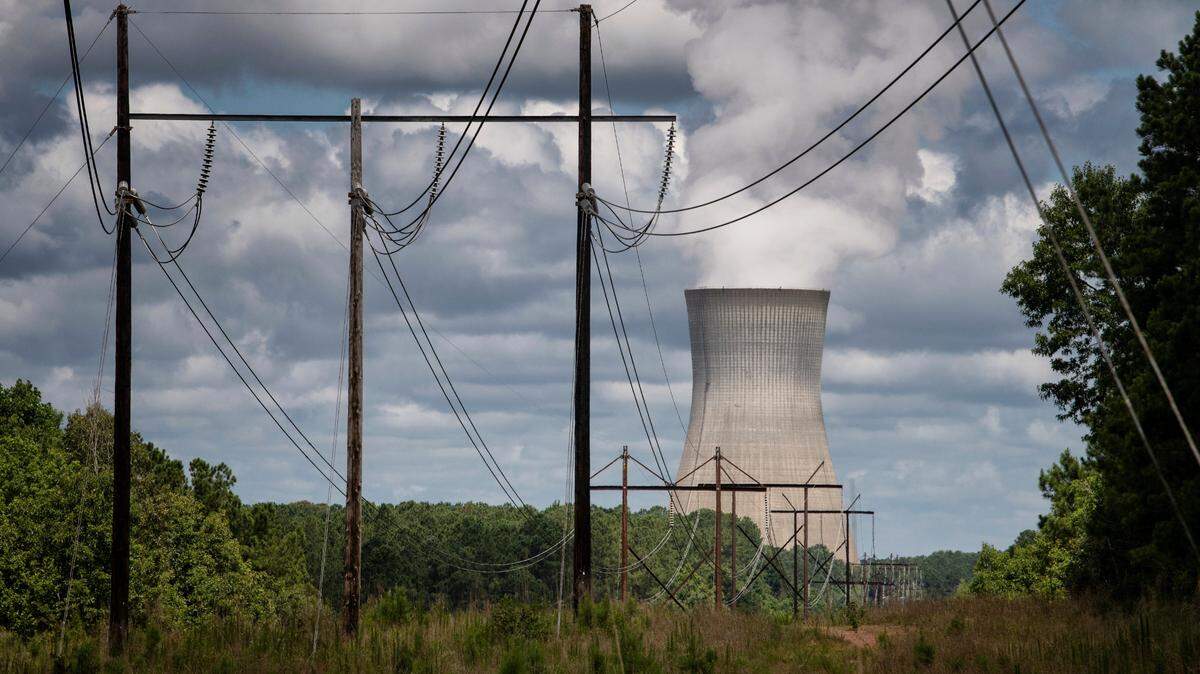
Nuclear power is making a comeback nationwide, though in North Carolina, it never went away. Duke Energy operates three nuclear power plants in the state, four if you count South Carolina’s Catawba Nuclear Station just below Charlotte. Both Carolinas are top 10 states for nuclear generation. Combined, more than half of Duke Energy customers across North and South Carolina get electricity through uranium fission.
Demand for power-hungry data centers has renewed interest in nuclear expansion. On an earnings call this week, Duke Energy said it had signed almost 1 gigawatt’s worth of data center projects in April alone. Increased electrification and the explosion of artificial intelligence are driving a data center race, making clean nuclear power more attractive.
Meeting around-the-clock energy needs will likely require more nuclear, Bill Norton, a Duke spokesman, wrote in an email earlier this year. As the state’s regulated utility monopoly, it is up to Duke to build these plants — be they traditional large reactors (like where Homer works in The Simpsons) or an emerging technology called small modular reactors.
How Duke pays for new nuclear is currently up for debate. Through Senate Bill 261, the North Carolina Senate is pushing to adopt a policy called Construction While in Progress, or CWIP, which would allow Duke to pass on the costs of building new nuclear and natural gas plants to customers through electrical rates before the plants become operational instead of the current process, which is generally after.
“From a business perspective, CWIP is awesome because it shifts all financial risk away from your shareholders and onto your consumers,” said Thomas Shumaker, director of a Raleigh advocacy group called Conservatives for Clean Energy. “And since we have no other choice, we’re a captive audience. Allowing CWIP in North Carolina would mean Duke has no risk at all as a business.”
Critics like Shumaker point to neighboring states as cautionary tales. South Carolina ratepayers have paid billions for two abandoned reactors. Georgia completed its Vogtle Nuclear Plant, but over budget and past deadline.
“We learned the hard way that this type of provision benefits only the utility, while the cost of its failure is borne by every hardworking family and business that pay their electric bills,” South Carolina Rep. Nathan Ballentine wrote in an April 29 opinion published in The Butner-Creedmoor News. “North Carolina, don’t do the same thing South Carolina did and expect different results. That would be insane.”
Rather than an overhaul, Duke Energy says the proposed CWIP legislation only modifies current state law. Building nuclear sites is expensive and prolonged; charging ratepayers during the process allows Duke to forgo private financing, which lowers costs for everyone by avoiding interest payments.
“Policies that enable more timely recovery of investments in modern infrastructure like always-on nuclear power plants help keep overall costs down for customers and result in more predictable energy prices by avoiding sudden spikes,” Duke Energy wrote in a statement to The N&O. “This process would be subject to regulatory oversight to ensure the protection of customers’ interests.”
Duke Energy is both a publicly traded company and a state-regulated monopoly. How it pays for, and ultimately passes along, costs is always a matter of public interest. Add CWIP to the list.
What about the mall, Mr. Sweeney?
Maybe Epic Games CEO Tim Sweeney enjoys nature so much that he’s let the former Cary Towne Center revert to wilderness on purpose. Joking about the former mall-turned-moonscape but not about Sweeney’s passion for conservation.
This week, we published an update on the billionaire who owns more land in North Carolina than perhaps any other individual. Sweeney is definitely the largest landowner in Chatham County, and ranks highly in Western North Carolina’s mountainous Mitchell and McDowell counties, too.
Land trusts praise Sweeney for quickly buying parcels and then holding them for major donations and discounted sales. “Tim operates as a private citizen, but thinks as a park planner or a landscape planner,” said Jay Leutze of the Southern Appalachian Highlands Conservancy.
In a rare direct response, Sweeney explained how he’s evolved his conservation efforts amid rising land prices. Read his perspective and see a statewide map of where he holds the most land.
.jpg "Raven Cliffs High Knob Bailey Meadow from Rhodo Garden (1).jpg")
Decision time for Triangle EPA workers
Last Friday, the Environmental Protection Agency told scientists at its Office of Research and Development to reapply for positions within a newly restructured EPA that blends this standalone science division into other offices. More than 1,500 people work in the research and development office, including around 600 employees in Research Triangle Park.
These scientists (along with their colleagues nationwide) are invited to apply for roughly 400 to 500 open positions, said Holly Wilson, an EPA employee and president of the local union that represents the agency’s RTP employees.
“The Hunger Games” meets a professional sports player draft is how Wilson described work this past week, as managers from other departments recruit science staff to their respective teams — 1,500 possible applicants for 450 or so slots. “Panic, frustration, just exhaustion, disbelief, anger, disappointment,” she said.
The EPA has planned to dissolve this science office since at least March according to documents shared with The News & Observer. Last week, EPA Administrator Lee Zeldin wrote that his restructured agency would be less bloated, more efficient, and save $300 million a year while maintaining Reagan-era staff levels.
“Under Trump, we are making the government work most effectively for the American people,” he wrote. Critics warn these cuts come with non-monetary costs. For the Triangle, it means a large local employer is scaling back.
.jpg "IMG_5455 (1).jpg")
Clearing my cache
- Apple has appealed the contempt order it received last week for violating its Epic Games antitrust decision, calling it “extraordinary.” The order forced Apple to allow app developers like Epic and Spotify to direct customers to lower cost options outside the App Store payment system. “Apple’s Motion to Stay is a last ditch effort to block competition and extract massive junk fees at the expense of consumers and developers,” Epic responded in a statement.
- President Donald Trump’s order last week to defund PBS and NPR will likely impact the 12 PBS stations and nine NPR stations in North Carolina, including WUNC.
- Raleigh cloud communications provider Bandwidth beat revenue expectations to start 2025, posting earnings Wednesday that jumped its share price 12%. “The results of our strategy to drive growth in our core platform are evident in our first-quarter performance across all three of our market offers: enterprise voice, global voice plans, and programmable messaging,” CEO David Morken said on the earnings call. Since Jan. 1, however, Bandwidth’s stock is still down 17%.
North Carolina’s own YouTube star MrBeast is writing a novel with best-selling author James Patterson. The plot will center on a “Beast Games”-style competition where 100 people vie, bond, back-stab and scheme to win a $1 billion prize.
Unscrupulous hacker. Stolen student and teacher data that was supposed to have been destroyed following a ransom payment is now being wielded to extort North Carolina schools districts. The hacker wants Bitcoin. But North Carolina is one of the few states to prohibit public entities from paying off ransomware attacks.
On an earnings call Thursday, Wolfspeed said it would cut a portion of its leadership team as it aggressively looks to lower costs. The Durham chipmaker overall said it has reduced its workforce by 25%.
In more Wolfspeed news, chief financial officer Neill Reynolds will exit the Durham chipmaker at the end of the month as the company shakes up its executive suite. Reynolds will next become CFO of Ralliant, a new tech firm expected to headquarter in Raleigh once it splits from the industrial conglomerate Fortive.
National Tech Happenings
- The Department of Justice asked a court to force Google to split off its ad tech business to remedy the company’s proven monopoly. Google wants to be allowed to make more limited changes.
- UnitedHealth Group says it uses artificial intelligence in 1,000 applications, including the processing of claims. The largest U.S. health insurer, UnitedHealth told The Wall Street Journal that AI alone won’t ever deny a claim.
- The Federal Reserve held interest rates steady Wednesday, with Fed Chair Jerome Powell advocating a wait-and-see approach to any tariff implications.
Thanks for reading!
This story was originally published May 9, 2025 at 9:40 AM with the headline "Duke Energy wants new way to pay for NC nuclear plants. It’s controversial.."