Dollar General accelerated rapid NC opening pace last year, despite downtown Raleigh exit
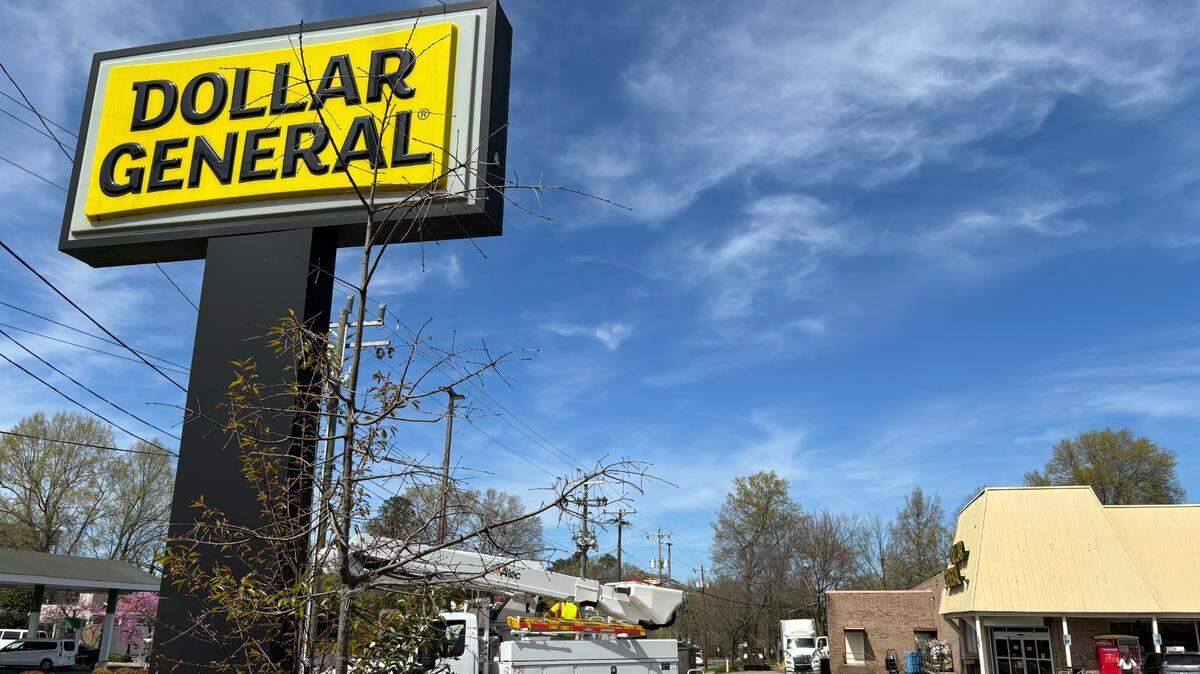
One is never far from a Dollar General in most North Carolina towns.
North of Durham, for example, the Vance County seat of Henderson has six stores within a four-mile radius. The Granville County seat of Oxford and its 9,000 residents support four Dollar Generals, while Roxboro in neighboring Person County has a smaller population but still five stores within 10 miles.
South of Fayetteville, the city of Lumberton has 10 Dollar General stores for less than 20,000 people. In the Blue Ridge foothills, the 10,600-person city of Mount Airy is saturated with 11 locations. And Dollar General hasn’t stopped building across the Tar Heel state.
The largest U.S. dollar store chain today operates 45 more North Carolina locations than it did last March, according to Dollar General’s latest annual report, which the company released Friday. That’s a new Dollar General on average every eight days, surpassing last year’s expansion pace (which was one every nine days).
There are now 1,121 stores in North Carolina, the third most in any state behind Texas and Georgia. Roughly one for every 10,200 residents. Despite local opposition and new fiscal challenges, more black-and-yellow logos are coming; the dollar store chain this month told investors it plans to open 575 U.S. locations throughout 2025.
“As long as North Carolina continues to grow, they will not run out of places to put stores,” said Rick Niswander, an emeritus accounting professor at East Carolina University who studies discount retail chains.
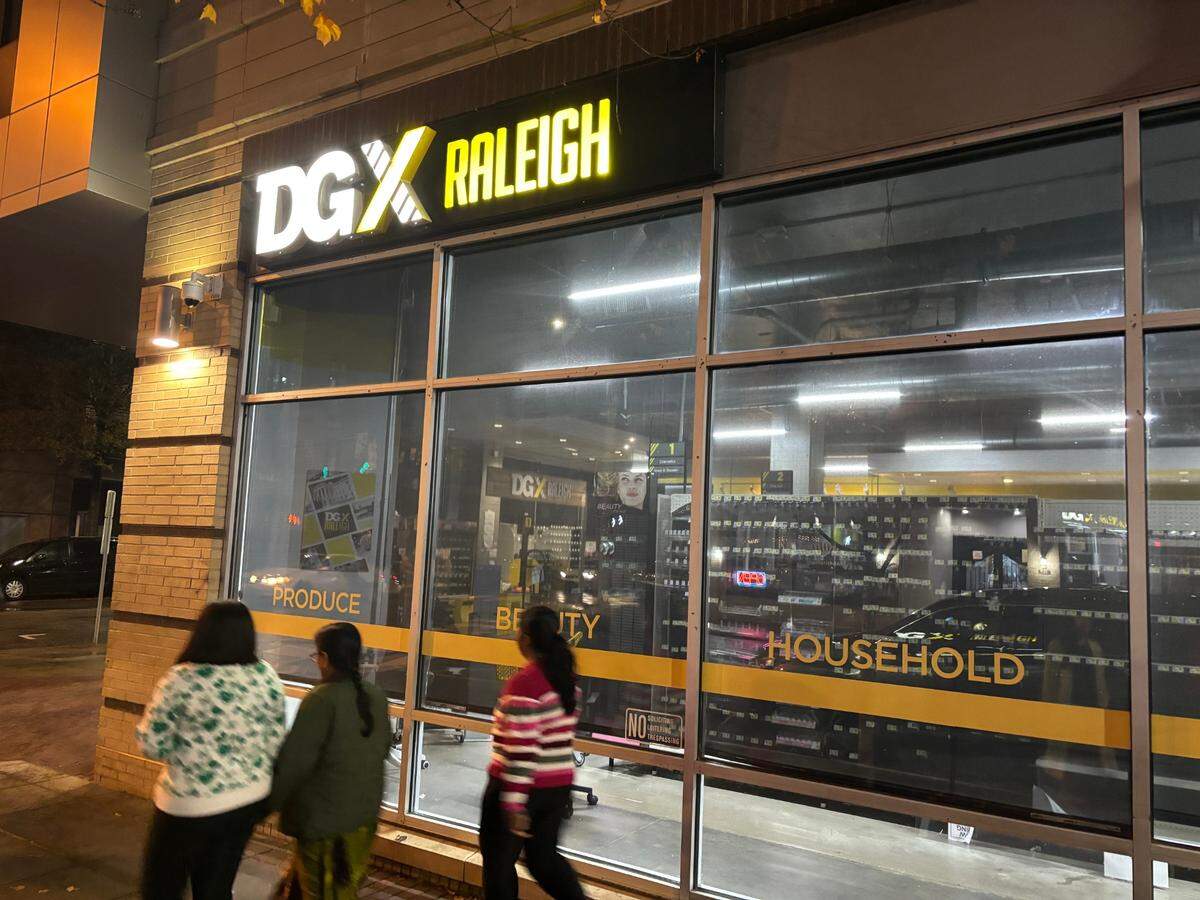
Subtracting from its growth, however, is the empty former Dollar General storefront in the center of Raleigh. In December, the company shuttered its only downtown Raleigh location, a DGX, as part of a “real estate portfolio optimization review” that closed 96 stores nationwide.
“(The closures) were predominantly in urban and metro settings where it has become very, very difficult to run a profitable store for a lot of different reasons that obviously have been out in the news for many years,” Dollar General CEO Todd Vasos told investors during a March 13 earnings call.
Vasos did not elaborate on those reasons, but security and inventory theft have long been significant concerns at Dollar Generals. In July, the company agreed to pay the U.S. Department of Labor a $12 million fine and implement stronger safety protocols following years of employee and customer complaints.
Expensive real estate and abundance of both brick-and-mortar and online sellers also contribute to low-margin discount stores struggling in cities said Mehmet Altug, director of the Center for Retail Transformation at George Mason University.
“Essentially, you have faced higher cost and less revenue potential,” he said. “The competition becomes more fierce.”
Dollar General combating falling profits
City blocks aren’t traditionally where Dollar Generals have proliferated. While Family Dollar and Dollar Tree, which are owned by the same Virginia-based parent company, focus on urban and suburban neighborhoods, Dollar General says that around 80% of its stores are in communities with fewer than 20,000 residents (Dollar Tree announced this week it is selling Family Dollar to a pair of private equity firms for around $1 billion.)
“A Dollar General is the kind of store you’re going to drive two to three miles for, not 10 miles,” Niswander said. “It’s not like a Costco that you’ll go for as a destination. They are for quick items.”
Fueling Dollar General’s spread in North Carolina is the state’s swelling population and large rural presence. Only Texas has more rural residents than North Carolina. And with average store footprints around 7,500 square feet, both land-use and construction costs are contained.
Yet, Dollar General has faced new headwinds. While it isn’t closing hundreds of stores like Dollar Tree and Family Dollar are in the process of doing, the company did record 30% lower annual profits, down from $2.4 billion to $1.7 billion. And its share price over the past 12 months has fallen 45%. Compared to two years ago, its stock is now close to a third lower.
Revenue keeps rising, but margins are tight. Dollar General defines its “core customer” as someone from a low and fixed-income household, a demographic its CEO predicted will face “continued economic pressure” in 2025.
Last May, the company released a statement titled “Back to Basics,” in which it outlined changes to its retail approach, including scaling back self-checkouts in order to lessen theft. Vasos told investors Dollar Generals anti-theft efforts, which in retail is known as shrink mitigation, will help offset any cost increases created by Trump Administration tariffs.
Competition from Walmart and its robust delivery network inspired Dollar General to recently introduce same-day delivery, which Vasos hopes to be available in 10,000 stores by the end of the year.
Local pushback and fines for price-scanning errors
The spread of Dollar Generals in small towns has also prompted local protests, from Transylvania County in Western North Carolina to Mount Airy to the tiny White Cross area in southern Orange County. Pushback has centered around the chain’s effect on public and employee safety, architectural aesthetics, and its competition with grocery chains and mom-and-pop shops.
In 2021, the city of Wilmington considered banning new discount variety stores from opening in “food deserts”, low-income neighborhoods that lack traditional grocery stores. Two years later, community opposition in Orange County helped narrowly defeat a proposed Dollar General in the White Cross community.
“Who wants a Dollar General store in their community?” said White Cross resident Lynne Jaffe. “This is a rural area, and there’s a lot of small businesses that serve in that location.”
Dollar General also routinely pays fines to the North Carolina Consumer Services’ Standards Division for “price-scanning errors,” where customers are charged more at the register than the listed prices display. In January, the state fined two Dollar Generals for overcharging on 14% of 50 purchased items. In early 2022, North Carolina fined the company for excessive price-scanning errors at 13 locations, with overcharge rates ranging from 6% to 24%. A few months later, Dollar General was found to have price-scanning errors at 15 locations in Central and Eastern North Carolina.
Family Dollar and Walmart have also been subjected to these types of state fines. But Dollar General has been accused of excessive price-scanner errors elsewhere too; in 2023, the chain settled a price discrepancy lawsuit from the Ohio attorney general for $1 million.”
“Dollar General is committed to providing customers with accurate prices on items purchased in our stores, and we are disappointed any time we fail to deliver on this commitment,” the company said in a statement to The News & Observer. “When a pricing discrepancy is identified, our store teams are empowered to correct the matter on the spot for our customers.”
Scanner errors are most prevalent when item costs quickly fluctuate, like during recent periods of rapid inflation, said Chad Parker, a manager at the North Carolina Consumer Services’ Standards Division, which is part of the state agriculture department.
“In my opinion, I wouldn’t say it’s malicious,” Parker said. “It’s just they’re not doing the job correctly. They’re not changing prices like they should be.”
Dollar Generals have multiplied in North Carolina since the Great Recession of the late 2000s, doubling from 467 locations in 2008 to over 1,110 today. The chain now faces more uncertainties than perhaps at any other time during this period. Falling stock. Thinning profits. A shift away from city locations. Local pushback. Tariff worries. Fines. Walmart competition.
But despite the unknowns, one thing about Dollar General seems likely this time next year: North Carolina will have more of them.
This story was originally published March 26, 2025 at 5:15 AM with the headline "Dollar General accelerated rapid NC opening pace last year, despite downtown Raleigh exit."