Doodle dilemma: New puppy store in downtown Raleigh opens, faces critics
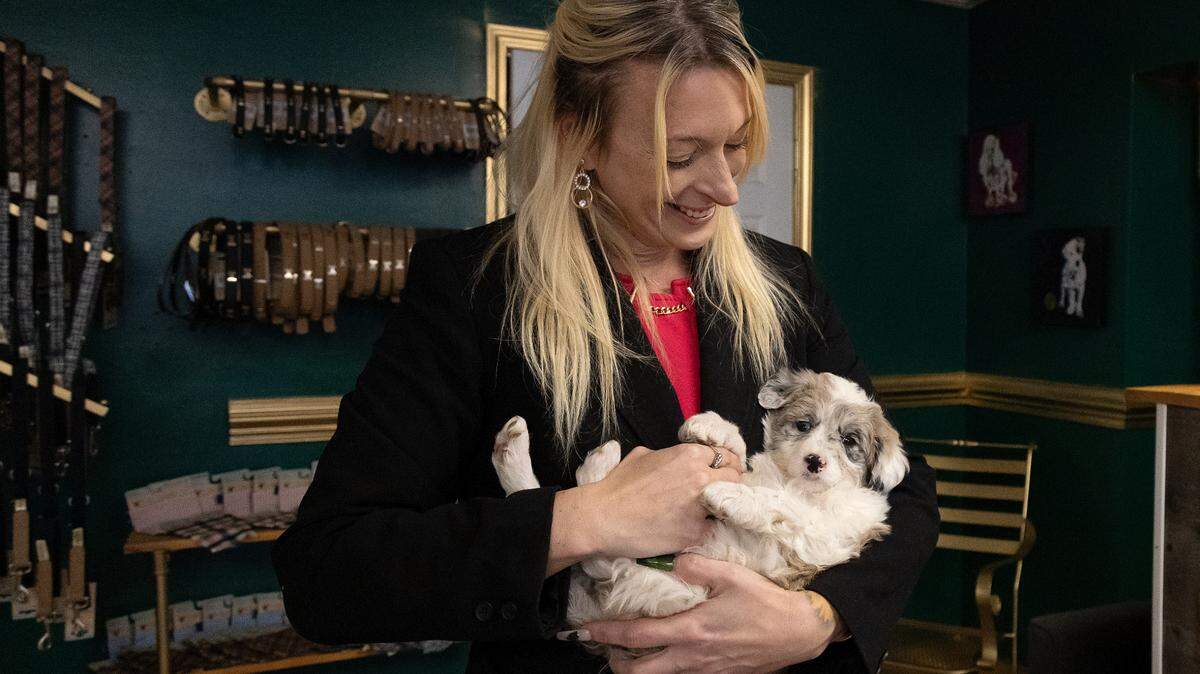
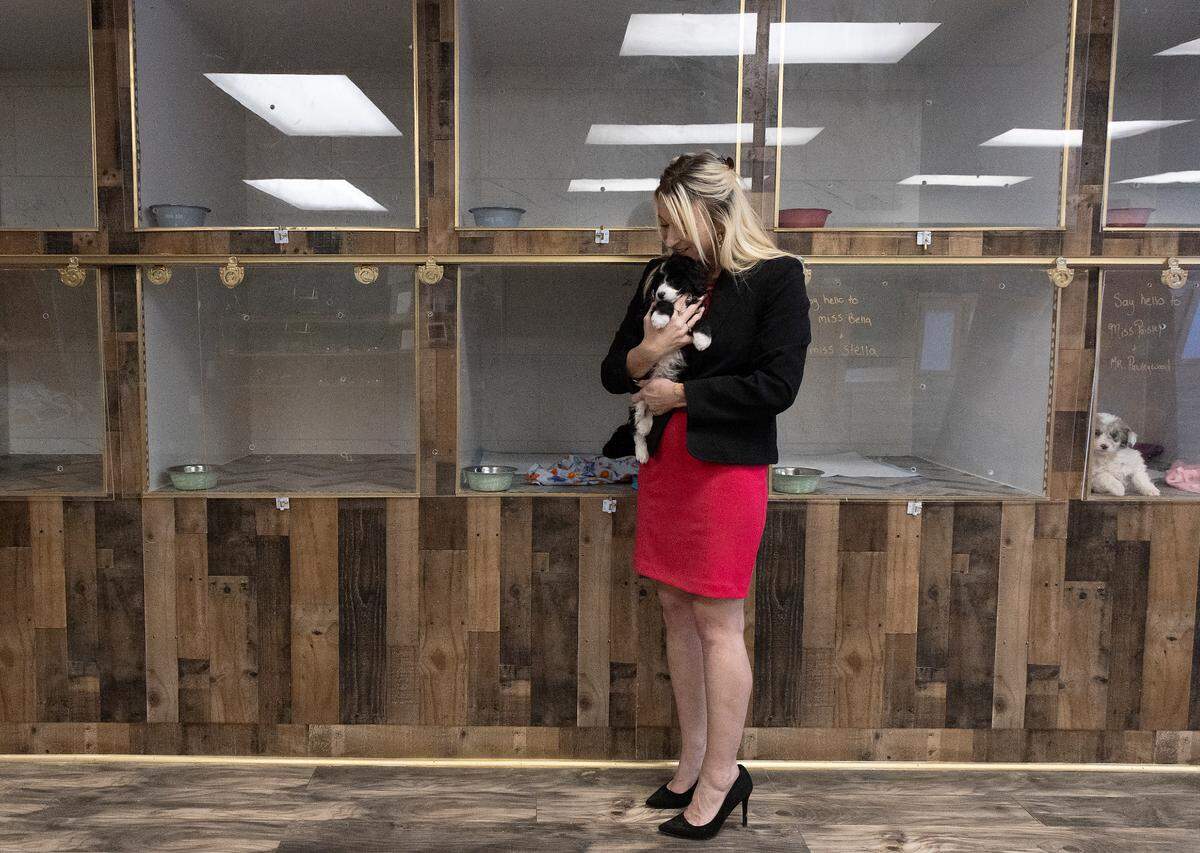
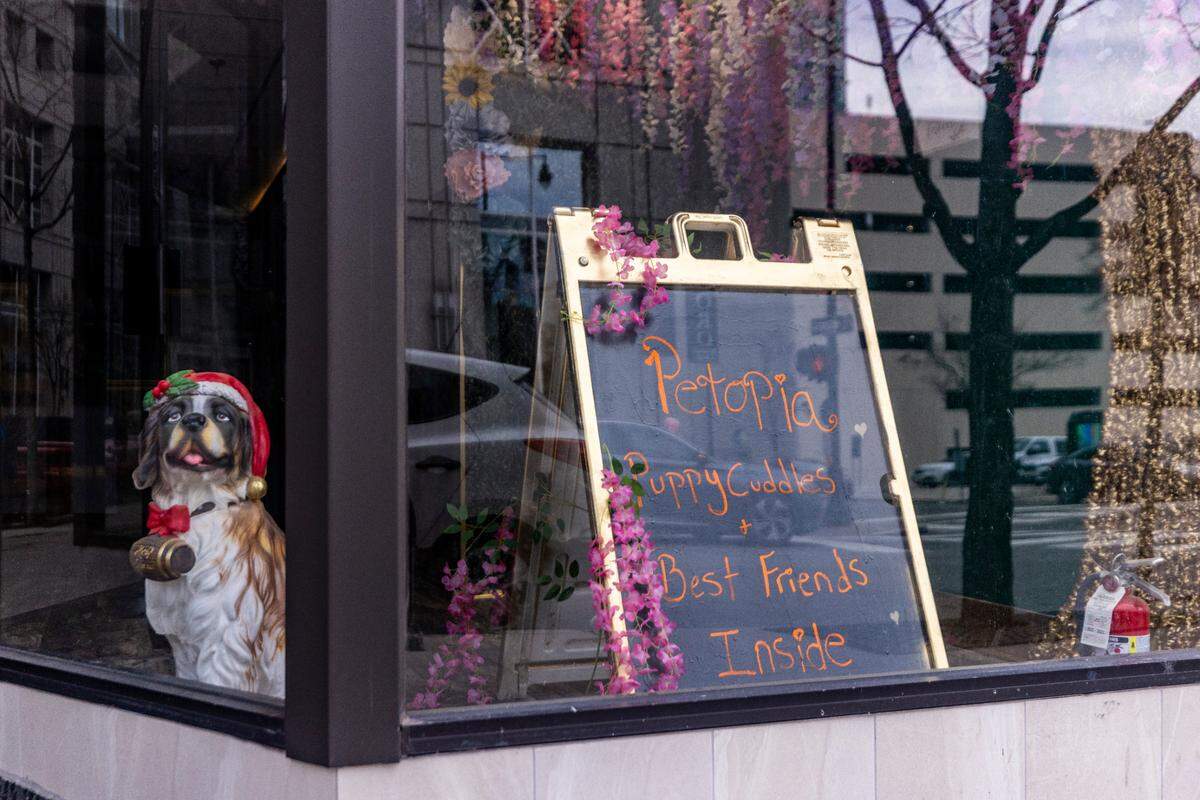
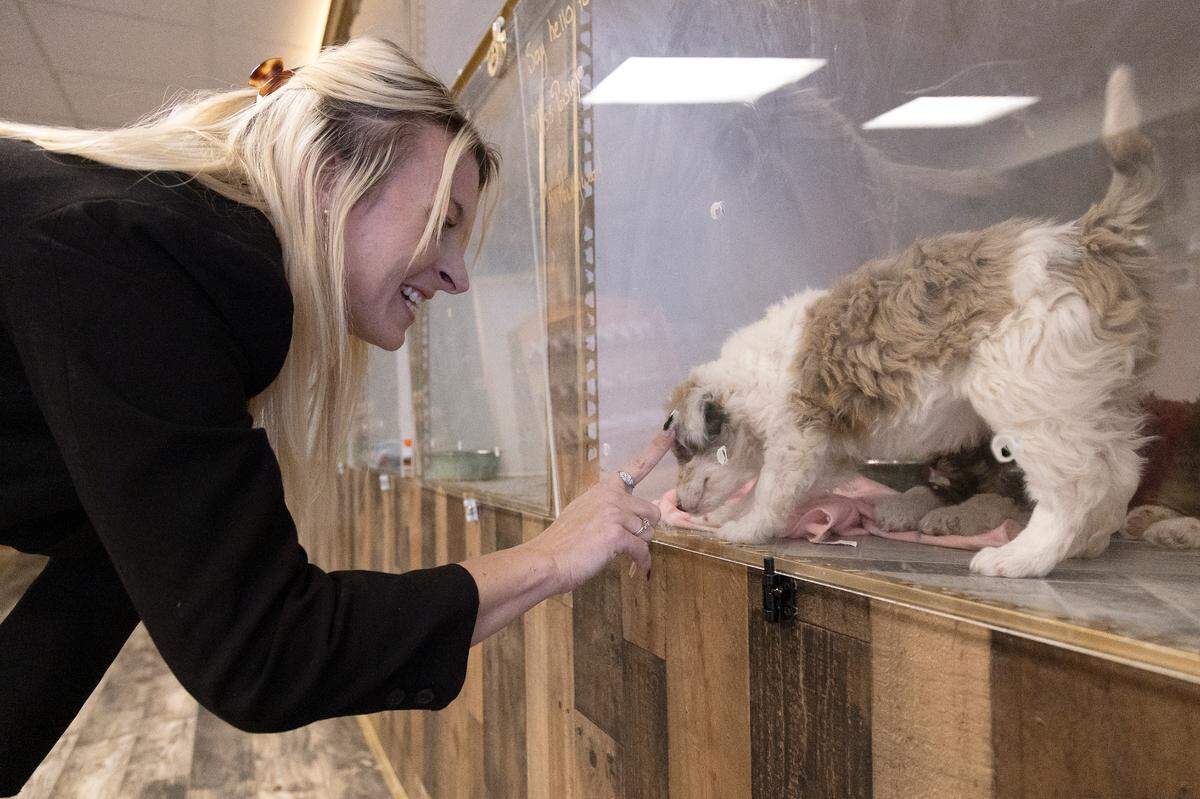
The newest business on Martin Street in downtown Raleigh opened this week with dog treats, leashes, shampoo and four puppies in plastic-windowed boxes in the wall.
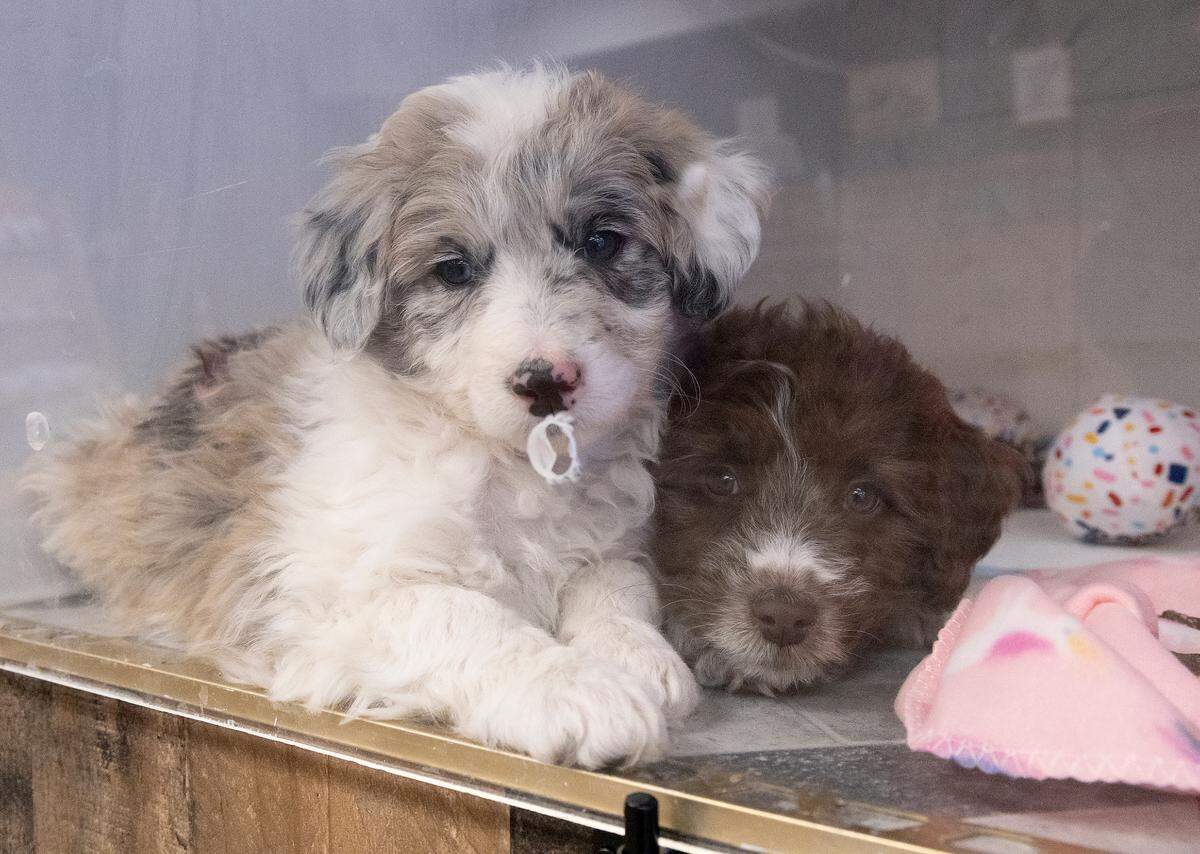
Each half poodle-half Australian shepherd — Aussiedoodle — on display was 8 weeks old. Each cost thousands of dollars.
Even before it opened, however, a petition, “Halt Petopia puppies from initiating a puppy mill in downtown Raleigh,” had collected over 15,000 signatures against the store.
Owner Jacklyn Barefoot, who’s also the breeder of the dogs for sale, saw the petition and said she was shocked by the resulting harassment and threats.
“I would have signed it,” she said in an interview with The News & Observer. “I mean the title was just [terrible]. But then you read into it and I’m like, ‘Oh, they are talking about me?’ None of this applies to me.”
‘Puppy doula’
Puppy mills are “inhumane high-volume dog breeding facilities that churn out puppies for profit,” according to the Humane Society of the United States. It estimates there are over 10,000 puppy mills in the United States resulting in 2.6 million puppies sold.
Barefoot says she’s not one of them.
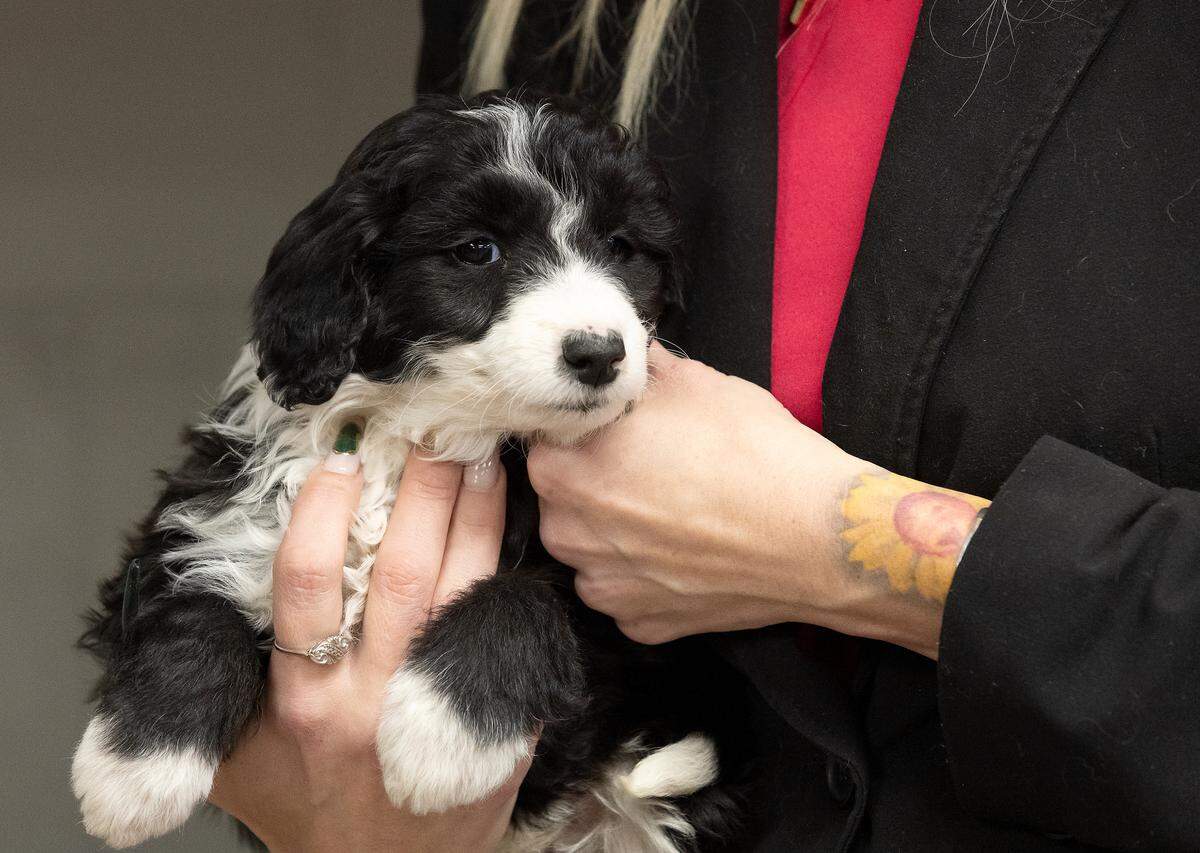
“I am, honestly, the definition of everything that’s not a puppy mill,” she said, cradling 8-week-old Paisley in the store on Tuesday.
“When I think puppy mills, I think of bad conditions for the puppies, bad conditions for mom, dad, like all of that,” Barefoot said. “I don’t think any love and affection actually goes into a puppy mill, which is primarily the difference that separates me and why I wanted to do something different.”
She breeds the puppies at her Four Oaks home, Barefoot Acres Farm, on about 10 acres in Johnston County. They range from $4,500 to $6,000, with financing available. She bases the price on each dog’s fur color and said her prices are lower than what some other Aussiedoodle breeders charge.
For comparison, purebred poodle puppies and Australian shepherd puppies available near the Triangle on the the American Kennel Club marketplace range in price from $1,000 to $2,500.
“Our puppies are born and raised in a no-kennel environment, surrounded by fields of grass with plenty of room to roam,” she wrote on Barefoot Acres’ Facebook page. “They are cared for with daily routines designed to prioritize their health, safety, and well-being.”
Her property is fenced, and the dogs have access to the indoors and outdoors, she said.
She has five adult female dogs and one adult male dog, resulting in one litter from each female a year, with puppies born about every season.
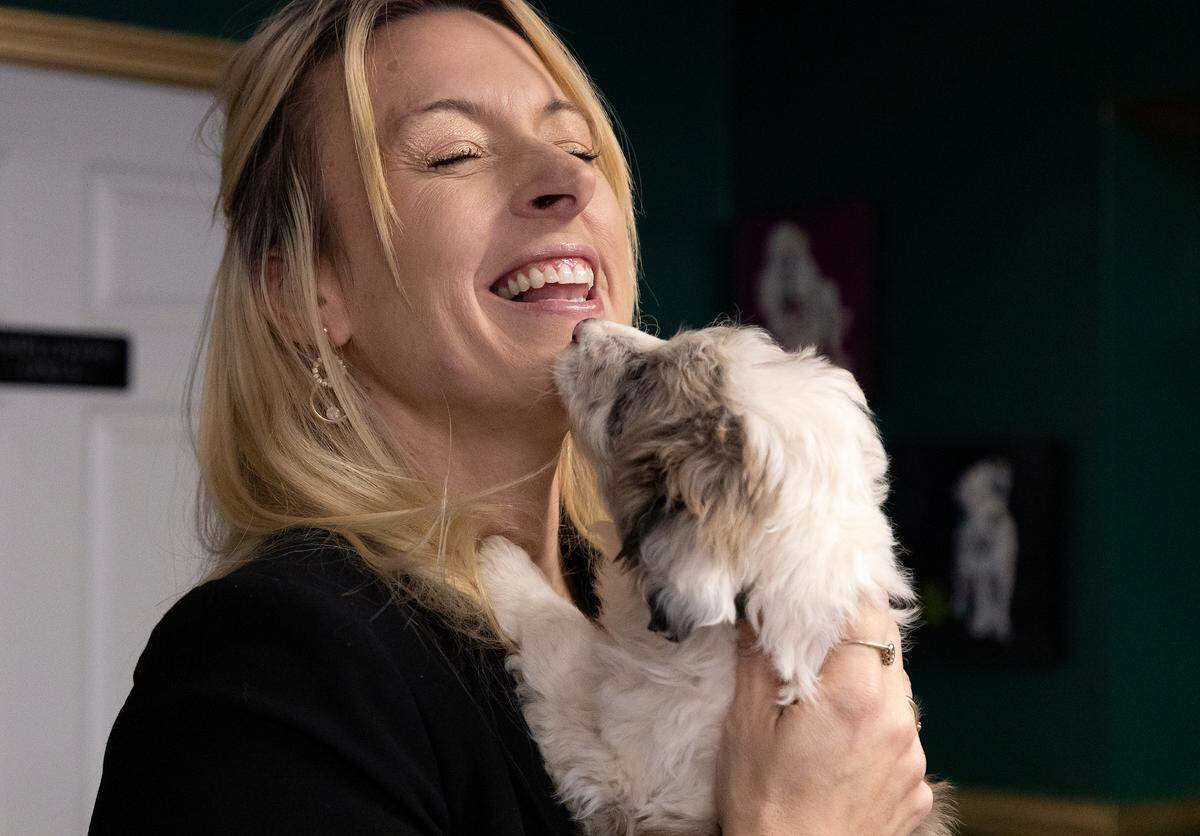
“Literally think of a puppy doula,” she said. “That’s what I am.”
She knows, she said, if one of her females needs to take a break one year or when she needs to retire an animal. One of her dogs, Dixie, will be retiring this year and staying at their home after having four litters.
‘Pets over profit’
Kara Woods, the veterinarian technician who started the petition, said she hasn’t spoken to Barefoot or visited the store. She said she’s learned a lot about breeders and how to spot “quality breeding versus not-so-quality breeding.”
“With your support, we can urge our legislators to ensure this ghastly operation never sees the light,” according to the petition. “It’s time to prioritise(sic) the lives of pets over profit, the time to adopt and not shop. Our collective voices can make a significant difference in preventing the unscrupulous trade of puppy lives.”
There are poodle breeders and Australian shepherd breeders who don’t agree with cross breeding the two dogs, Wood said, adding it can cause genetic anomalies and birth defects. In a follow-up, Wood mentioned hip dysplasia, progressive retinal atrophy and Von Willebrand’s Disease, a bleeding disorder.
However, Jennifer Federico, director of the Wake County Animal Center, said every dog is different and it’s hard to know if any mixed breed dog will have more or fewer health issues than a purebred dog.
A spokesperson for the N.C. State University College of Veterinary Medicine said the school could not provide an expert to speak on “the health concerns on mixed-breed dogs” because there isn’t much “definitive research” on it.
‘Dogs are healthy’
Johnston County Animal Services has been called to Barefoot’s property five times since 2019, records show.
There have been three welfare checks since 2023, after which Animal Services reported that all of the animals were healthy and taken care of.
“All dogs are healthy,” according to a 2023 report. “All dogs have water, shade, large doghouses with heat and electricity.”
In 2019, Animal Services investigated a reported dog bite. The documents state that Barefoot was bitten by an Australian shepherd named Gypsy.
“Ms. Barefoot stated that her dog bit her over a month ago,” according to the report. “She said a few days after it got hit by a car and died.”
The News & Observer confirmed with Animal Services that “the dog was hit by a car a few days after the bite.”
But Barefoot said that’s not what happened.
“A UPS driver sped down our long driveway, ultimately running over our very sweet and precious dog,” she said. “It was very devastating for our family.”
Barefoot initially said no one had ever been bitten at the property. Then she said she was bitten after the dog was hit by the vehicle while she was trying to ease her pain.
“She didn’t immediately die,” Barefoot said. “She got trapped underneath the thing. It was very devastating. And, you know, she’s a part of our family. We raised her since she was a puppy and it was very bad. She was in a lot of pain, and I pulled her aside to try and console and help her, and she bit my hand in the process. But I didn’t think it [was] anything. I had honestly forgotten about it.”
The family added a gate and drop box to prevent something like that from happening again, she said.
‘No consistency’
Doodle mixes are starting to enter already overcrowded shelters, and people are attracted to them because of their looks and size, Federico said.
“That makes them popular,” Federico said. “But they are a mixed breed dog. There is no consistency in behavior. There’s no consistency in genetics. There’s no consistency because they’re not a legitimate purebred dog.”
Quality breeders will show buyers a litter’s parents and genetic lines and usually have one litter a year, she said.
She’s never seen a store that sells puppies from a breeder in an ethical way.
“Most breeders aren’t going to be taking their young puppies and schlepping them back and forth to a store to have random people coming in and visiting and petting them all day and exposing them to fill in the blank. I’ve never seen it,” she said. “It doesn’t mean it doesn’t happen. But I’ve never seen it.”
‘Care and compassion’
Barefoot acknowledges “some will not like what we do no matter how amazing and different we are.”
“At Petopia, we truly understand your concerns because they are the same ones that motivated me to start this journey over a decade ago,” she said on Facebook. “Like many of you, I wanted a safe, loving, and transparent way to find a healthy, happy furry companion — one raised with care and compassion from the very beginning.”
People used to be able to visit her house to see the puppies’ parents, Barefoot said in the interview, but she’s not allowing it anymore because of the “threats and nastiness of social media.” She said she is happy to FaceTime or video people who want to see the dogs.
Petopia is an allowed business under the city’s downtown zoning because selling puppies is a type of retail, according to Patrick Young, the city’s planning director. And animals may stay overnight as long as it’s not the store’s primary use. Barefoot said the puppies return home with her each night.
Shelter partnerships
Ideally, Barefoot said, she’d like to work with local shelters to showcase puppies or smaller dogs at her store.
“And then have a larger, possibly senior dog that we can have just here in the store that’s available for adoption,” she said.
She declined to say which shelters she has or intends to work with because the shelters “caught a ton of backlash from the community.”
Federico said the Wake animal center is not partnering with Barefoot. Federico was informed by concerned residents that Barefoot was in the process of adopting an animal from the shelter in a since- deleted Facebook comment that implied the dog was going to be the first dog in a partnership.
“So we went ahead and canceled the adoption and said if she wanted to truly partner, she had to apply through our foster program to become a foster parent, or through our transfer program, to be a transfer partner, if she wants to be a 501c3,” Federico said. “And, as far as I know, I haven’t heard from her.”
In the comment, Barefoot wrote she was hoping the dog would be Petopia’s “first official foster from a local high kill shelter looking for his forever home.”
The Wake County Animal Center has nearly reached capacity at its shelter and has issued multiple pleas in recent years to community members to adopt to avoid having to euthanize adoptable animals due to lack of space. The center has not euthanized animals for space for eight years.
Barefoot confirmed her adoption of a dog was denied and that they were not “able to address the issue before activists put their nasty twist on a great thing.”
Her intention, she said, was to help the dog get adopted as soon as possible and she wasn’t planning to add “any additional fees for our services, food, care.”
The News & Observer’s Inside Look takes readers behind the scenes to illuminate the people and places in our community.
This story was originally published January 17, 2025 at 8:48 AM with the headline "Doodle dilemma: New puppy store in downtown Raleigh opens, faces critics."