What are the in-office work rules entering 2025? We asked 10 major Triangle companies.

This summer, Pendo told employees to spend more time at its downtown Raleigh tower.
While coming in Tuesdays and Wednesdays would still be mandatory, staff at the local software company were told to pick a third day, at their individual discretion, to work in-person.
“Even if you are using Slack and using Zoom, the benefits of a drive-by conversation that you don’t have to schedule are enormous,” Patricia LaPaglia, Pendo’s global director of workspace and employee experience, said during a tour of the headquarters this month.
Nearing five years since COVID-19 toppled office routines, companies continue to weigh and adjust their in-person rules. Momentum is pointing back to pre-pandemic patterns, with some studies showing required office time ticked up this past year.
Entering 2025, these policies will affect work-life balance, talent recruitment, the economic health of downtowns, and real estate demand. A push by President-elect Donald Trump to return all federal employees to offices could also ripple across the country to North Carolina sites.
The News & Observer asked 10 large Triangle-area employers about their in-person office rules and the reasoning behind the policies. Here’s what they said:
Fidelity
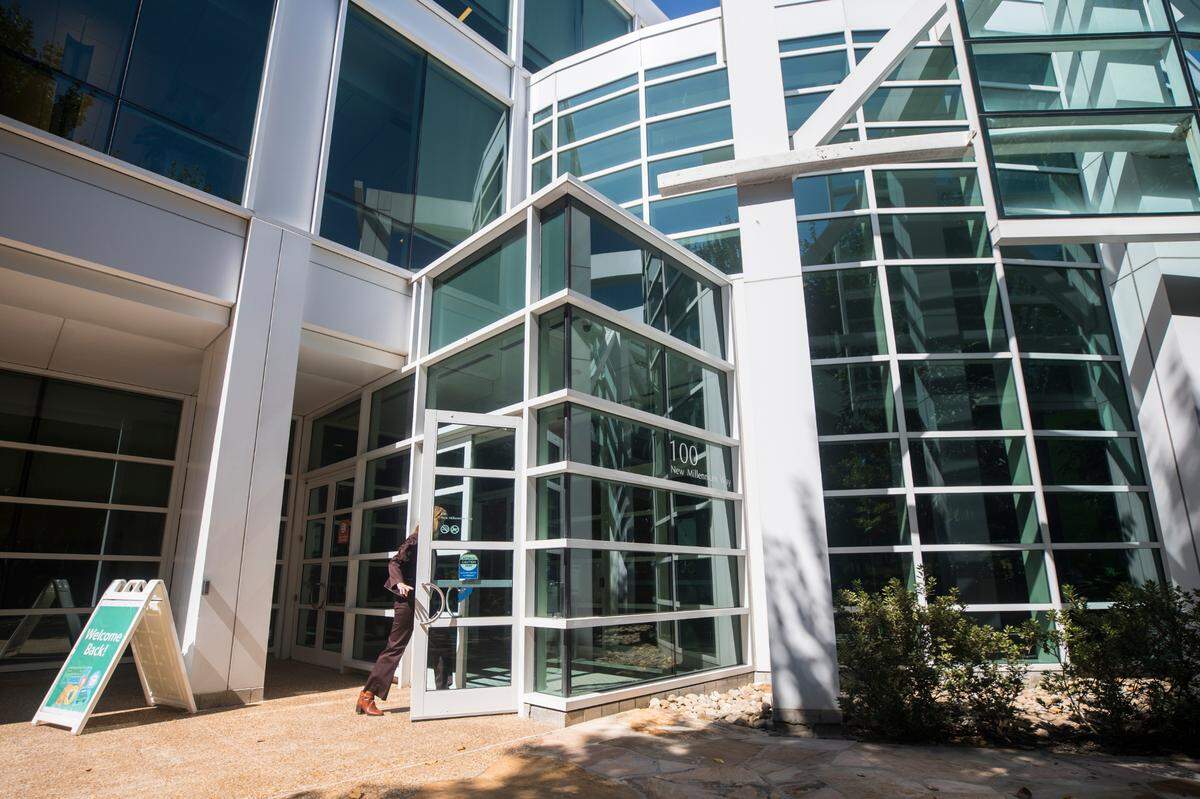
Fidelity Investments is the second-largest employer in Durham County, only behind Duke University. It might also be the Triangle’s fastest-growing major employer. The company has more than 8,000 employees in North Carolina, with most based at its Research Triangle Park campus.
In September, the company started to require workers be onsite for two weeks out of every four-week period.
“Fidelity’s hybrid working model blends the best of both onsite and offsite work experiences,” company spokesperson Aadil Shaikh said in an email. “It provides associates with the flexibility they enjoy working offsite while making the best use of time together onsite.”
Wells Fargo
In early 2024, Wells Fargo opted to vacate its 29-story tower in downtown Raleigh. With more employees working from home, the bank chose to shrink its real estate footprint and reassign staff at Raleigh Capitol Center to available workspaces elsewhere.
“This is a real estate consolidation,” Wells Fargo spokesperson Josh Dunn told The N&O last January. “We have more real estate than we need.”
Heading into the new year, Wells Fargo will maintain its existing remote work policy, which the company set in 2022. “Employees are expected to be in the office a minimum of three days a week,” Dunn said in an email, adding, “Most senior leaders and employees who work directly with customers are expected to work in the office four or five days a week.”
U.S. Environmental Protection Agency
Trump wants federal employees back in the office. This is easier said than done given existing deals between the federal government and its union. Still, this effort from the new president will be closely watched in the Triangle, where the U.S. Environmental Protection Agency operates its biggest physical campus.
The agency doesn’t have a specific RTP campus policy. Nationwide, it allows individual employees and their supervisors to determine telework, remote work or other arrangements.
“EPA is committed to delivering vital public health and environmental protections for the American people,” the agency told The N&O in a statement. “In-person time, as well as the right level of flexibility, are important to ensure that we are able to meet our mission and support our workforce. We are equally committed to our partnership with our unions and our obligations under our union current contracts.”
.jpg "IMG_5455 (1).jpg")
Cisco
The California tech giant Cisco announced two rounds of layoffs in 2024. But its remote work policy at its RTP campus didn’t change.
“As a people-first company, Cisco believes the office should be a magnet, not a mandate, and does not enforce a company-wide return-to-office policy,” company spokesperson Jimin Lee-Bui said in an email. “As we had done even before the Covid pandemic, we continue to offer flexibility to our workforce, trusting employees globally to make the decision for themselves in how and where they want to work.”
N.C. Commerce Department data shows Cisco is the fourth-largest employer in Durham County. It opened its RTP campus in the 1990s.
Red Hat
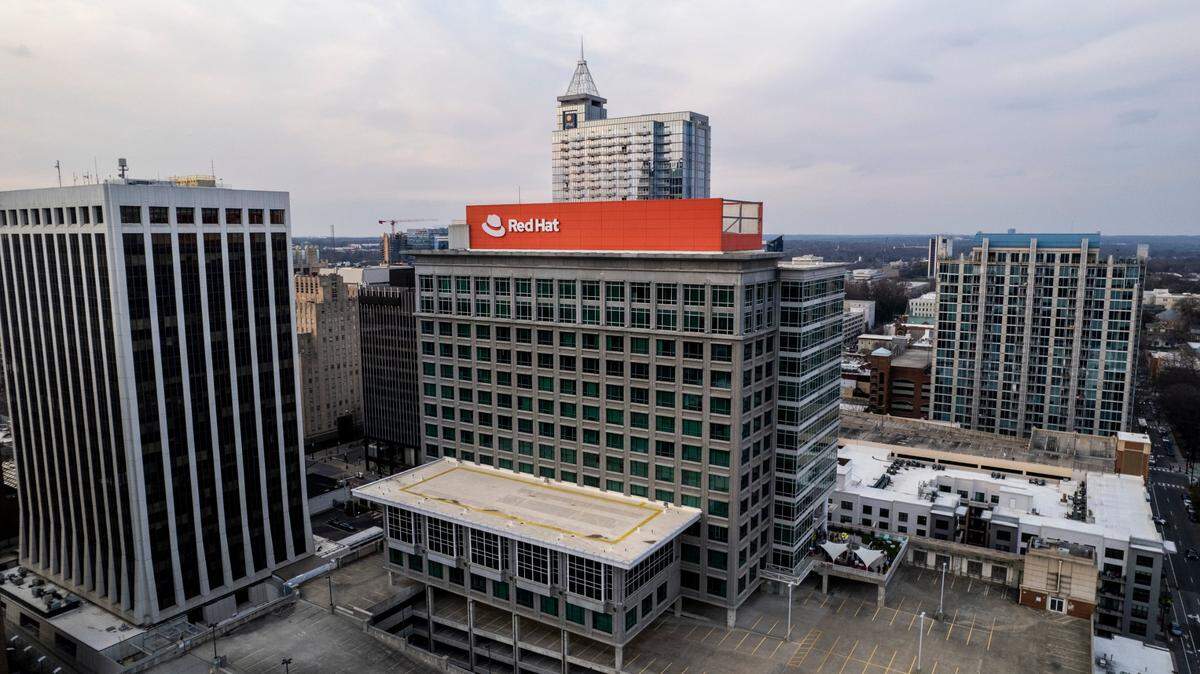
Red Hat is headquartered in downtown Raleigh, but the open source software provider doesn’t require employees to be at its tower. Since 2022, the company has maintained an “office-flex” policy that allows workers to come in as much or as little as they decide.
“We’re still embracing “office-flex” for many of our associates and focusing on intentional in-office engagements, especially for our leaders,” Red Hat spokesperson Allison Showalter said in an email. “There is no corporate in-person policy.”
RTI International
“We provide staff with the flexibility to work where and when they are most productive with resident, hybrid or telework options,” said Bucky Fairfax, chief human resources officer at RTI International, an RTP nonprofit that provides consulting and research expertise.
RTI International set its in-person policy in August 2023. For Triangle-based workers who elect to be “residents” — as opposed to hybrid or teleworkers — the expectation is for them to work at the company’s headquarters an average of 3 days per week.
“Given the nature of some of our work, we have numerous staff in RTP such as engineers, laboratory scientists, facilities, and security whose work must be conducted onsite,” Fairfax said in an email.
SAS
The Cary analytics provider SAS Institute, one of the longest-operating technology companies in the Triangle, hasn’t altered its work policy.
“Since the pandemic, we have remained committed to flexibility in the workplace,” SAS spokesperson Shannon Heath said in an email. “Employees can choose their work arrangement (Full-time Remote or Hybrid) as long as the job function doesn’t require them to be in the office to perform their duties.”
MetLife and Lenovo
At its global technology campus in Cary, the insurance and employee benefits provider MetLife expects its roughly 2,600 employees to work in-person at least three days a week.
Since late 2022, Lenovo has maintained a similar “3:2” model for its U.S. workforce, which includes several thousand at the company’s North American headquarters in Morrisville.
This story was originally published December 31, 2024 at 5:00 AM with the headline "What are the in-office work rules entering 2025? We asked 10 major Triangle companies.."