Your Amtrak train’s late again? North Carolina’s hot weather could be to blame
Charlotte’s hot summer isn’t just causing you to overheat. It’s impacting the Amtrak trains you ride, too, contributing to them arriving late across North Carolina.
Amtrak issued an alert on July 15, for example, that high temperatures between noon and 6 p.m. could require its trains to operate at lower speeds, resulting in delays of up to an hour. The temperature in Charlotte that day hit 92 degrees, and the delay impacted routes into and out of the city throughout the week.
Such delays continued through July.
Weather-related delays on the Piedmont train, which runs eight times daily between Charlotte and Raleigh, nearly tripled from the second quarter of 2022 to the second quarter of 2024, federal data show.
A third of all Amtrak’s weather delays last year were heat-related, according to Amtrak spokeswoman Olivia Irvin.
And in the second quarter of this year, Piedmont trains were delayed by weather for over 11 hours. When a train is delayed by weather, that means trains behind it often get delayed too.
Another popular train in the area is the Carolinian, which travels daily from New York to Charlotte.
It was delayed by 1 1/2 hours July 16 due to, among other factors, heat-related slow orders — orders put in place to operate trains at reduced speeds when train tracks are too hot.
Just like the heat, train delays could stick around for the rest of August. Heat and climate-related delays have been a worsening problem for the nation’s railroad passenger corporation.
Amtrak experienced more than 450 weather disruptions nationally between 2006 through 2019, resulting in lost ridership of 1.3 million customers and over $127 million in lost revenue, according to Amtrak’s 2022 climate vulnerability assessment report.
The report predicts these disruptions will become more severe and frequent over the next decade. It projects $220 million in losses in the coming decade due to weather disruptions.
Amtrak declined to say or provide data indicating how many delays were heat-related this year.
The Federal Railroad Administration’s quarterly delay data tracks all weather-related delays together, making it difficult to track how many were related to heat. It also tracks 38 other types of delays as well, such as detours, engine failure, maintenance and late crew members.
Why heat-related Amtrak delays happen
CSX and Norfolk Southern operate the tracks Amtrak trains run on between Charlotte and Raleigh. This means Amtrak trains must adhere to speed restrictions put in place by CSX and Norfolk Southern on these track sections, according to Kimberly Woods, an Amtrak spokeswoman.
Heat causes railroad tracks to expand, and cold causes them to contract, said Warren Flatau, a Federal Railroad Administration spokesman.
When tracks are constructed, workers lay them at a temperature referred to as rail-neutral temperature, which is about halfway between the hottest and coldest the tracks are likely to ever get. That provides the most room for temperatures to fluctuate and not force a dangerous expansion or contraction of the rails.
CSX declined to say or estimate the hottest temperatures rails could reach in the Charlotte area. Norfolk Southern said they could reach temperatures above 140 degrees Fahrenheit. Tracks in the Charlotte area can reach a maximum temperature of about 145 degrees Fahrenheit, according to Ravi Amin, a UNC Charlotte graduate and chief track engineer at engineering consultant firm Gannett Fleming in Virginia.
When the tracks reach about 95% of that maximum temperature, approximately 138 degrees in Charlotte, Amin said, that’s when railroad track operators typically start to slow their trains as a safety precaution.
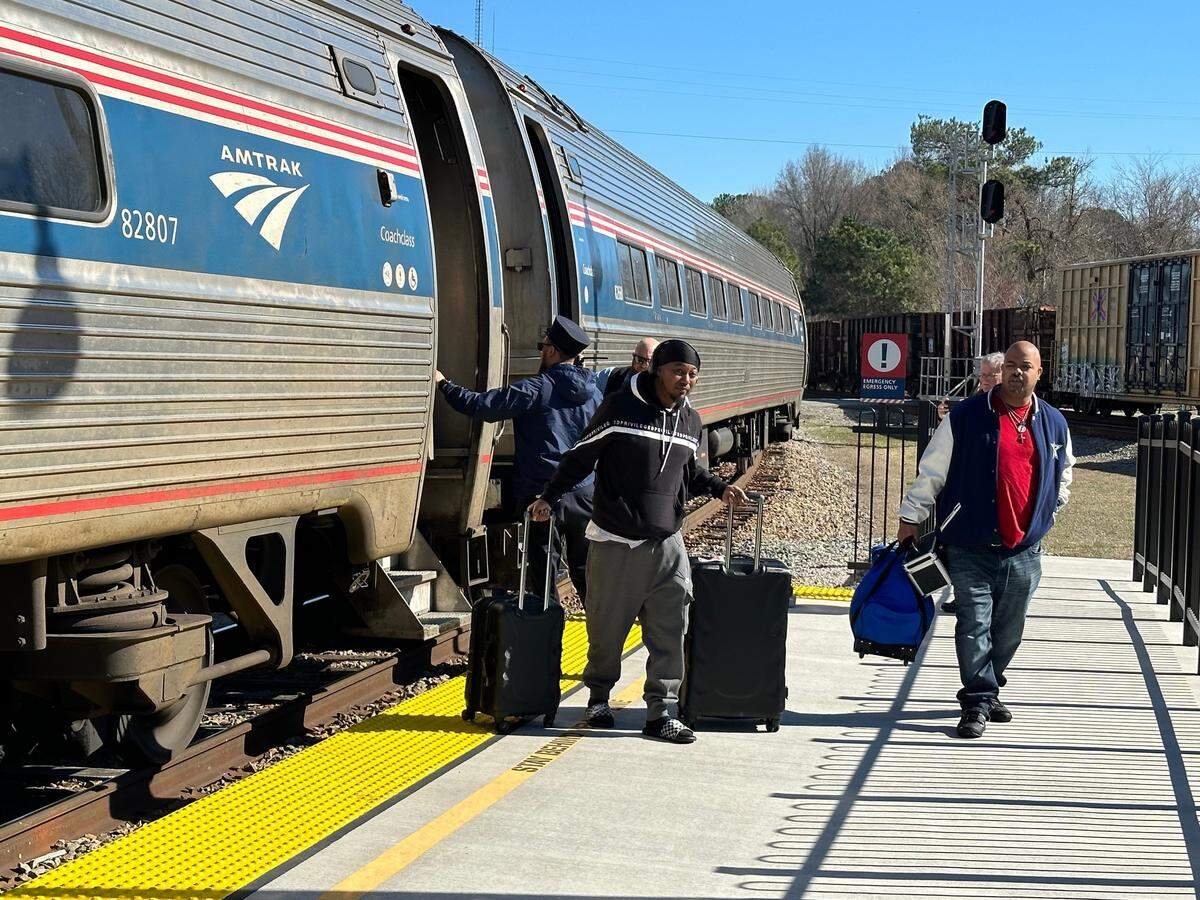
What this means for your travel
The maximum speed Amtrak trains can travel between Raleigh and Charlotte is 79 mph, said Jamie Kritzer, an N.C. Department of Transportation spokesman.
Train speeds drop to 59 mph on CSX’s portion of the track between Raleigh and Cary under heat-related slow orders. However, train speeds can drop to 25 mph on Norfolk Southern’s section of the track between Cary and Charlotte, according to Heather Garcia, a Norfolk Southern spokeswoman.
This speed reduction can result in delays of up to 60 minutes, according to Amtrak.
What’s more, delays of any kind can cause a ripple effect on trains scheduled later in the day, Flatau said. For example, if the first train from Raleigh to Charlotte is delayed by 30 minutes, this could put the second train, and any other trains after it, also behind schedule.
How delays protect riders
When tracks expand due to heat, they can buckle out of alignment, Flatau said. Misaligned railroad tracks can cause trains to derail.
Heat-related slow orders protect passengers by giving track crews more time to monitor track conditions, according to Flatau. This extra time allows crews to notify trains to stop if conditions ahead aren’t safe.
But since sometimes it’s impossible to avoid a rail buckling when it’s hot, it makes sense for Amtrak to slows down its trains to avoid a derailment or minimize the impact of a derailment, Amin said.
“With any weather-related event, safety is always our top priority,” said Austin Staton, CSX spokesman. “Our goal is to keep communities and employees safe and ensure our trains are moving with minimal delays.”
Database editor Gavin Off contributed to this report
NC Reality Check reflects the Charlotte Observer’s commitment to holding those in power to account, shining a light on public issues that affect our local readers and illuminating the stories that set the Charlotte area and North Carolina apart. Have a suggestion for a future story? Email realitycheck@charlotteobserver.com
This story was originally published August 20, 2024 at 5:00 AM with the headline "Your Amtrak train’s late again? North Carolina’s hot weather could be to blame."