Raleigh’s Bandwidth saw its stock fall 27% on Thursday. Here’s what spooked investors.
Bandwidth, a Raleigh tech firm that makes communications software, lost more than a quarter of its value Thursday as investors reacted to the company’s underwhelming earnings forecast.
Founded in 1999 by Henry Kaestner and current CEO David Morken, Bandwidth has roughly 800 employees based in the North Carolina Research Triangle. Its network extends to more than 60 countries where Bandwidth software enables voice, text messaging and emergency services communications.
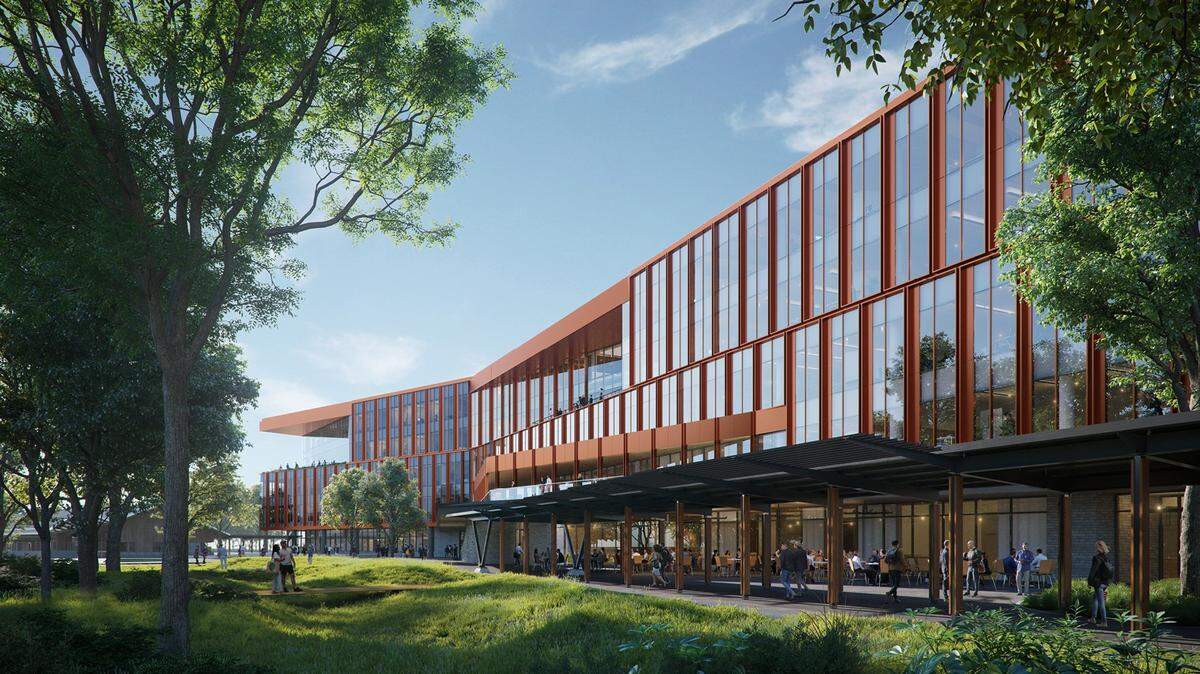
As it plans to relocate to an ambitious new office complex in west Raleigh, Bandwidth seeks to regain its momentum.
In April 2020, the state offered the company an incentive package worth up to $32.2 million to create 1,165 jobs. A few months later, Bandwidth’s stock hit an all-time high of $193.03.
At the end of Thursday, a share was selling for $17.40.
Why are Bandwidth’s leaders still optimistic about the future? Why exactly did its stock plunge Thursday? And why is Bandwidth’s staff turnover high?
The News & Observer spoke to the company, and dove into its latest financial filings, for answers.
1. Revenue projection sinks stock
By the end of Thursday, Bandwidth stock had fallen 27% from its previous day’s closing. Even though the company announced it had beaten its revenue expectations for the fourth quarter of 2022, its outlook for the current fiscal quarter — and beyond — appeared to give investors pause.
“While we expect weaker macro conditions in the near term, we’re optimistic about 2023 and beyond,” Bandwidth spokesperson David Doolittle told The N&O on Thursday.
Bandwidth anticipates generating around $133 million in revenue in the first quarter of this year, down from the $157 million the company generated over the same period last year.
For 2023, Bandwidth predicts it will make between $576 million and $584 million, a small bump from last year’s reported revenue of $573 million. From 2021 to 2022, Bandwidth’s revenue had jumped a more substantial 16%.
2. The stock has been sliding
Bandwidth’s drop on Wall Street is a setback for the company, which has seen its stock price on a downward trajectory since the first year of the COVID-19 pandemic.
On Oct. 13, 2020, a share of Bandwidth stock cost $193.08, a record for the company that went public in 2017.
Its subsequent fall mirrors the diminished valuations of other telecommunications firms like Zoom, RingCentral and the major Bandwidth competitor Twilio. Each is trading at a fraction of its pandemic-era peak, a time when virtual communications exploded as social distancing and remote workdays became universal across many industries. Some anticipated this dynamic would persist as the new normal.
But as pre-COVID work routines reemerge, investors have reset their lofty forecasts for how ubiquitous virtual business communications would be going forward.
3. Bandwidth execs: Eyeing the 2024 election
Despite its modest near-term outlook, Bandwidth officials spoke optimistically Thursday about the future.
Doolittle pointed out the company counts major firms like Cisco, Google, Microsoft and Amazon Web Services as clients, offering them “critical communications, which are less affected by the economy.”
He added that more companies worldwide are beginning to embrace cloud-based communications, which Bandwidth provides.
And while 2023 is an off-election year, executives anticipate the 2024 races will spark heavy usage of its software.
“We’ve become a go-to platform for campaigns at every level and for both parties to send out text messages,” Doolittle said.
4. A quarter of the company’s workforce is new
Bandwidth has seen significant staff turnover. At the end of 2022, around 25% of Bandwidth employees had been with the company for a year or less, according to its latest annual report.
“Since 2020, we have experienced and may continue to face higher than usual employee turnover rates,” the company stated in its 2022 annual report.
Bandwidth attributed this turnover to “the great resignation,” which it said impacted the technology industry broadly.
Since the summer of 2021, the company has also required U.S. employees to be in-person every workday, which some former and current employees criticized. If staff wished to work remotely or hybrid, the company recommended they find work elsewhere.
5. Massive new headquarters on the way
This summer, Bandwidth anticipates opening a 534,000-square-foot headquarters on Edwards Mill Road in west Raleigh.
The facility is set to include a school, amphitheater and athletic field. The complex more than triples the company’s current office space on North Carolina State University’s Centennial Campus, according to its annual filing.
“Our new headquarters is going to be a game-charger, because it’s going to bring all of our Raleigh employees under one roof to collaborate together, and (it’s going) to be a great space to for our customers and the community to engage,” Doolittle said.
In June 2021, Bandwidth purchased 40 acres in west Raleigh and sold 26 acres of this space to a third-party developer. The company currently leases its facilities.
This story was produced with financial support from a coalition of partners led by Innovate Raleigh as part of an independent journalism fellowship program. The N&O maintains full editorial control of the work.
This story was originally published February 24, 2023 at 5:30 AM with the headline "Raleigh’s Bandwidth saw its stock fall 27% on Thursday. Here’s what spooked investors.."