‘What now?’ Former workers confront a post-QVC future in Rocky Mount, NC
Sedriq Crandell didn’t think much of the fire alarm. After working at the QVC distribution center in Rocky Mount for the past four years, there had been plenty of prank alarms.
But the smell of smoke wafting in the air as he and hundreds of other workers filed out the facility told him this time was different.
Soon, flames burst through the roof of the building and small explosions could be heard from inside.
That is when people began to panic. Some climbed a barbed-wire fence that was preventing them from fleeing farther, ripping their clothes on the way over, he said.
“We didn’t know what was going to happen,” Crandell, 27, recalled in an interview at his home in Rocky Mount. “The fire was getting bigger and bigger and bigger. People started climbing (the fence), ripping up their clothes. My whole mindset was I hope this place doesn’t explode. That was when it became scary.”
The Dec. 18 fire at the QVC plant in Edgecombe County was devastating. The fire — complicated by water supply issues that disabled QVC’s sprinkler systems and fire pumps — destroyed more than 75% of the 1.5 million-square-foot distribution center and killed one worker, 21-year-old Kevon Ricks.
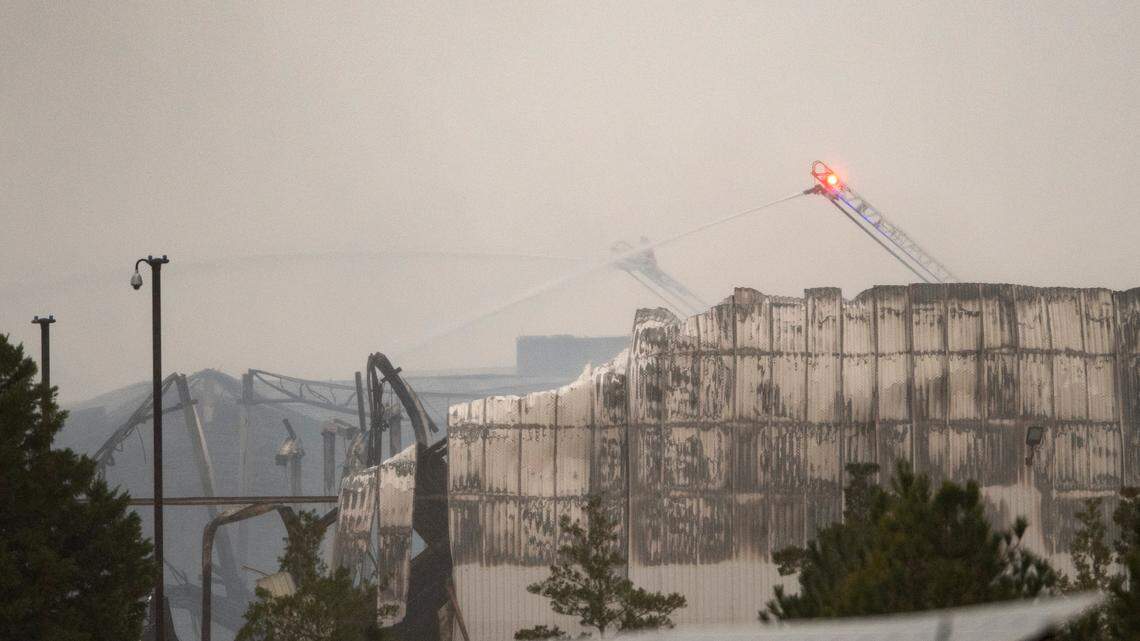
It also led to the elimination of 1,953 jobs, in a metropolitan area with the highest unemployment rate in the state, at 5%. The QVC distribution center was such a large employer that people traveled from more than 17 counties to work there, according to Norris Tolson, chief executive officer of the Carolinas Gateway Partnerships, an economic development agency in the Rocky Mount area.
QVC has not yet decided what the long-term future of the facility will be, and Tolson said his agency is having conversations with the company about reinvesting in the property. “We are hopeful,” he said.
But, for the foreseeable future, it will be out of commission. When a reporter drove by recently, security guards manned the entrance as bulldozers slowly tore down the remaining shell of the building. The cause of the fire has not been determined, and the Bureau of Alcohol, Tobacco, Firearms and Explosives is offering a cash reward for information.
A spokesperson for the company said in February that “QVC is still assessing the impact of the fire, and while we haven’t made any long-term decisions about the site, we already know the building will be closed for an extended period and there will not be work there for the team for the foreseeable future.”
In response to the fire, the company gave its workers a $500 bonus and extended pay and benefits up until last month.
On Monday, Gov. Roy Cooper’s office announced that the state received a $4 million federal workforce grant to help train and support workers displaced by the fire. The grant is expected to “intended to serve approximately 650 people living in a 10-county area,” Cooper’s office said in a release.

But workers like Crandell are left uncertain about the future. In the aftermath of the fire, Crandell, who raps under the name Ekid Knuck, wrote a song called “What Now?” In it, he ponders what will happen to the workers of QVC and asks for prayers. More than two months after the fire he is still wondering.
“What’s next?” Crandell, a father of two children under the age of 5, asked. “I’ve got kids to take care of.”
Rocky Mount response
Since the fire, the Rocky Mount region, a community of more than 145,000 people, has tried to answer those questions.
The QVC plant was built in Rocky Mount after Hurricane Floyd devastated the city in 1999. It continued to grow while many of the city’s largest employers, like the Hardee’s corporate office and Centura Bank, saw their presence decline in the 2000s. “It was a great catch for Rocky Mount at the time,” Tolson said.
When the fire happened late last year, the community responded quickly. More than $250,000 has been donated to assist workers who were laid off after the fire. The United Way of the Tar River Region set up a telephone line, at 211, to help connect workers to charities that could help pay for food and home bills.
Most QVC employees worked jobs that paid $25,000 to $35,000 annually, but included benefits, like health insurance and a 401(k).
“The community has really come together,” said state Rep. Shelly Willingham of Rocky Mount. “We are going to have a ripple-like effect from all of this … but it has brought people together.”
Locally, there is optimism about finding jobs for all of these workers.
Existing employers and the local community colleges have held job fairs and hired some former QVC workers, including 120 at McLane Co., a firm that distributes food to convenience stores and wholesale markets, the Rocky Mount Telegram reported.
The Rocky Mount region had been on the upswing before this fire, Tolson said. It had landed some critical investments at a new rail hub, the Carolina Connector. That hub, owned by railroad giant CSX, can move about 110,000 containers a year.
“That is going to create a lot of jobs in the coming years,” said Tolson, who noted more than 70 companies are considering expanding in the area.
The city’s location — almost smack in the middle of Interstate-95, between New York and Miami — has made it a popular destination for distribution outposts, including a Corning distribution center and the pharmaceutical giant Pfizer, which has become Rocky Mount’s largest employer.
Near downtown, Rocky Mount Mills, a redevelopment of an old cotton mill by Raleigh’s Capitol Broadcasting Co., is becoming a popular attraction for food and breweries — a replication of what Capitol did with the American Tobacco Campus in downtown Durham.
And in 2020, the state Division of Motor Vehicles moved its headquarters from Raleigh to Rocky Mount, which opened many local positions after some employees balked at the move.
“There are a lot of jobs around,” Willingham said. “I am optimistic.”
Yet even before the QVC fire, the Rocky Mount region has had a slower recovery from the pandemic than other parts of the state.
Employment in the Rocky Mount metro area is still 3% under pre-pandemic levels, according to Michael Walden, a professor emeritus of economics at N.C. State University and a longtime watcher of the state’s economy.
“Losing 2,000 jobs is a big blow to the regional economy, and the lost income will reverberate throughout the area and impact numerous other businesses and jobs,” he added in an email.
“The lack of job growth could easily lead to more local workers seeking jobs in nearby areas, particularly the fast-growing Greenville metropolitan area.”
Not looking to leave
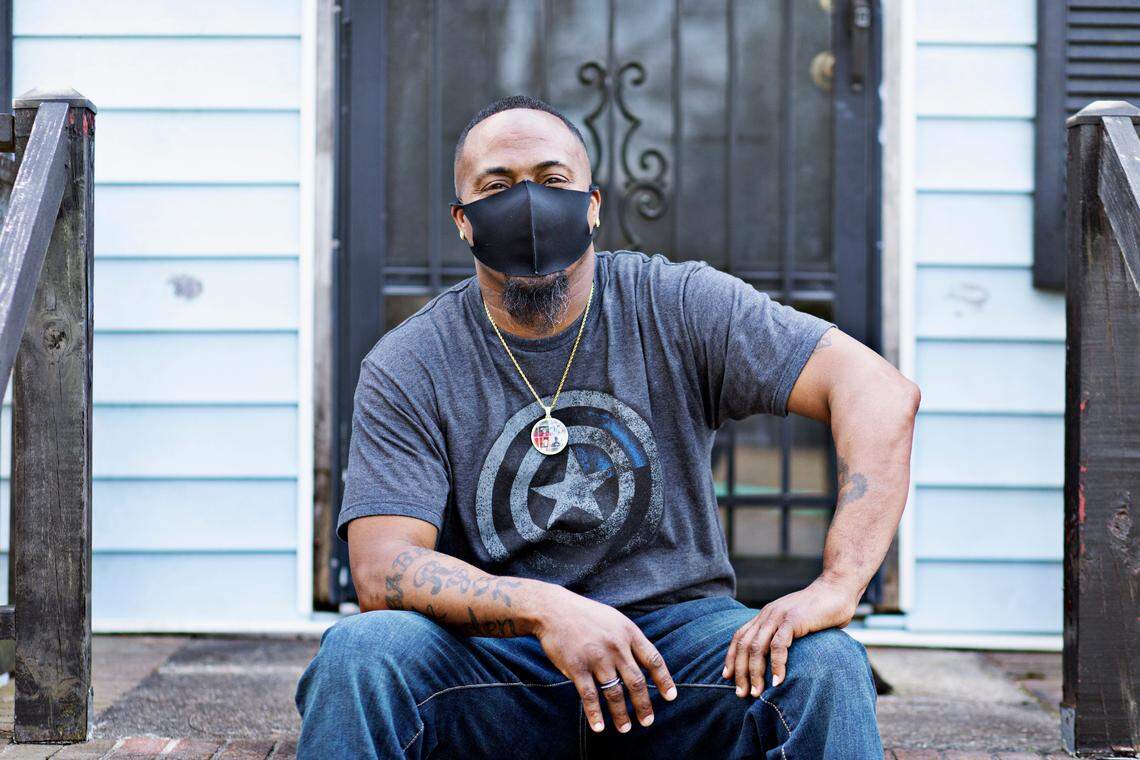
Corey Howington, a QVC forklift driver whom coworkers called “Uncle,” said he’s heard of several companies hiring former QVCers, such as Cummings, Pfizer and Bridgestone, which has a large presence in nearby Wilson.
But, at the moment, the 46-year-old Whitakers native is not interested in them or leaving the area. He hopes to use the QVC fire as an opportunity to open his own business: a barbershop.
“It’s something I have wanted to do for years, but every time I was about to do it, a job like QVC would come around,” he said.
The fire made him pause and reflect on what he wanted to do next. Plus, years of warehouse work has taken a toll on his knees.
“I have been cutting hair on the side since seventh grade,” he said. “I love it. It is art.”
Crandell, his coworker, said he isn’t looking to leave Rocky Mount either, since his son and daughter lives here.
But he said he’s not found many better opportunities than QVC.
“It is not like there aren’t a lot of options, but will the new jobs be able to pay as much? Or will (workers) be OK not getting as much?” he said. “You can get another job but it might be $10 an hour versus $20 an hour. On top of that QVC had benefits and 401(k).”
Crandell said he’s living off savings at the moment. But he noted: “There will come a day when I will have to get something.”
This story was produced with financial support from a coalition of partners led by Innovate Raleigh as part of an independent journalism fellowship program. The N&O maintains full editorial control of the work. Learn more; go to bit.ly/newsinnovate
This story was originally published March 14, 2022 at 6:00 AM with the headline "‘What now?’ Former workers confront a post-QVC future in Rocky Mount, NC."