Toyota to open multibillion-dollar, car battery plant in NC with thousands of jobs
Toyota will open a multibillion-dollar battery plant with at least 1,750 employees about an hour’s drive outside the Triangle, after North Carolina and Randolph County approved an incentive package Monday worth $438.7 million for the company — one of the largest manufacturing investments in the state’s history.
The Japanese automaker announced in October it would build a $1.29 billion facility in the United States to manufacture hybrid and electric vehicle batteries — a key component of the company’s plans to make 70% of its cars electric by the end of the decade.
The plant known as Toyota Battery Manufacturing, North Carolina will be built in Liberty, a small town in Randolph County that is home to the Greensboro-Randolph Megasite, one of the designated areas in North Carolina the state markets to potential large manufacturers.
Toyota will launch production in 2025 and expand operations by 2031. The site will produce 1.2 million battery packs per year, said Chris Reynolds, chief administrative officer of corporate resources for Toyota North America.
The state’s Economic Investment Committee approved the state’s incentive for Toyota — referred to internally as Project Darwin — at a special meeting in Raleigh on Monday.
“North Carolina’s economic story — from the Wright brothers first in flight to life-saving medicines at Research Triangle Park — we have been a state of firsts, partnering with industries to develop new ideas that really do change people’s lives,” Gov. Roy Cooper said Monday afternoon at a media event to announce the plant.
After announcing the battery plant, Cooper said, “We hope in the future, everything that goes around the battery will be a part of this, too.”
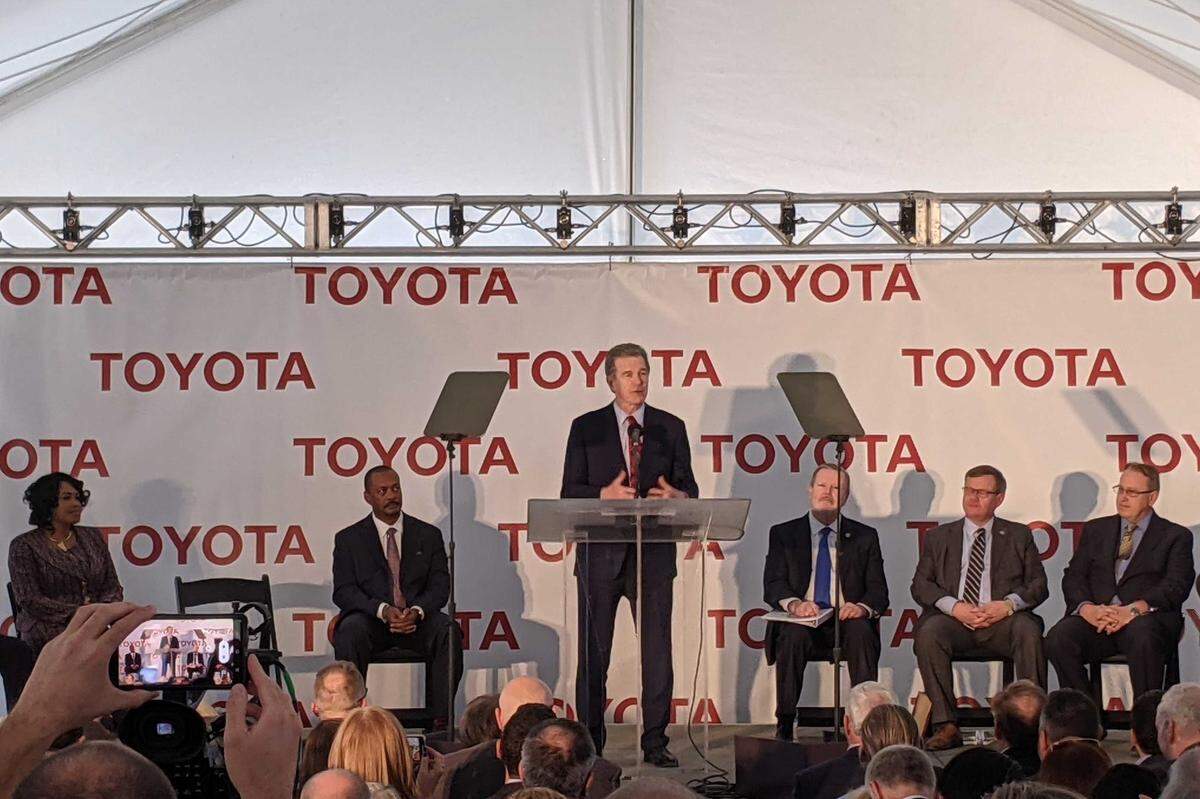
Reynolds did not have a timeline for when construction of the plant would begin but said it would be operational in 2025.
Toyota eventually will create 1,750 jobs into 2029, with the jobs paying a minimum average wage of $62,234, according to the state’s Commerce Department. That’s well over Randolph County’s overall average annual wage, which now is $37,865, according to a news release.
If Toyota meets hiring and investment goals, it will be in line for a Job Development Investment Grant worth $79.1 million over the next 20 years.
The company is also eligible for funds from the state’s community college system, the Department of Transportation and the Golden Leaf Foundation worth a combined $55 million. The new state budget appropriates $135 million to pay for site-preparation work in Randolph County.

In total, the state’s incentive offer will reach $271.4 million.
Randolph County will add another $167.3 million to the offer, according to the Commerce Department.
The new plant, about 35 miles west of Chapel Hill, could continue to expand. Reynolds, like Cooper, signaled a bigger Toyota investment in the future.
“This is only our first chapter in North Carolina,” Reynolds said. “The best is yet to come.”
Mark Poole, of the Commerce Department, said the state anticipates there will be a second phase of expansion at the battery plant in the 2030s, which could require a second round of incentives.
“The phase two commitments would not be considered until the company creates at least 3,875 jobs and invests at least $3 billion,” he said.
NC budget appropriation
The expansion comes three years after North Carolina narrowly missed out on a joint Toyota-Mazda manufacturing plant. Toyota, at the time, considered the same Randolph County megasite, but ultimately chose to build its plant in Alabama.
Poole said competition for the battery plant was intense, with Toyota considering sites in nine other states, all of which were prepared to offer cash incentives, land conveyances or tax abatements.
“A world-class company has taken notice of the way we do things,” said Machelle Sanders, North Carolina’s secretary of Commerce. “This company could have gone anywhere in the world, but they chose North Carolina.”
Toyota’s decision to build in North Carolina was facilitated by the state’s new budget, which appropriates $320 million for infrastructure and site development at Randolph’s 1,800-acre megasite.
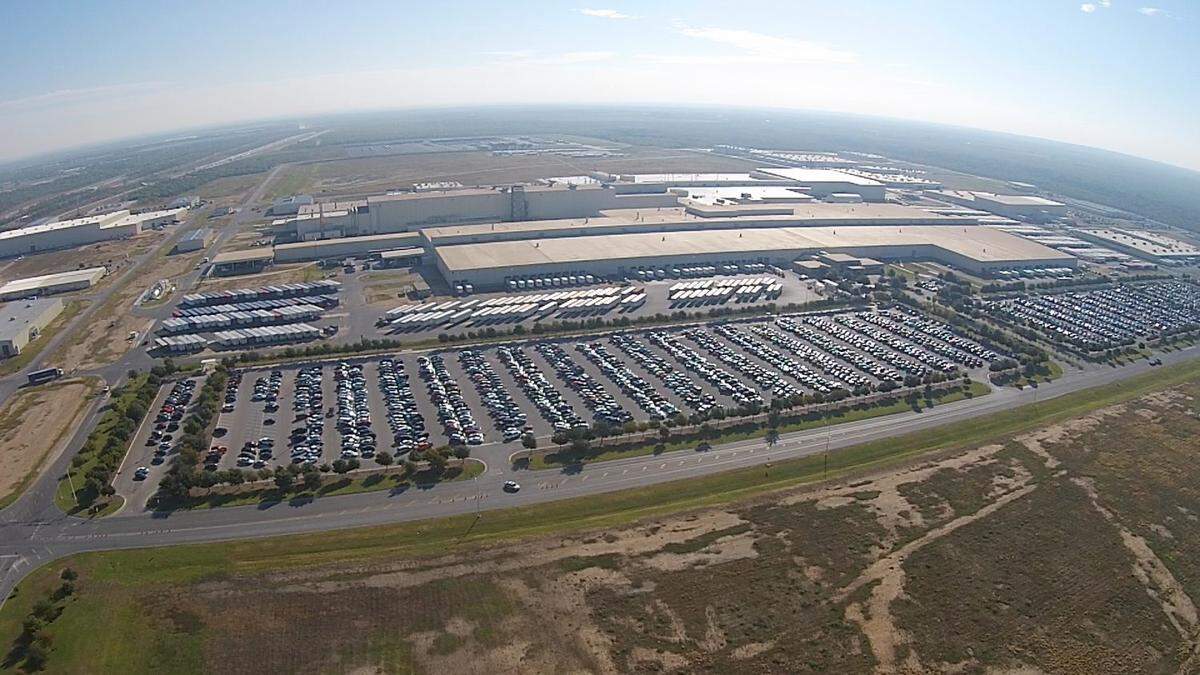
$135 million is allocated to the N.C. Dept. of Transportation for road improvements; another $185 million could be used for further site improvements, should Toyota agree to a second phase of expansion.
To secure state funds, Toyota had to commit at least $1 billion in investment. Over the next 10 years, though, the company could expand that to $3 billion, with about 3,875 jobs.
Electric vehicles account for nearly 25% of Toyota’s sales, according to a news release. The company plans to increase that to 70% by 2030, the release said.
“We’re not building this for just 2030, it’s a generational facility,” Reynolds said. “If you do the math of what we said we would build in phase one, and compare that to the number of electrified vehicles we intend to sell by 2030, and then imagine the number of electrified vehicles we’re going to sell going into 2040, you’ll get a sense of the potential scale of what might come next.”
Toyota’s commitment is “transformational,” and should attract other economic development opportunities for North Carolina, according to state Rep. Jon Hardister, a Republican from Greensboro.
“If you get a large manufacturer, not only is it a lot of jobs, but they are jobs that pay well,” he previously said in a telephone interview. “And when you have large manufacturers, you tend to have ancillary companies as well.”
The new battery manufacturing plant is likely to service Toyota’s several vehicle production facilities around the country in places such as Missouri, Kentucky, Indiana, Alabama and Texas.
This story was originally published December 6, 2021 at 11:00 AM with the headline "Toyota to open multibillion-dollar, car battery plant in NC with thousands of jobs."
CORRECTION: A previous version of this story incorrectly listed how much the state budget appropriated for the Toyota plant. It is approximately $320 million.