After a year of a pandemic and protests, Downtown Raleigh eyes a comeback
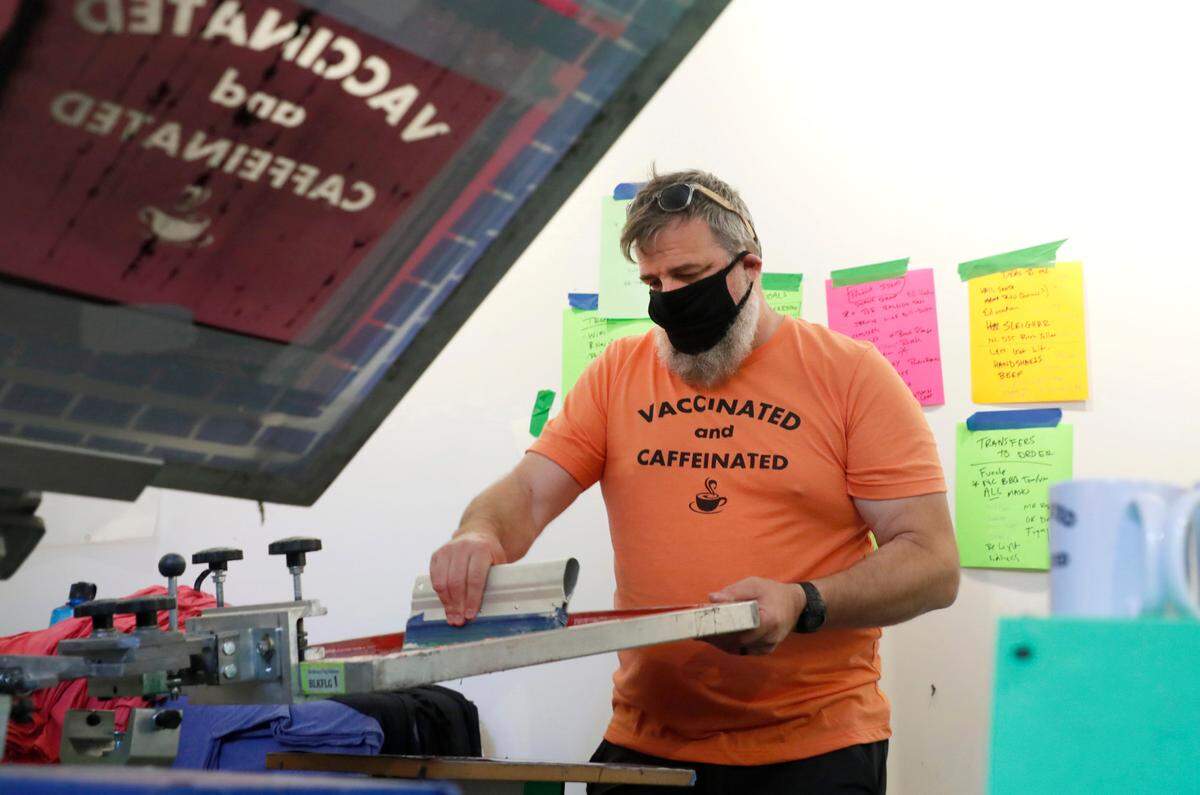
From Sunday until Tuesday, John Pugh doesn’t bother opening his downtown Raleigh clothing store, House of Swank. There are simply not enough people coming downtown to sustain a retail business every day of the week.
“I can’t justify it,” said Pugh, whose business has sold humorous North Carolina-themed T-shirts for the past decade.
But there hasn’t been much humor to find in the situation in downtown since March 2020, where many businesses have struggled or closed altogether.
The COVID-19 pandemic left offices empty and kept thousands of workers from buying lunches or shopping. Business travel slowed to a trickle, street festivals and concerts were canceled, and major conferences were placed on hold for months.
And a year ago, what initially started as a peaceful protest over the death of George Floyd turned destructive, leaving nearly 200 businesses damaged or looted. The protests — first on May 30, then again the next night — left the area on high alert, and businesses remained boarded up for months as nightly demonstrations continued into the summer.
“Hell, this year was stressful,” said Pugh. “We had to get custom boards made for our windows.”
Pugh, whose shop is on East Hargett Street, is one of the many business owners in downtown Raleigh who are cautiously waiting to see if the central part of the city recovers as vaccines become more easily accessible and coronavirus restrictions fall across the state.
But it’s still not clear when — or if — downtown will return to the heights of the past decade, when food and beverage sales in downtown broke records every year.
According to one survey from the Downtown Raleigh Alliance, 42% of employees in downtown are not working in their offices, though many have eyed June as a potential soft reopening.
While many business owners said they supported the Black Lives Matter cause behind the protests, even taking part in the peaceful demonstrations themselves, the prospect of more vandalism loomed and the uncertainty added another layer of anxiety to an already tumultuous year.
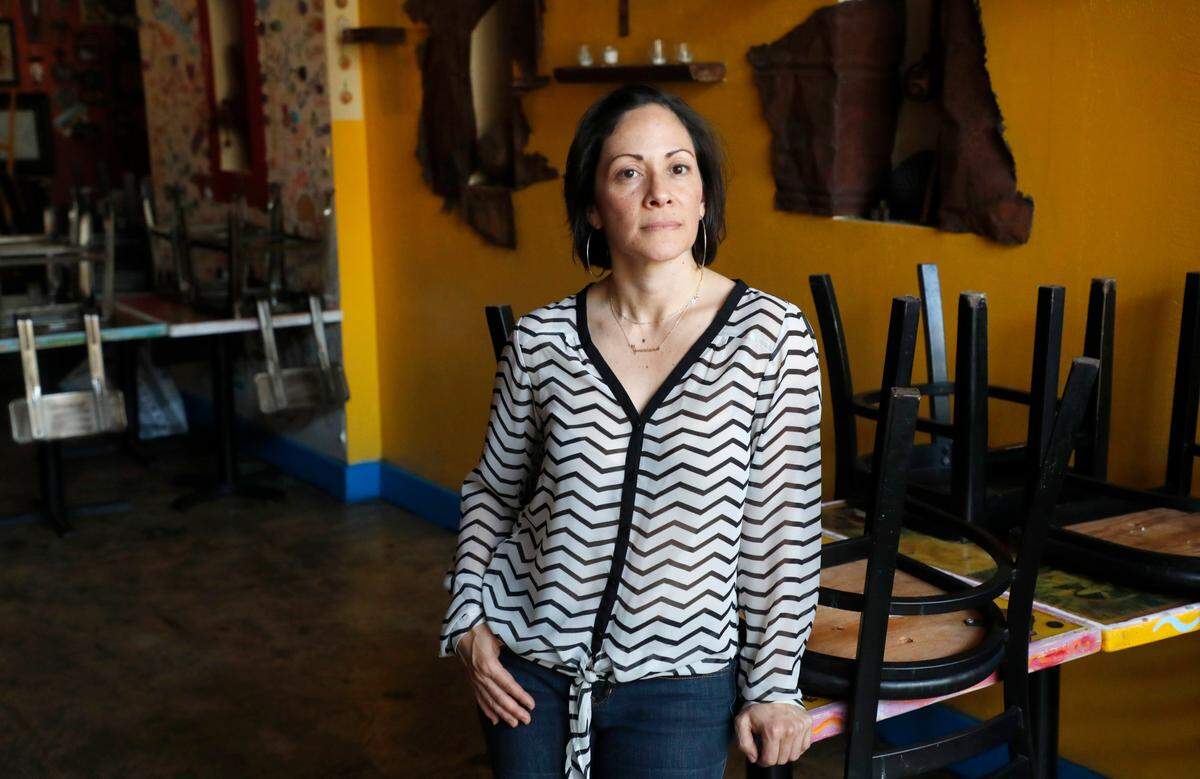
“It certainly was a very traumatic time,” said Angela Salamanca, reflecting on last summer. She’s the owner of Mexican fusion restaurant Centro and cocktail bar Gallo Pelón on South Wilmington Street. Her hardships were magnified when her restaurant had its windows smashed during protests that she had participated in just hours before.
“It was challenging,” she said. “I mean, I myself was out there marching peacefully with my kids several times after the murder of Floyd. That didn’t take away from my fear and my concerns as a business owner of getting our property damaged, and as a matter of fact, it was damaged.”
In the roughly eight months that her restaurant’s windows were boarded up, they featured a colorful mural that included a portrait of Floyd and spread the Black Lives Matter message.
But inside the restaurant, the stress took a toll on more than just finances, Salamanca said, with morale being at an all-time low for her employees who came to work behind covered windows.
“We’re talking about how folks were feeling not safe to come to downtown to support businesses, because everything looks like it’s boarded up ... in this very scary, war zone-like place,” she said.
The boards created a perception problem for downtown, some business owners said.
“There is still a perception around safety, be it real or not, protests and COVID,” Pugh said. “We are still getting consistent phone calls asking if it is safe.”
Over the last year, “any reason essentially became a reason not to go downtown,” adds Darwil Alhuwalia, who co-owns Plaza Cafe on Fayetteville Street, a business whose main customers were office workers.
Slowly recovering
Things are improving, however. On weekends, Moore Square has visitors again, and the nightlife in Glenwood South, is almost back to pre-pandemic levels. Even during the heights of the pandemic, lines stretched outside night spots and bars on Glenwood Avenue.
The district, home to some of Raleigh’s most popular bars, is back to 89% of pre-pandemic sales, according to research released in April by the Downtown Raleigh Alliance.
But the recovery has been uneven so far, said Bill King, CEO and president of the Downtown Raleigh Alliance. Parts downtown dominated by office buildings remain mainly empty, with employers not ready to send people back until later this summer — and even then, probably, on a hybrid schedule.
The Fayetteville Street district, home to most of the city’s tallest buildings, is only at 27% of pre-pandemic sales, according to the Downtown Raleigh Alliance.
“Let’s face it, downtown has been a bit of a ghost town,” Mayor Mary-Ann Baldwin told The N&O in an interview. “What we’re seeing now is things starting to perk back up, so there’s light at the end of the tunnel and I’m optimistic.”
Baldwin said the Fayetteville Street corridor likely won’t see a strong recovery until workers return in large numbers.
Red Hat, for one, has plans for workers to return in September with Citrix coming back in July, though both of the companies, and many others, seem to favor keeping hybrid work in place for the foreseeable future.
“I think once you start seeing more foot traffic, you’ll see more businesses open,” said Baldwin. “And it’ll have this kind of spiral effect, so, it’s all going to have to work together. But that’s what I’m excited about.”
The return of consistent events at the Raleigh Convention Center this summer and the Amped Up Music Series, weekly live concerts at the Red Hat Amphitheater starting May 27, also will help, Baldwin said.
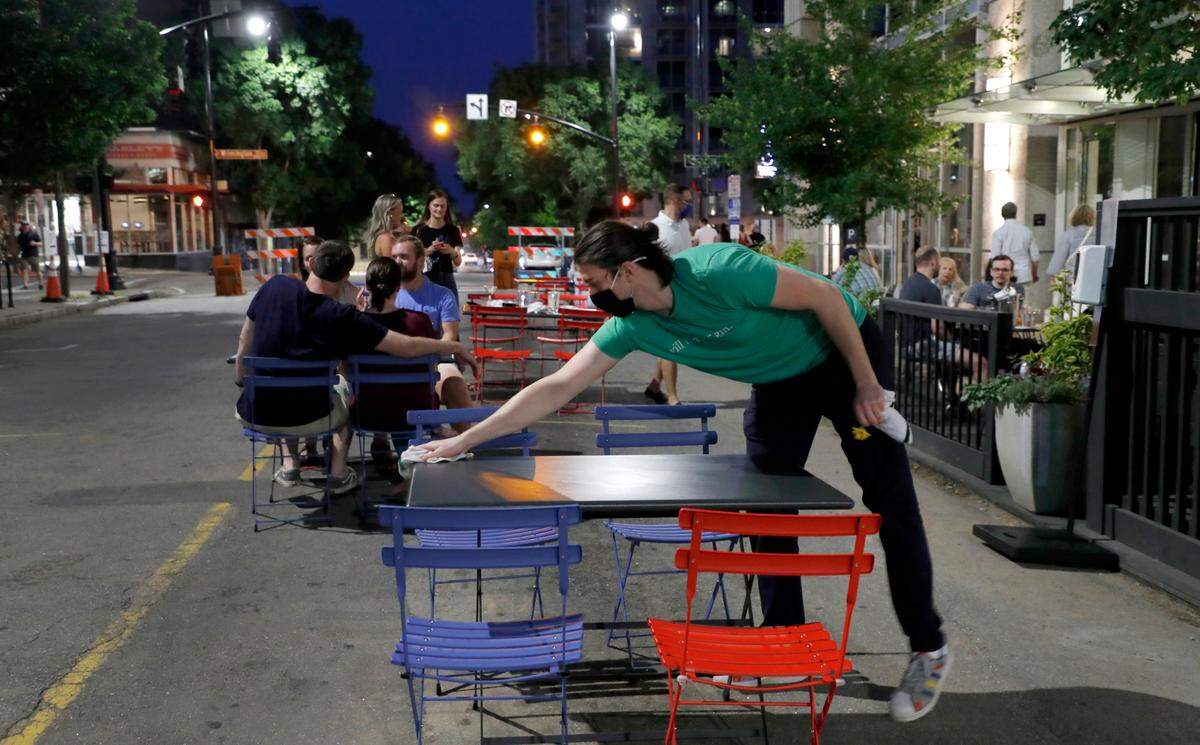
The expansion of outdoor eating has been one bright spot, many say, and they’re hopeful it stays in a post-pandemic world. That includes more restaurants with outdoor dining on sidewalks, plus a weekly rotation of Dine Out Downtown, which plunks tables down in the middle of the street in downtown’s main districts. The Raleigh City Council recently approved an extension of outdoor dining through Oct. 30.
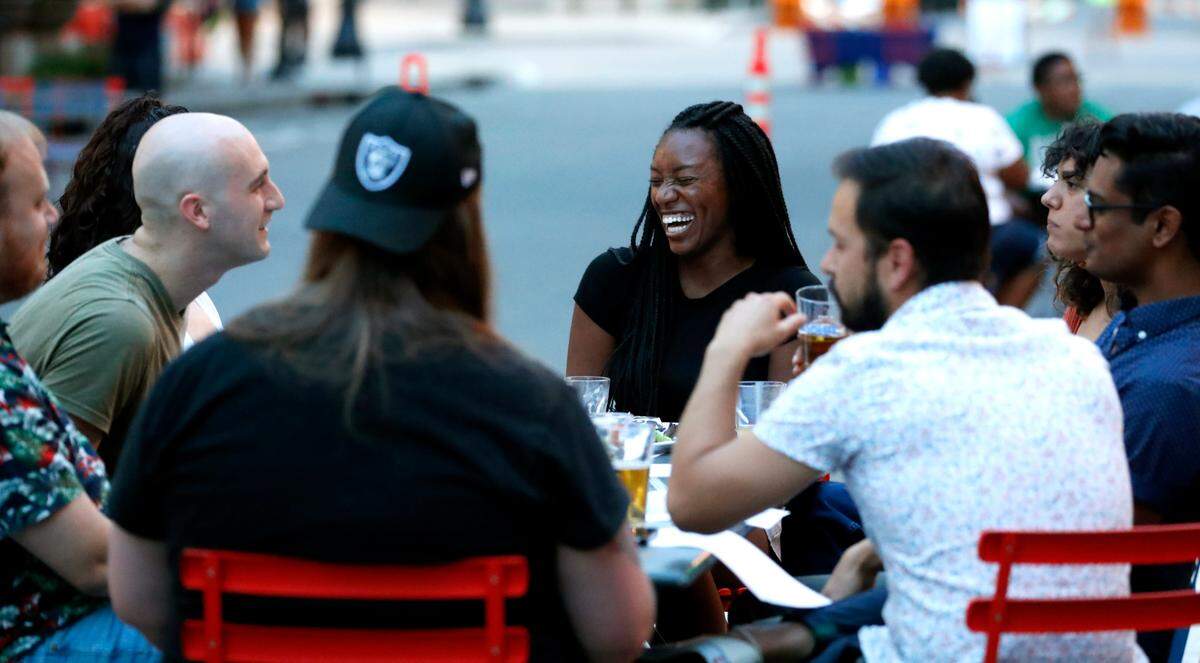
Jennifer Martin, the executive director of Shop Local Raleigh, hopes the return of large events, like the Brewgaloo beer festival Sept. 17 and 18 and the World of Bluegrass, Sept. 28 to Oct. 3, could provide a narrative shift for downtown. The Raleigh staples were canceled last year, along with other downtown festivals like SparkCon, Artsplosure and the Hopscotch Music Festival, which typically draw thousands.
“Events create community and bring people back together,” she said.
A permanent switch?
Structurally, the recovery of Raleigh’s retail and food restaurants might be related to one of its biggest strengths: its surging technology industry.
According to research from Indeed, Raleigh is one of eight cities with large tech clusters (cities like San Francisco, Seattle and Austin) where service jobs have recovered at a slower pace than the national average.
While the tech sector has done just fine throughout the pandemic, others have not. Salamanca, the owner of Centro, for instance, said she has struggled to hire enough workers to fully reopen her restaurant on South Wilmington Street.
“What did much worse were local services and businesses that people weren’t spending money at because they were working at home,” said Jed Kolko, chief economist for Indeed. “In places like these big tech hubs, where more people can work remotely, restaurants and retailers really suffered.
“Fewer people are getting lunch in the middle of the day. The businesses in San Francisco, Raleigh, Seattle and Austin that fed and cut the hair and sold clothes to these workers saw their business drop.”
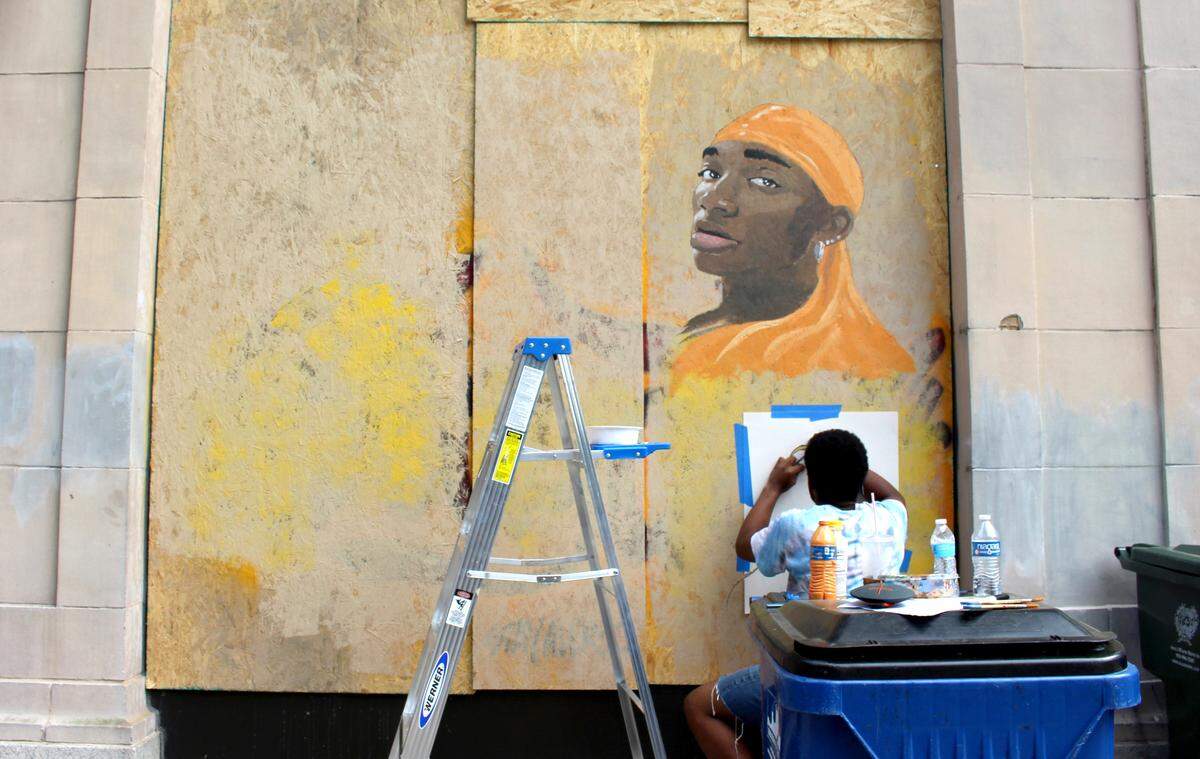
For some businesses, that meant closing for good. Apex Outfitters had its entire store looted and damaged extensively on May 30 during the first night of the George Floyd demonstrations.
After navigating claims with its insurers and suppliers, owner Kyle Denis said he was looking at spending $100,000 to simply open the doors again. It was too great a price, he said, and Apex Outfitters officially closed its downtown Raleigh in December, shifting its resources to its original downtown Apex location.
“Did I really want to put $100,000 back into something that for the foreseeable future — the next three to four years — I am not going to break even on?” he said in an interview.
If the pandemic hadn’t been ongoing, and it was only getting worse last summer, the store potentially could have reopened successfully, he added. But the shop depended on employees from places like Pendo, Red Hat and Citrix to shop there, and they aren’t returning in droves to the office.
Vincenzo Verdini, principal at commercial real estate agency CityPlat, said the double whammy of the pandemic and the aftermath of the protests made some companies cautious about leasing or investing in downtown Raleigh.
“If that’s what your visuals are, it’s hard to convince someone to invest in an office building or move to another location,” Verdini said. “It’s not an inviting environment.”
But he said that perception came more from companies who would be new to Raleigh — “those individuals that didn’t have as much history in Raleigh,” than those who have seen the capital city flourish in recent years.
“I think the individuals that have been invested in the city and have been to parts of downtown and have seen the growth that has happened ... Most of them have been and continue to be bullish on downtown Raleigh,” he said.
Denis said he would love for his business to return to downtown Raleigh one day, though he said he has lost confidence in the leadership of the city.
“Downtown Raleigh will bounce back,” he said. “But it is going to take a while.”
Kolko said people are watching to see whether the pandemic has created a permanent shift in how people live, work and shop. If workers permanently take on a hybrid schedule, catering demand could fall. Hotels could see fewer reservations for business travel. Conferences might become more sporadic.
“At the same time, we could see more demand for services in residential neighborhoods” if everyone is working at home, Kolko said. “The restaurant lunch business might go down permanently in downtown but might be higher in neighborhoods.”
Still attractive
And yet, downtown remains attractive to many. So far, there have been more openings than closings in 2021, according to Downtown Raleigh Alliance, and many more are hoping to open by the fall.
One of those will be Union Special, a bakery owned by Andrew Ullom, a former pastry chef for award-winning downtown restaurateur Ashley Christensen.
Ullom always wanted to open up shop in downtown, but he couldn’t afford it at first.
The success of his first shop at Gateway Plaza and falling rents in downtown presented a second chance, though. In 2019, Ullom said he was quoted $40 a square foot for space in downtown. A recent survey of properties on the commercial property marketplace LoopNet, shows prices now hovering around $30 a square foot.
Union Special’s second location will open later this year on Fayetteville Street, in the former space of Tama Tea, which closed last May, days before the protests, while most of the state was locked down.
“I don’t necessarily like that we are benefiting from someone like Tama, which had a great concept, closing,” Ullom said. “But it was a good opportunity for us.”
Some retail businesses have had a chance to experiment, like the Black Friday Market, which sells goods made by Black businesses. The company went from being just a pop-up shop concept to now occupying permanent space in the former Apex Outfitters location on West Hargett Street. Black Friday Market’s opening was assisted by a grant from the Downtown Raleigh Alliance.
“We have seen more flexibility on space in the past year,” said King, of the Downtown Raleigh Alliance.
Ullom said he remains “bullish” on downtown’s prospects going forward, though he doesn’t think the recovery is going to be instantaneous.
“I don’t think downtown will be back until 2022, because I just don’t see us getting to herd immunity,” he said, referring to the percentage of people who get vaccinated and build immunity to COVID-19.
Baldwin said she hopes the city can remain helpful to the small businesses that have weathered the past year. She pointed to the city’s facade rehabilitation grant program as one example, which supports businesses to improve and repair aged or damaged storefronts.
“We have money in the budget, our new budget for next year, so we’ll continue to provide assistance to small businesses with those types of grants,” said Baldwin. “We will be getting funding from the federal government for stimulus money and some of that will go to small business grants as well. There’s going to be a major effort to help them reopen, stay open and be successful.”
Those federal funds include $80 million in American Rescue Act money that will “reactivate” downtown and support small businesses, according to the city manager.
Still uncertain
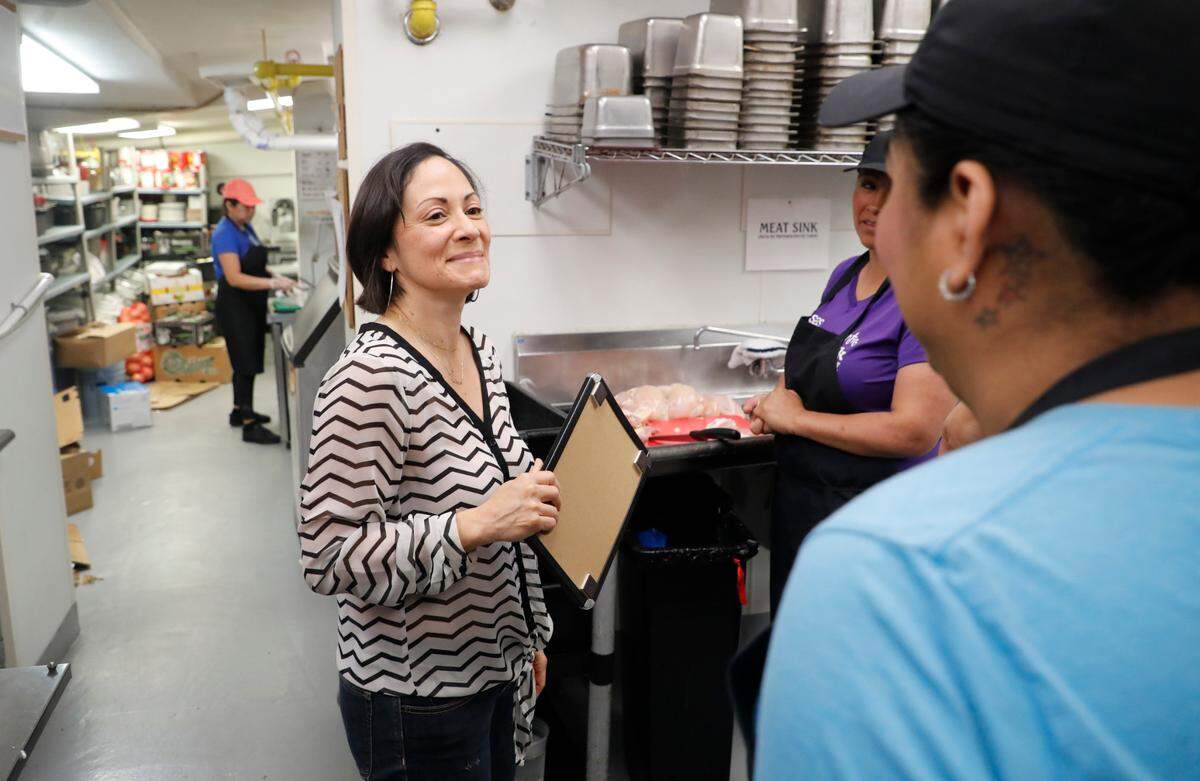
Though mask mandates have been lifted for vaccinated people and many are flocking to reopened restaurants, Salamanca said it’s hard for restaurants to adapt and transition quickly.
For one, COVID-19 caused many food industry workers to relocate or find jobs in other industries, creating staffing shortages that have prevented Salamanca and other restaurant owners from reopening fully, she said.
“I need to take into consideration what reopening is going to do to my mental health and my physical health,” said Salamanca.
She has operated Centro as a take-out-only place for the duration of the pandemic, only opening the Gallo Pelón cocktail bar indoors for three days a week.
“I do think that we are turning a corner for sure — I say that cautiously,” she said.
Alhuwalia, the co-owner of Plaza Cafe, is waiting for downtown workers to return.
“For us, it’s not over yet,” Alhuwalia said. “Our loans were paid off and we had to take out another loan to survive another year.”
Pugh, the owner of House of Swank, recently has contemplated whether his business can thrive without a downtown store. A surge in online sales and a Paycheck Protection Program loan were the lifeblood of his business over the past year.
House of Swank still has about a year-and-a-half left on its lease, he said, and he will probably have to come to a decision this winter about whether to stay or go.
“As an entity, I think we will be fine” if we do go, he added. “We have bobbed and weaved and pivoted, and we are good at that.
“But am not ready to commit one way or the other,” he said. “Time will tell.”
News & Observer reporter Anna Johnson contributed to this story.
This story was originally published May 27, 2021 at 6:00 AM with the headline "After a year of a pandemic and protests, Downtown Raleigh eyes a comeback."