Durham startup FoodLogiQ is helping the food industry navigate its COVID-19 turmoil
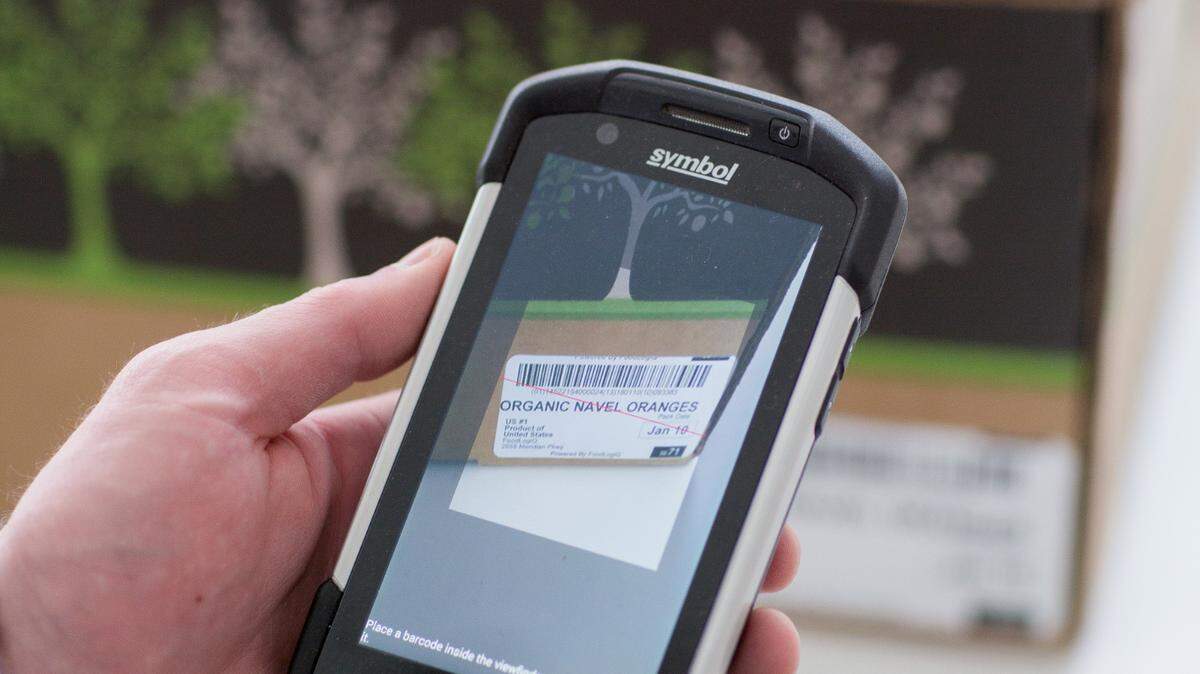
While most companies have suffered from the effects of the coronavirus pandemic, FoodLogiQ, a Durham-based technology startup that helps manage food supply chains, has seen its business surge as restaurants, grocery stores and food suppliers grapple with how to keep operating amid major disruption.
That increased demand comes even as the technology company had to move its entire workforce home. It’s another example of how certain digitally focused tech companies have been able to thrive during the pandemic, as a wide swath of industries move quickly to bring their businesses online.
“Our business is in the middle of this,” company CEO Sean O’Leary said in an interview. “We have very large clients ... so we’ve been very busy supporting our existing customers (as they) figure out how to deal with this.”
O’Leary, who joined the company in 2019, said demand for the company’s services has doubled since the pandemic started spreading across the U.S. “And I expect it potentially to triple in the coming months,” he added.
FoodLogiQ’s customers include the Amazon-owned grocery store Whole Foods, Tyson Foods (which is also an investor), Subway and Buffalo Wild Wings.
Whole Foods in recent weeks has used FoodLogiQ’s software to manage COVID-19 safety protocols across thousands of associates, O’Leary said. The startup has helped other customers manage huge changes in consumer behavior, which in turn placed stress on their supply chains and what food items were needed. Some companies, especially ones that make pantry staples, have seen orders surge by 700% in recent weeks, as consumers hunkered down at home, Food Dive reported.
Founded in 2006, FoodLogiQ develops supply-chain software meant to track food safety — a service that has grown tremendously as U.S. food regulations tightened in recent years to prevent food-borne illnesses. But the company’s software also helps restaurants and suppliers track how products were shipped, automate tasks, monitor safety and risks, audit filings and other supply management tasks.
Those have all become increasingly important as restaurants and grocery stores deal with supply chains being shut down or impeded by the spreading illness. Like many industries in recent years, food companies have raced to digitize their supply chains in an effort to record every step along the supply chain, from the farmer to the table.
By documenting every step, food sellers can quickly trace food contamination incidents — whether it is a massive recall of romaine lettuce or an E. coli outbreak at a restaurant chain — or prove that a product marketed as organic is truly organic. In a sign of how important food traceability has become, the company has even worked with its main competitors, such as IBM, Ripe.io and SAP, to create food traceability systems that can be shared across each other’s platforms.
Now the same technology that the company has used to communicate food recalls is being used to distribute information about evolving safety protocols to combat COVID-19.
COVID-19 has put even more pressure on making those supply chain digitized, which in some cases are still being done on spreadsheets and by hand. O’Leary believes that once food companies get past the survival stage of the crisis, there will be a switch toward digitizing supply chains even more aggressively.
O’Leary said most of FoodLogiQ’s customers are in crisis management mode or trying to rebuild their supply chains.
“We’re getting a lot of demand around that,” O’Leary said. “But when they get back online they’re going to say, ‘OK, now we can get to the future. This is a number one priority. What do we need to do?’”
He believes they will put even more money into automation and digitization, and FoodLogiQ is positioned to help them.
O’Leary said he has been surprised to see how well FoodLogiQ’s employees have taken to working from home. In some ways, he said, productivity has actually gone up. He said the company has had to tell employees to mind their hours, as working from home can blur the line between work and home life.
The company anticipates that there will never be a “normal” return to the office, O’Leary said, given how successful remote work has been.
“We do know that we’re not going to go back and do exactly the way we used to do,” he said. “A large chunk of our employees aren’t going to come back into the office, and quite honestly, we think that’s for the better.”
FoodLogiQ has raised $32 million from investors, including its most recent round in 2018, according to venture capital tracker Crunchbase.
If its growth continues at its current rate, the startup may find itself returning to its investors for more capital.
“We have enough runway to to continue to scale, at least through 2021,” O’Leary said. “I feel as if capitalizing the business in the future won’t be a major challenge but it might be a requirement, for sure.”
“I don’t know what’s going to happen,” he added, “but if demand triples this year or even quadruples, we’d probably need to raise capital to address it.”
This story was produced with financial support from a coalition of partners led by Innovate Raleigh as part of an independent journalism fellowship program. The N&O maintains full editorial control of the work. Learn more; go to bit.ly/newsinnovate
This story was originally published June 25, 2020 at 2:54 PM with the headline "Durham startup FoodLogiQ is helping the food industry navigate its COVID-19 turmoil."