With initial funding dried up, startups still struggle to navigate PPP loan process
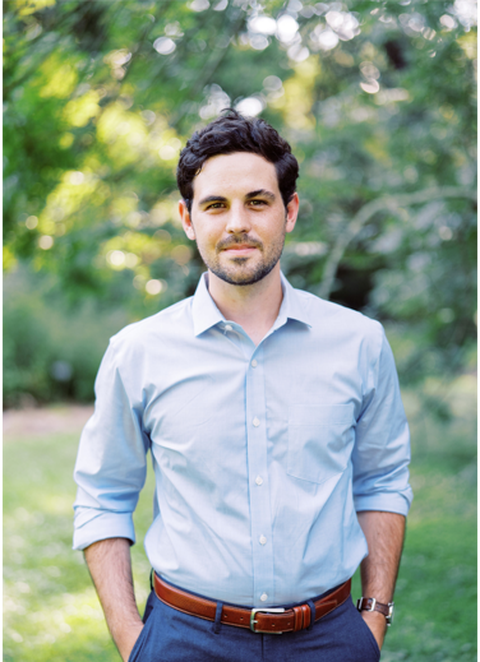
Ken Gillette, the cofounder and chief technology officer for Pocket Prep, thought his startup’s business might have a chance to thrive during the coronavirus shutdown.
With more time at home, he theorized, people would be more likely to use his company’s mobile test prep for exams, like nursing or financing certifications. But like many companies, it has instead seen a severe drop in sales — around a 55% decline — as testing centers across the country also closed down and delayed tests, Gillette said.
“We thought we wouldn’t see a major downturn but within three days of [the virus] taking off sales plummeted,” Gillette said in a phone interview with The News & Observer. “A couple days after that they were talking about [paycheck protection program] loans, and we thought we definitely need to do this because if this continues more than a couple months we will be in trouble.”
The company has a good financial foundation, but if this downturn stretches for several months, Gillette said, it would struggle to pay its 13 employees spread across offices in Durham and Seattle. So he got on the phone with his bank, Chase, and filled out an application for the PPP loan program.
The program has been very popular because it allows companies and nonprofits with fewer than 500 workers to get a low-interest loan to cover up to two months of payroll and expenses like rent and utilities. And If the loan is used to retain workers and the company doesn’t cut wages, it turns into a grant — an alluring prospect given that most other relief and deferments add to a company’s debt.
The program began on April 3, which is when Gillette applied. He got his money on April 7, a quick turnaround. “As soon as we got that money in the account ... and knowing we now have more runway to move our company forward was a big relief,” he said.
But others have struggled
That’s how the program is supposed to work. But for many companies, the process has been much more frustrating.
Not every bank has been able to move as quickly as Chase, and because a majority of banks are only working with existing clients, many small businesses only have one option to tap these funds. And as Congress only allocated around $350 billion for the program, some feared — rightfully, as it turns out — that they wouldn’t qualify for a loan before the money runs out. The White House announced Thursday that the money had run out, The Washington Post reported.
As of April 13, there have been 23,786 approved PPP loans to North Carolina businesses worth a total of around $5.7 billion. It is not known how much of that money has been disbursed.
Peter Gwaltney, president of the NC Bankers Association, said he believes Congress will find more money for the program. Given the circumstances, and how quickly this program came together, he thinks banks are doing about as well as can be expected.
“Banks are producing on a daily basis the number of small business loans they do in a year,” he said. “People are working around the clock on this.”
John Replogle, an investor at One Better Ventures and the former head of Burt’s Bees and Seventh Generation, said the loans are a vital lifeline but it’s been a bumpy process. Only one company he works with has received funds so far.
“The process from application to approval to cash in hand is taking far too long,” he said.
Wells Fargo, one of the most popular banks in North Carolina, initially limited the amount of PPP loans it would issue, the Charlotte Observer reported. The bank is hoping to expand its offerings after getting a restriction lifted that was imposed because of its fake-account scandal.
Lister Delgado, another local investor, said many companies in his portfolio have also had trouble working with some of the larger banks “overwhelmed with applications.”
Jason Caplain, a general partner at Bull City Venture Parnters, said it’s been a hot debate in the startup community about whether to even apply for PPP loans. He is advising companies to stay away from the program unless it is absolutely necessary for survival.
Caplain said he worries that startups that would be fine without the money will take opportunities away from a lot of other starving businesses.
“When you sign off on [the application], the founder and CEO is repping that their company is negatively impacted,” he said. “They have to say that and it is fraudulent to say otherwise” if you are doing OK.
Another complication arises for startups that brought on venture capital money and gave significant decision-making rights to an investor. The company could need to get the investor to waive those right before it can apply for PPP.
“In one case we signed something to give up rights so that we could apply,” Caplain said. “Everyone is doing things they can to be helpful.”
Worried about a delay
Eric Surface, founder and CEO of ALPS Insights, a young analytics startup in Raleigh, said he’s worried about his potential funds being delayed indefinitely.
His company was just getting ready to take on several new clients and start raising more funds from investors when the world came to a stop because of COVID-19. Like many young companies, ALPS is facing an uncertain future now, and Surface viewed a PPP loan as a way to survive without new money coming in.
But after more than a week’s worth of back and forth over documentation, Surface is worried his application has been delayed so long there might not be any new funds available whenever he ultimately gets final approval. At first BB&T, which has merged with SunTrust to become Truist, wouldn’t accept a payroll document from ADP, a payroll software company. Eventually the bank accepted it.
“If BB&T [Truist] had understood my payroll calculation the first or second time I explained it, I might already have a loan,” he said. “I’m now afraid we will miss the loan” if Congress cannot agree on replenishing the program.
Beyond the logistical failures of the program’s launch and Congress not allocating enough money for it, Surface said the PPP loan has another fundamental flaw for many startups.
As a small company, ALPS relies heavily on 1099 contractors, Surface said, noting his 1099 payroll is equal to his W2 payroll. But PPP loans don’t allow companies to claim 1099 employees as part of the loan forgiveness. Surface believes this will likely cause him to permanently lose contractors who had been working with the company for months.
All this adds up to making it harder for the company to regain momentum whenever the economy does turn the corner.
“If I can’t continue to pay them, then they are not working on our project,” he said. “Maybe they will go somewhere else, so I lose continuity and people that know our architecture.”
This story was produced with financial support from a coalition of partners led by Innovate Raleigh as part of an independent journalism fellowship program. The N&O maintains full editorial control of the work. Learn more; go to bit.ly/newsinnovate
This story was originally published April 16, 2020 at 2:40 PM with the headline "With initial funding dried up, startups still struggle to navigate PPP loan process."