
AI-backed PAC spends big in NC election, amid challenges in Washington
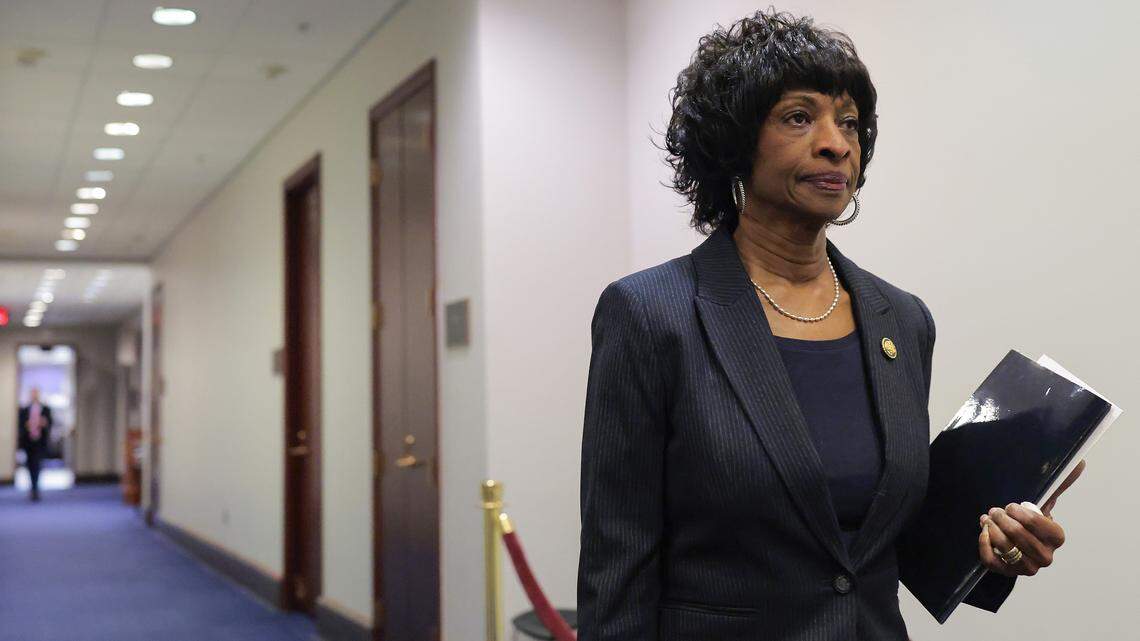
A super PAC that describes itself as focused on “sensible” regulation of the mushrooming artificial intelligence industry is buying ad time to support U.S. House Rep. Valerie Foushee.
The political organization has ties to the AI company Anthropic, which is facing its own challenges with the federal government.
Anthropic bills itself as prioritizing safety and mitigating the risks that AI can cause, like a model that “pursues goals that conflict with our best interests,” which the company has said could have “dire” consequences.
In that same vein, Anthropic has thrown $20 million dollars behind Public First Action, a self-described “bi-partisan” nonprofit formed to promote AI education and “safeguards.”
The organization shares the same leader as the Jobs and Democracy PAC, which spent more than $1.3 million on ads supporting Foushee in her Democratic primary contest with Durham County Commissioner Nida Allam, according to Federal Elections Commission records.
Foushee sits on three AI-focused groups, including the House Bipartisan AI Task Force, and has voiced concerns about how the emerging technology impacts the job market.
And she represents areas of North Carolina where data centers — key infrastructure of AI development — have become hotly contested issues. That includes the town of Apex, where close to 5,000 people have signed a petition opposing a developer’s bid to turn hundreds of acres of land into a data center.

The congresswoman “plainly does not support” the proposed Apex project, Max Oget, director of communications for Foushee’s campaign, told The News & Observer.
“She’s heard from residents and met with local leaders, and she served on local government,” Oget said. “She really trusts the local leaders to listen to the community and, in her words, make the right choice.”
Allam has said she will not accept campaigns from “the AI lobby”.
Stalling ‘meaningful AI policies’
A two-term U.S. House member, Foushee’s political assignments have become increasingly technology focused over the last two years. She was one of 24 politicians who Democratic House leader Hakeem Jeffries named to the bipartisan Task Force on Artificial Intelligence in 2024.
Jefferies also named Foushee to a new commission that works on policy “in partnership with the innovation community, relevant stakeholders and committees of jurisdiction,” according to a December press release announcing the assignment.
Two days later, Foushee’s office released a report showing over 50,000 jobs were lost in 2025 “specifically cited as AI-related reductions.” And it happened all under President Donald Trump’s watch, Foushee said in a statement about the report.
“Yet Washington continues to stall on enacting meaningful AI policies that would protect American jobs and ensure our nation leads in the responsible development of this transformative technology,” Foushee’s statement read.
“The American people deserve answers, and I’m fighting every day to deliver them on their behalf.”
Foushee is focused on ensuring AI doesn’t cost Americans jobs and ensuring everyone can benefit financially from the booming industry, Oget said.
A nonprofit’s affiliated PACs
Former Democrat House member Brad Carson, who is from Oklahoma, leads the Jobs and Democracy PAC. With former Republican Congressman Chris Stewart of Utah, he also runs Public First Action, which received the $20 million Anthropic donation in early February.
Carson and Stewart are also affiliated with at least two different political committees: The Defending Our Values PAC, focused on backing candidates prioritizing AI regulations for children, and the Jobs and Democracy PAC, which is buying television and radio ads for Foushee.
The two PACs share similar missions: To support candidates “committed to AI policies that protect working families, safeguard our democracy, and ensure new technologies benefit everyone,” according to the Jobs and Democracy website.
While Carson and Stewart’s PACs throw big money behind candidates, like Foushee, leading up to the election, other AI-backed organizations are doing the same thing.
That includes Leading the Future, a PAC formed in August 2025 to support “pro-AI candidates. The PAC received a $25 million dollar infusion from OpenAI President and co-founder Greg Brockman and his wife Anna in 2025, according to federal filings.
Leading the Future spent part of that money to buy advertisements opposing New York state assembly member Alex Bores, WIRED reported.
Bores is one of the candidates supported, in part, by the Jobs and Democracy PAC and worked to regulate AI with passage of The Responsible AI Safety and Education Act, which his office says will require large AI developers to prevent the use of their products to create weapons or aid crime in New York.
Data centers and opposition
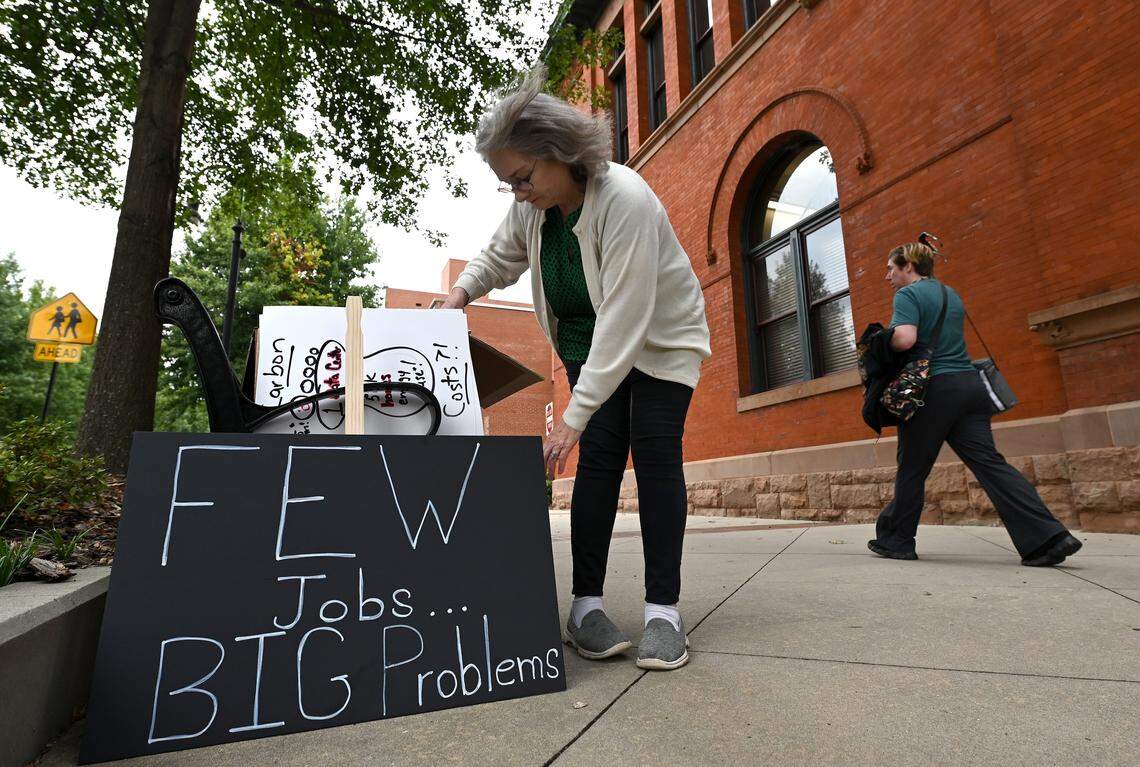
The construction of and plans for more data centers is ramping up in North Carolina, with opposition in some cases growing too.
Residents of Apex have been speaking out on a proposed 300 megawatt data center project. And their opposition has been significant, Apex Mayor Jacques Gilbert told The N&O in mid-February.
“More so opposition to any type of data center in our community,” Jacques said at the time. “That’s what I’ve heard the most.”
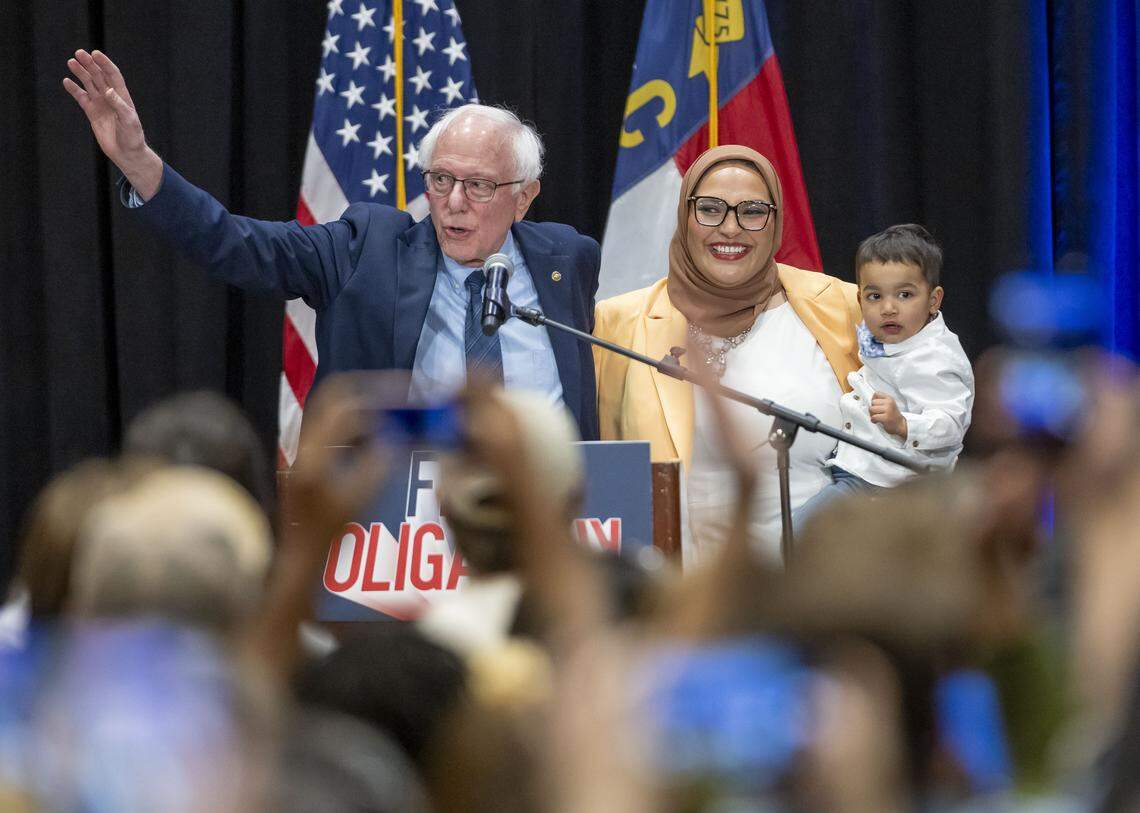
Allam, Foushee’s opponent, has made it clear she supports Apex residents’ fight against the proposed data center too. She subscribes to U.S. Sen. Bernie Sander’s moratorium on all data center development.
She also has noted that Apex residents’ demanded that their elected officials not take money from AI-backed organizations, at a press conference in early February.
“They’ve asked candidates to refuse money from the AI lobby, and I am proud to do that,” Allam said at the press conference.
Apex isn’t the only community trying to figure out how to address the ever-expanding tech industry.
Right next door in Chatham County, commissioners recently approved a one-year ban on new data center development this month to figure out how best to regulate the facilities, The N&O reported.
Oget said the congresswoman isn’t opposed to local moratoriums, if that’s what local constituencies choose to do.
“But she has worries that a national moratorium would cause issues,” Oget told The N&O. For example, Oget said, if local leaders wanted to build a hospital that needed a data center component, they wouldn’t be able to if lawmakers pass a national ban.
The future and an ultimatum from the feds
This primary campaign spending occurs at a time when Anthropic is in the middle of a conflict with the Trump Administration’s leadership at the Pentagon. Through a partnership with Plantir, one of Anthropic’s Claude products played a role in the U.S. operation to capture Venezuelan President Nicolás Maduro, The Wall Street Journal has reported.
The Pentagon wants Anthropic to allow it to use the company’s AI products for any lawful purpose that the Defense Department favors, according to New York Times reporting. But Anthropic is demanding limits on government uses, including a ban on involvement in mass surveillance of Americans or autonomous weapons, the newspaper reported.
Anthropic has rolled back part of its safety pledge, including dropping the commitment to not releasing AI models the company “can’t guarantee proper risk mitigations in advance,” TIME recently reported.
But federal officials are threatening to end Anthropic’s contract with the Pentagon if it doesn’t further amend its safety standards, NPR has reported.
The apparent power struggle between Anthropic and the federal government is concerning, Foushee said in a statement released Thursday evening.
“I firmly object to any effort by the Administration to strong-arm AI companies into enabling mass surveillance or developing weapons that operate without meaningful human control,” Foushee said. “These uses threaten civil liberties and human rights at home and around the world, and they raise profound moral and constitutional concerns.”
AI companies have the obligation to “stand by safeguards that they embrace” and shouldn’t “weaken them to political pressure,” the statement reads.
This story was originally published February 27, 2026 at 4:08 PM with the headline "AI-backed PAC spends big in NC election, amid challenges in Washington."
