Here’s one last look inside legendary Raleigh restaurant 42nd Street Oyster Bar
Pretty soon after it opened in 1987, the wooden armrest along the bar at 42nd Street Oyster Bar started to fade, rubbed by countless beer-swigging, oyster-slurping elbows.
Longtime co-owner Brad Hurley wanted to add another coat of varnish.
“You don’t get it,” founder Thad Eure Jr. told him. “This is how I want it to look, this is how I want it to feel.”
42 Street Oyster Bar was built to be timeless, but after nearly a century in one form or another, its time is up.
The restaurant will close for good March 30, ending its current 38-year stretch as a sprawling embrace and reflection of Raleigh’s best times.
Since Hurley and co-owner John Vick announced the closing in early March, the restaurant’s doors open each evening to a long line of diners hopeful for one last meal in the space. With reservations snatched up almost instantly, fans are waiting hours for that last look inside.
42nd Street Oyster Bar: Eure’s masterpiece
The look Eure wanted for the restaurant was based on a memory.
When he was 7, his father and namesake, Thad Eure Sr., took him to the old 42nd Street Oyster Bar, a ramshackle hangout for beer and bivalves with sawdust on the floor. It was the first time the younger Eure had ever been in a restaurant.
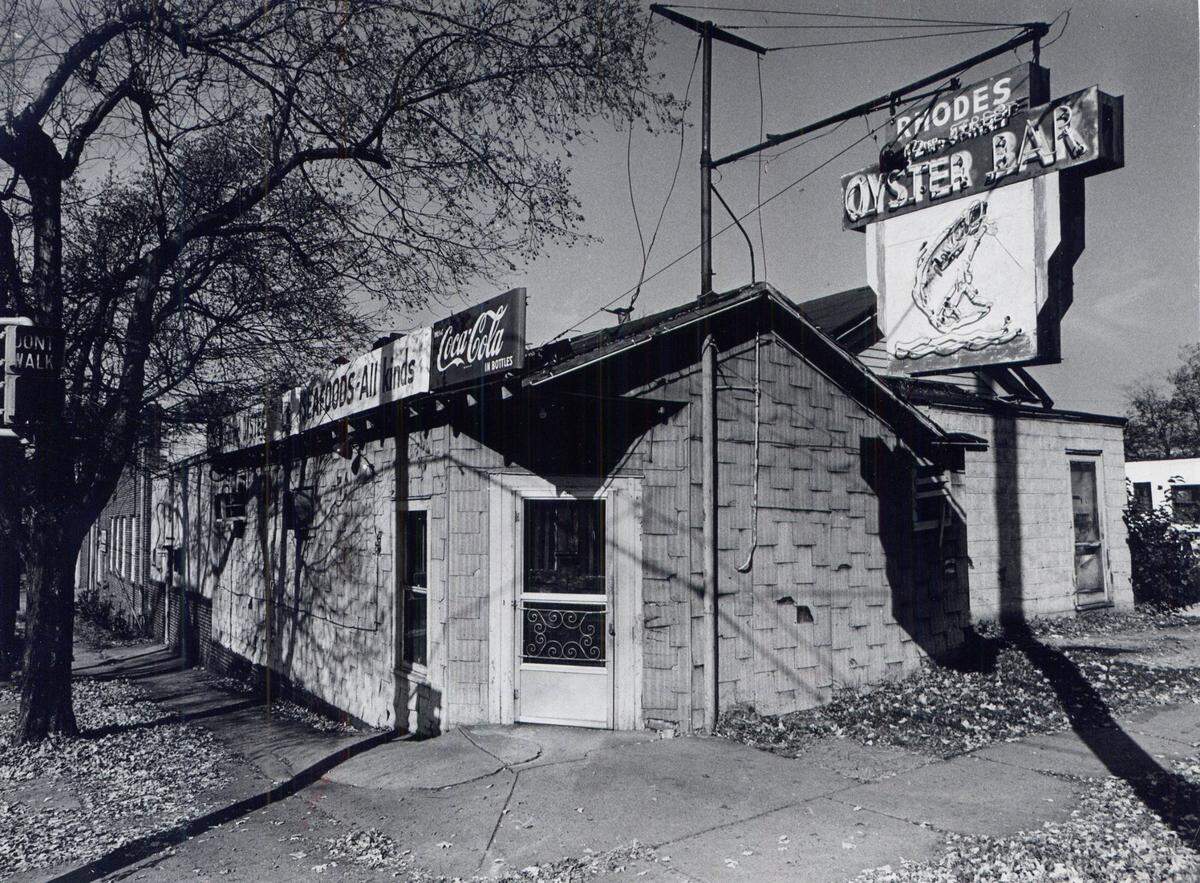
Decades later, as the co-founder of Raleigh’s Angus Barn and the Darryl’s chain, Eure bought the old oyster bar, which was then the 42nd Street Tavern. He knocked down the old building and rebuilt it big enough to capture the feeling of childhood wonder.
While the Angus Barn will be Eure’s rightful legacy, the 42nd Street Oyster Bar might be his masterpiece, pieced together as a love letter to what it feels like to eat in a restaurant.
It held the icy thrill of devouring a just-shucked oyster, made zippy by horseradish and lemon, of very cold beer and crispy fried fish. Its classics were comfort, like its most famous side dish of cheesy potatoes, a still-secret recipe that’s likely equal parts cheese and potatoes. It held the collective chorus of clanging plates, whispers and shouts, where even the air seemed to have a pulse.
“He didn’t know what he wanted to do when he bought it, but he knew that one day he wanted to bring it back to the way it felt when he was a kid,” said Van Eure, Thad Eure Jr.’s daughter and Angus Barn owner. “He wanted it to be a restaurant that had that nostalgic feeling of what it meant to a community.”
Van also credits her mother, Alice, with the restaurant’s interior design.
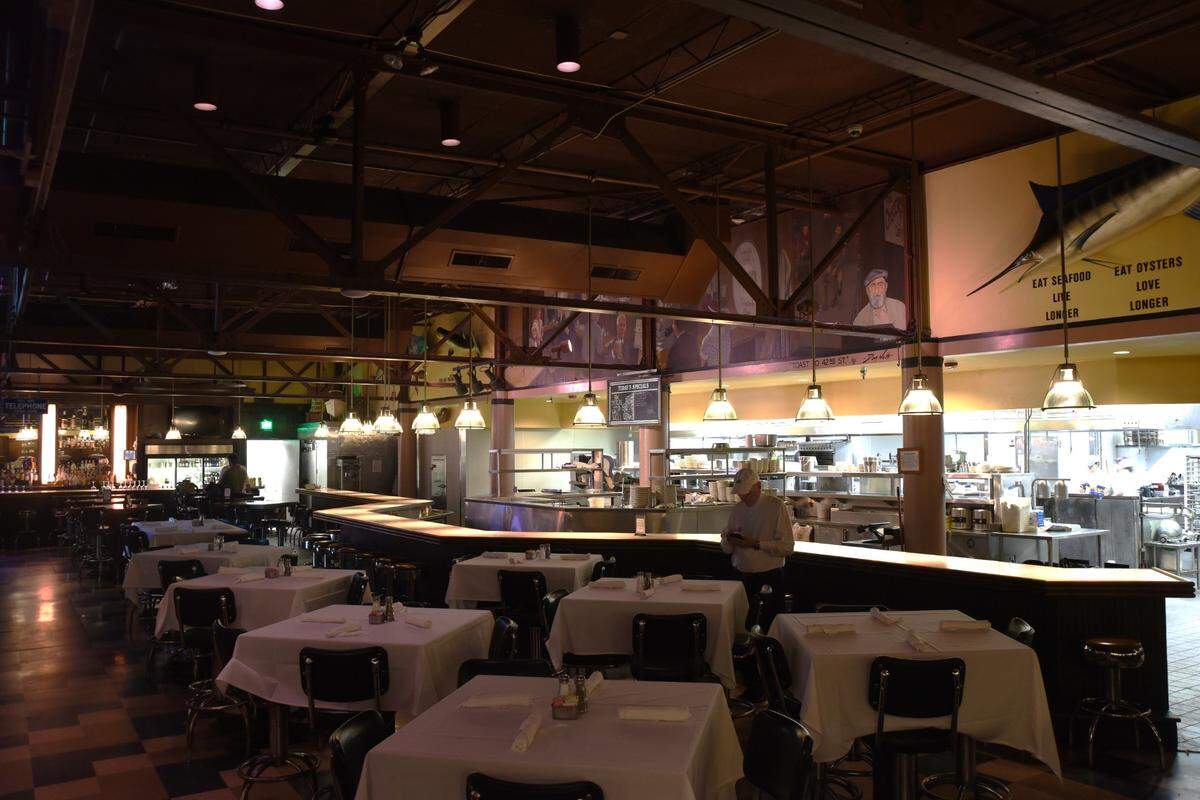
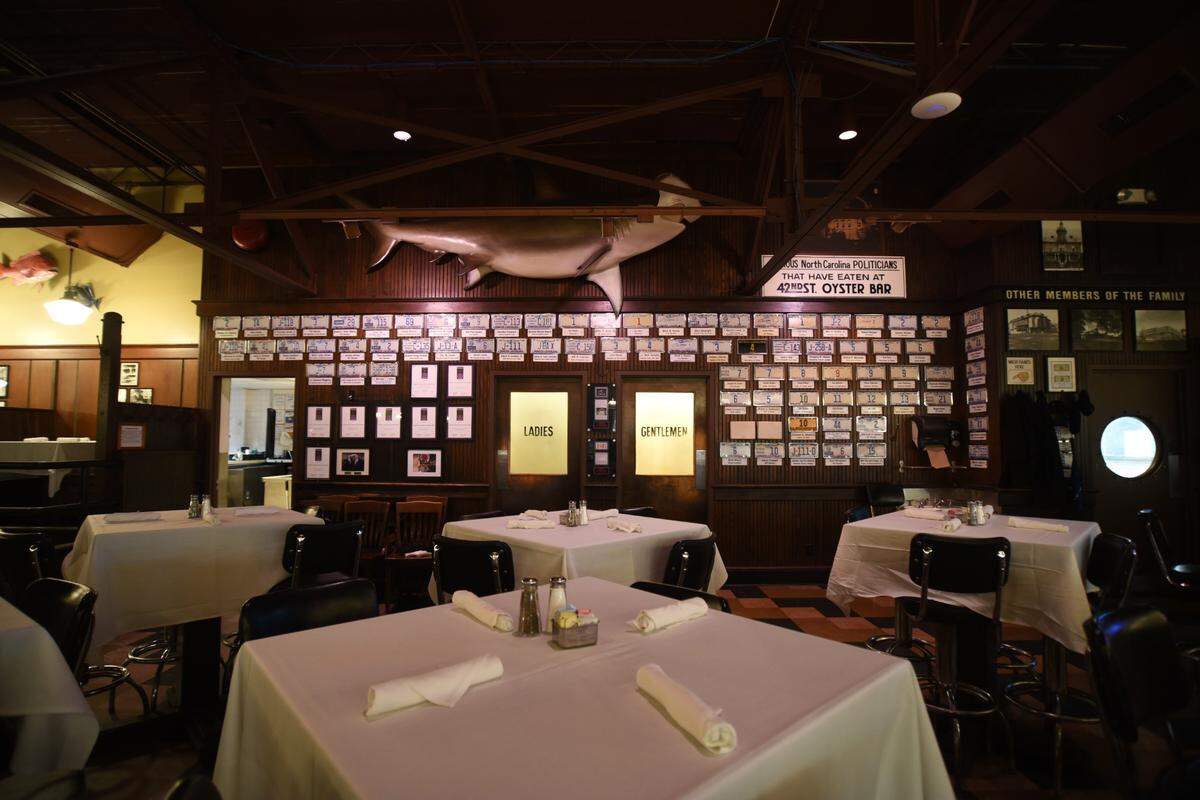
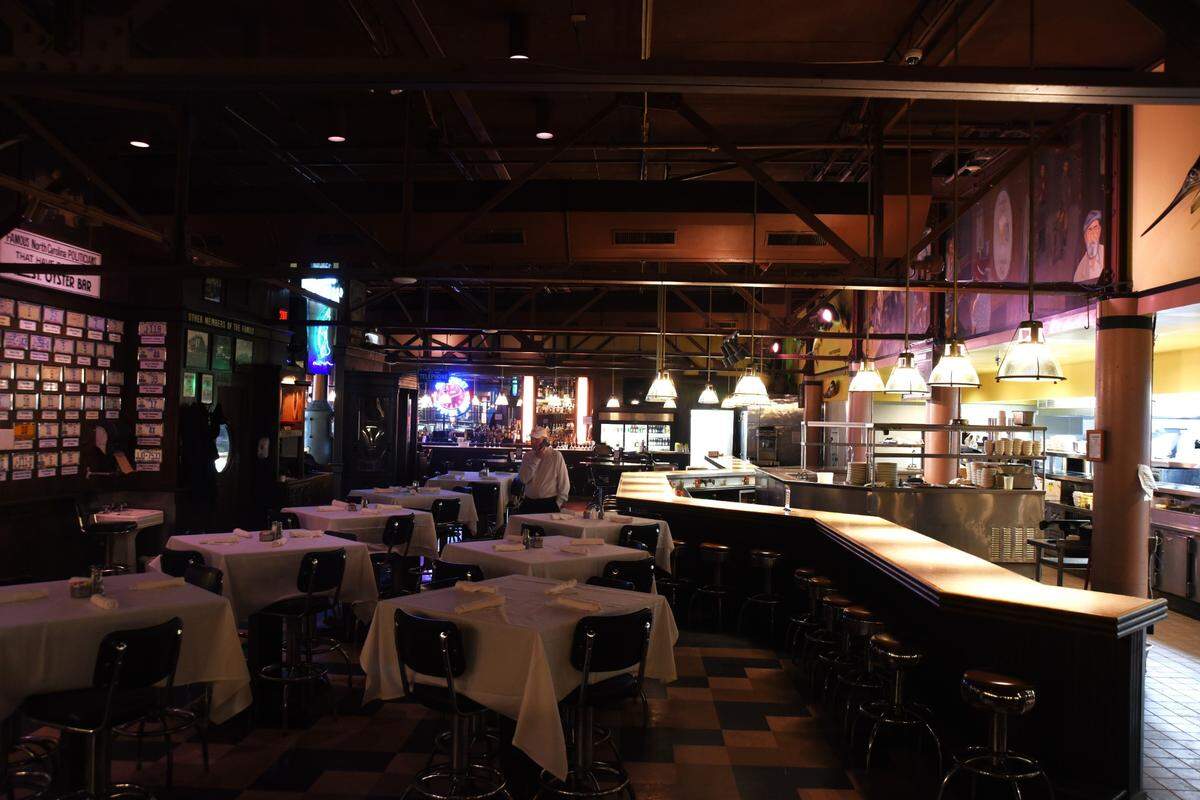
The centerpiece of 42nd Street is of course the oyster bar, which snakes from one corner of the restaurant to the other, connecting its dark and divey side, lit by TVs and neon, and its buttoned-up side, with white tablecloths and mounted trophy fish.
“I consider them restaurant geniuses; they could envision something and make it happen,” Van Eure said. “Their goal was to have it feel like it had been there forever.”
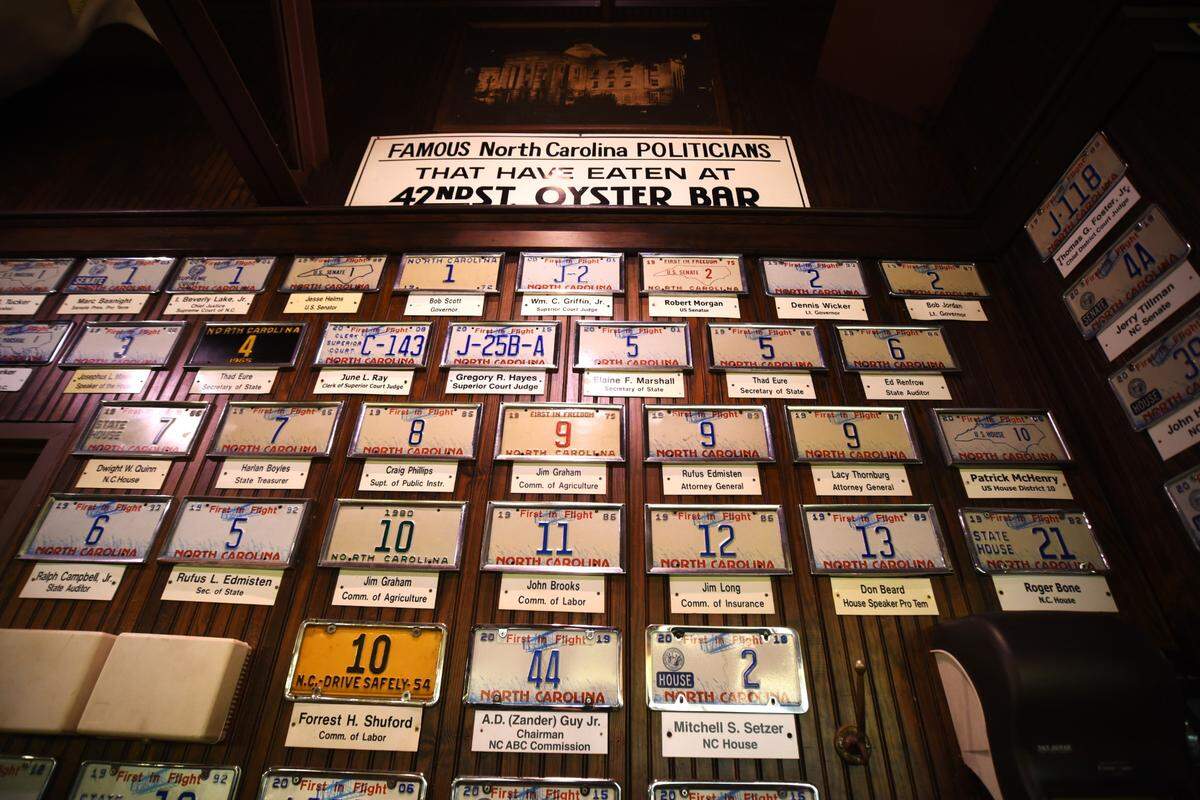
License plates by the bathroom
Often the setting for Raleigh’s political hobnobbery, 42nd Street was a favored haunt of politicians. For decades, a wall of license plates from North Carolina lawmakers accumulated on a wall by the bathrooms, including Gov. Jim Hunt and longtime secretary of state Thad Eure Sr.
The restaurant would sometimes pop up in lobbying receipts, like in 1991 when Phillip Morris bought a $1,978 breakfast for lawmakers.
“Politics is part of the legend and lore of the oyster bar,” former 42nd Street manager Jim May said in 1991.
Or maybe former News & Observer dining critic Greg Cox put it best in a 1996 blurb.
“This is where important people meet to roll up their sleeves and get their hands dirty with the important business of eating mounds of peel-your-own shrimp,” Cox wrote in one of his many shout-outs to the oyster bar.
And as any notable restaurant in a city of a certain size, it showed up in the police blotter, like a 1991 break-in where a thief tried to take $3,259 worth of seafood, steaks and alcohol.
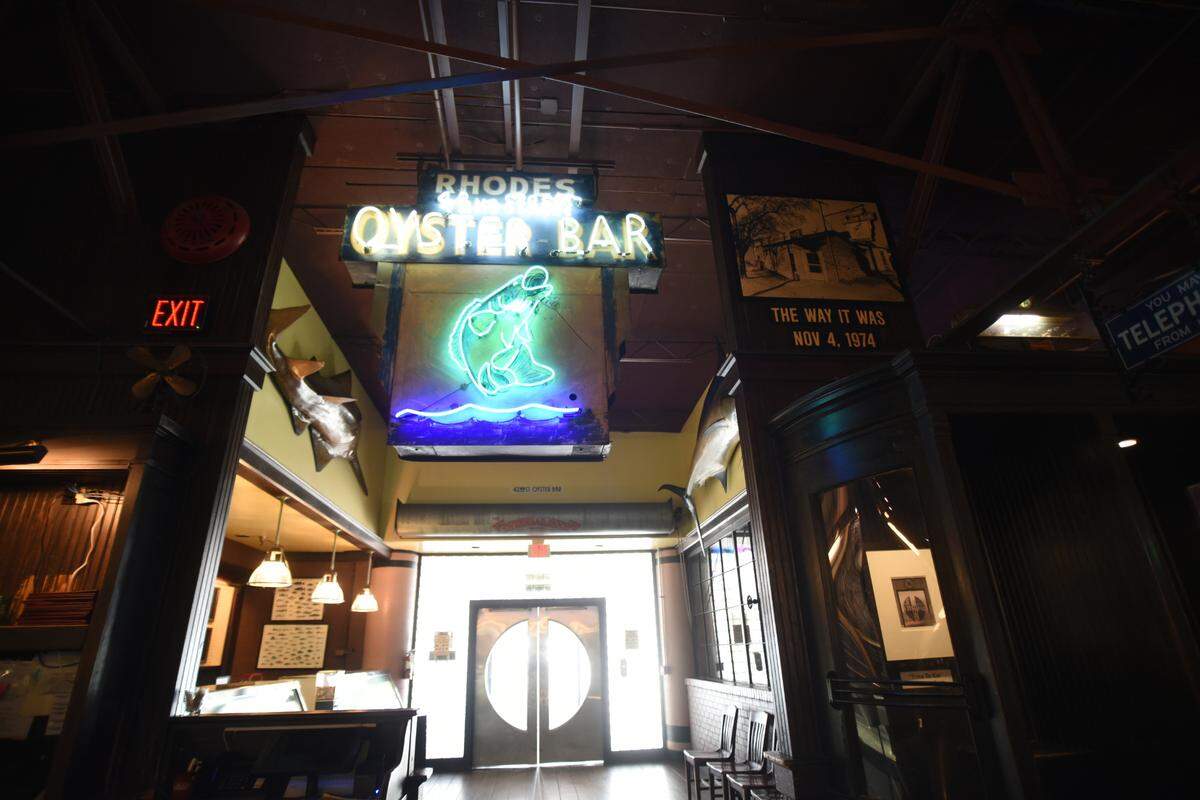
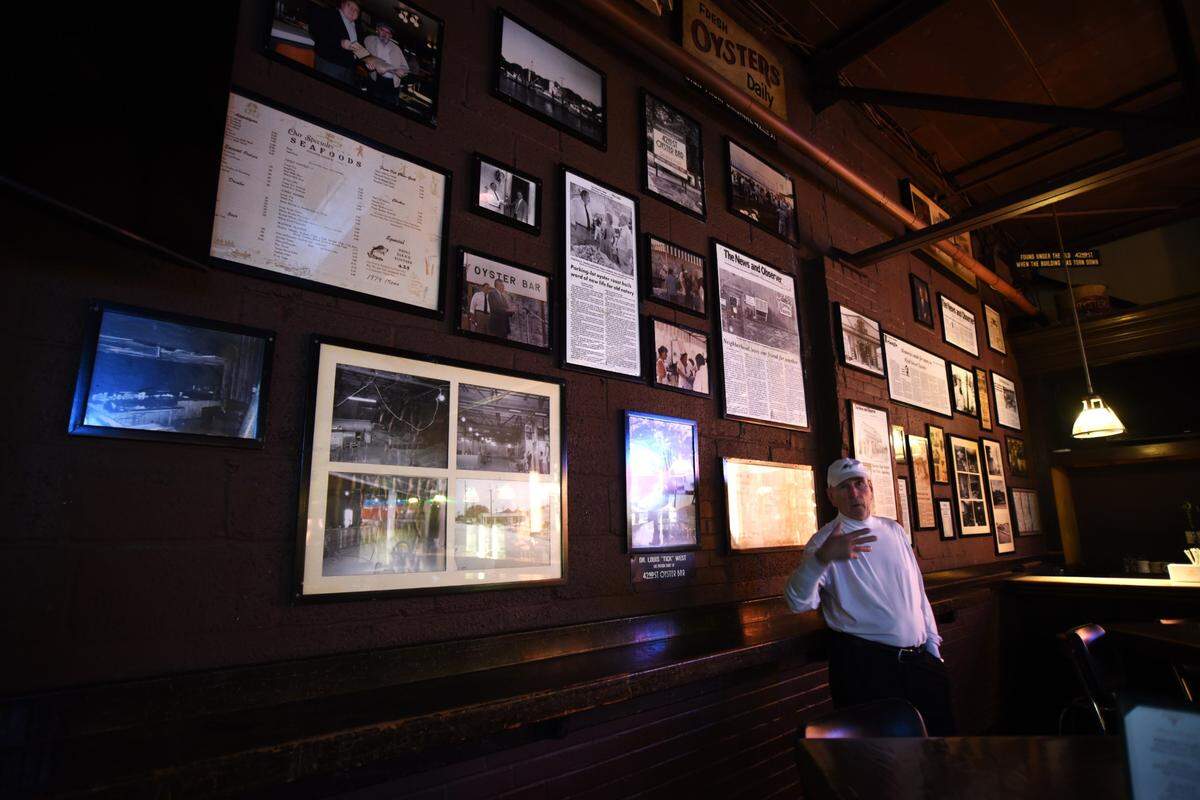
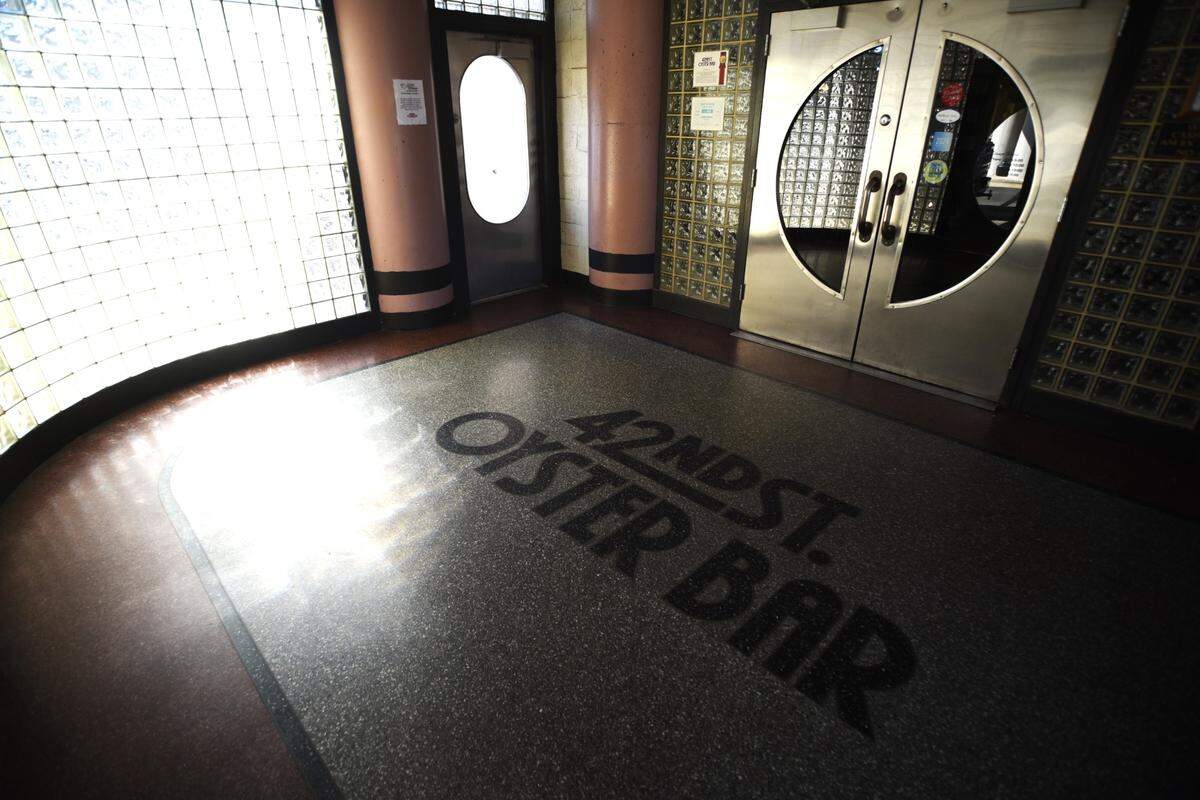
Though it was never particularly old, the Eures built 42nd Street with an inertia of authenticity. The original neon sign was refurbished and hung up in the restaurant’s entrance, glowing like a Christmas star. There was an old phone booth and dozens of photos of Raleigh history, newspaper clippings and ancient menus.
To borrow from “Hamilton,” 42nd Street always felt like the room where it happened — and would likely happen again.
42nd Street stewards
In 1988, only a year after 42nd Street opened, Eure Jr. passed away from pancreatic cancer. The restaurant’s managing partners Hurley and John Vick, each longtime Darryl’s employees, bought 42nd Street and steered it for nearly its entire run.
“They continued to make us so proud with how they ran it and how they cared,” Van Eure said. “They kept that same genuine hospitality feel.”
Calling the closing bittersweet, Eure said she understood the decision. The parking lot her dad bought in the 1970s is now valued at more than $3 million. The land where the restaurant sits is owned by Hobby Family LLC and is valued at $6.5 million.
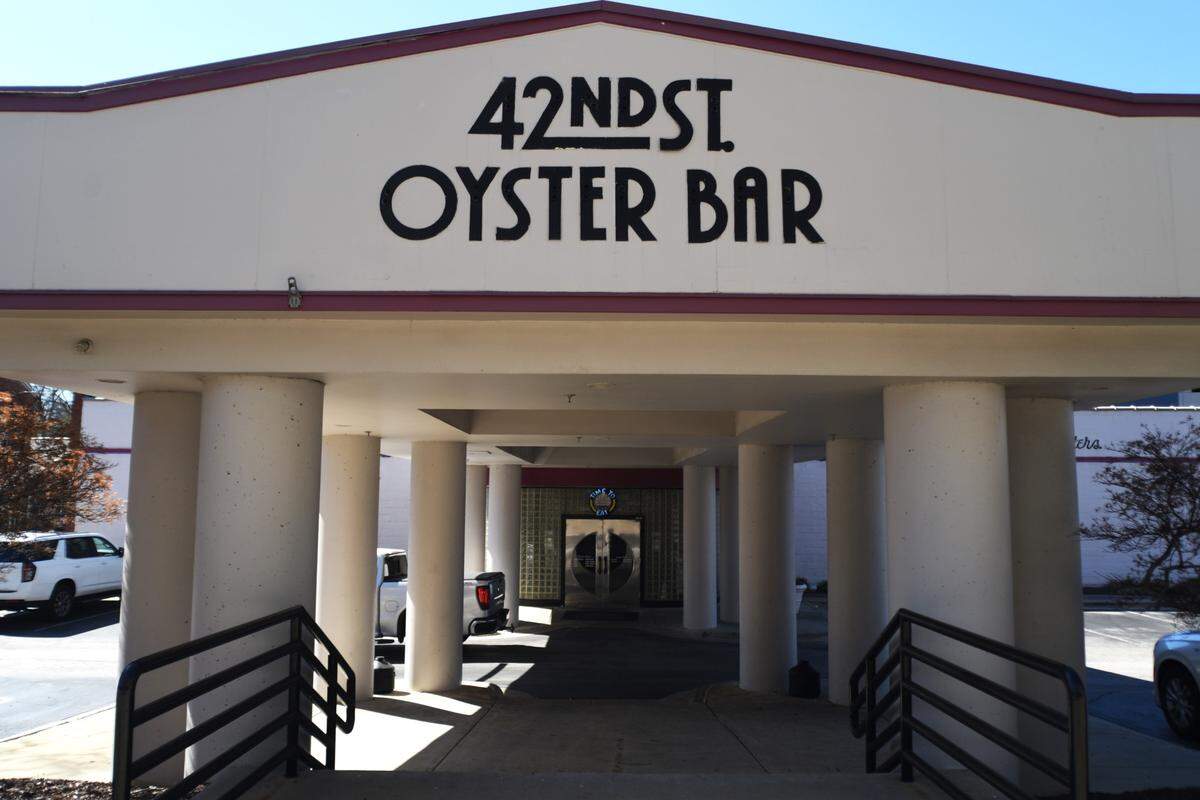
When it came time to consider a new lease, Hurley said they couldn’t come up with a new agreement where the restaurant made sense.
“We’ve had a good run,” Hurley said.
“I completely support Brad and John in their decision,” Van Eure said. “They made the best decision they could with all the facts they had to deal with.”
In the mural, legends look down
Looking down from above the zig-zagging bar is a giant mural of the saints and heroes of 42nd Street.
There’s Thad Eure Jr. as a young boy and his father as an old man, regulars in suits and laborers in work clothes, a couple dressed up and a man dancing with a raccoon. And holding a pool cue, there’s even Burt Reynolds, who legend has it loved the bar when he had road games in Raleigh playing football for Florida State in the mid-1950s.
At 42nd Street, now and forever, you always print the legend.
This story was originally published March 28, 2025 at 7:00 AM with the headline "Here’s one last look inside legendary Raleigh restaurant 42nd Street Oyster Bar."