Gardening Guide: How to use seeds to start growing a warm-weather garden
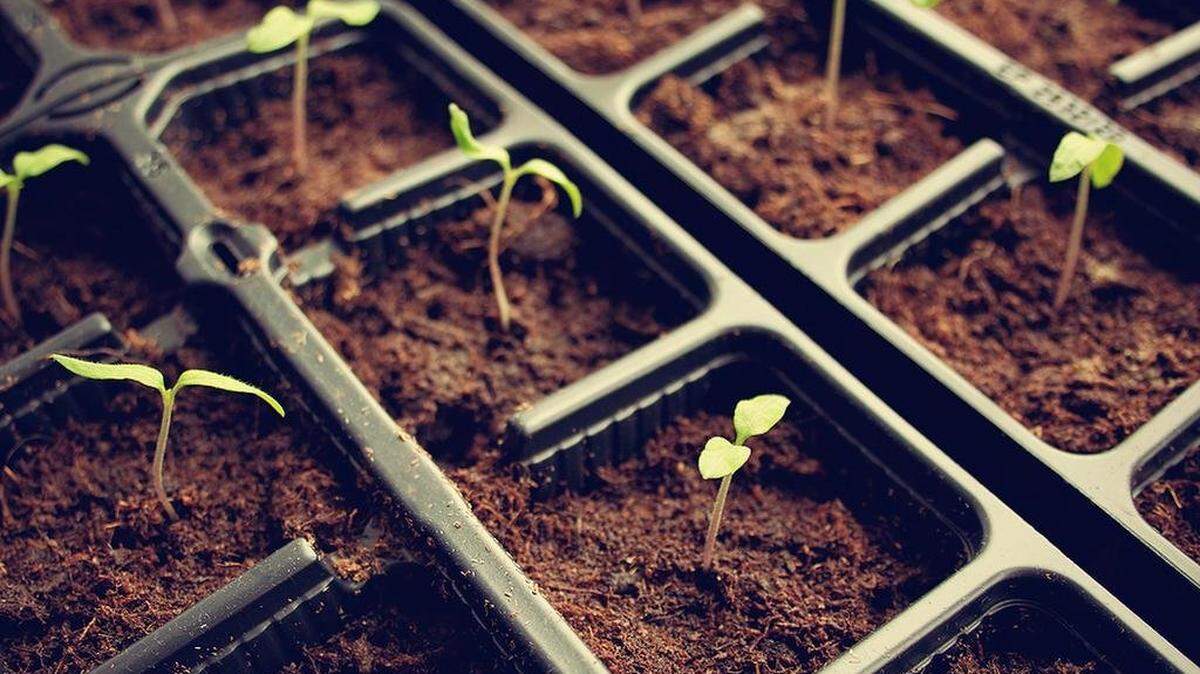
Warmer weather is here, but it’s not summer garden season yet.
We still need to get through some chilly nights, so while you’re patiently waiting to stick warm-weather plants in the garden, you can start growing plants from seeds indoors.
All you’ll need is a few materials from the local gardening or hardware store, and a little bit of free indoor space — like a bookshelf or some floor space in your garage.
We chatted with three expert seed starters to learn the basics. We’ll tell you what you’ll need, how much time it takes and even answer some frequently asked questions.
Our experts are Robin Baumgart and Cris Clemons, both Master Garden Volunteers with NC State Extension; and Howard Allen, owner of Faithfull Farms, a family-owned farm in Chapel Hill. Baumgart helps lead the “Ready-Garden-Grow” class taught at regional libraries, and Clemons helps lead a Healing Transitions class for therapeutic gardening.
Here’s what they want you to know about starting plants from seeds.
Why grow plants from seeds?
There are tons of benefits from growing plants from seeds, our experts said.
▪ A wider variety: If you go to your local gardening store and find baby plants, you won’t have many varieties. Maybe two kinds of lettuce, one kind of squash and a handful of tomato types. But if you head over to the seed rack, your options open up tremendously.
▪ Start your season earlier: By starting plants from seeds (inside), you can get your garden going about two weeks earlier.
That’s because your baby plants will have grown indoors in a nurturing environment while the outside world was still warming up. Once it’s warm, you won’t be starting from seed, but you’ll be starting from a little plant.
▪ Save your seeds: It typically takes a few years for seeds in seed packets to expire, so Clemons recommends busting out the Sharpie and writing dates on seed packets that don’t get used up.
“A pack of seeds that you’re not going to get through is only about $2,” Clemons said. “Make a garden friend and share seeds, that way you can kind of get them at half price. Or, you can write the date on your packet and save them for next year, and the year after that.”
Check the back of your seed packets to see how long seeds will last, she said.
▪ Less waste (and less time needed): This applies if you’re planting directly into your garden outside. While some plants might require a little more experience (like tomatoes, eggplant and peppers), beginners should be able to pop seeds in the ground and wait for the warm weather to start germination, Clemons said.
No need to buy seed trays, and there’s no need to use coverings to trap moisture and humidity in the early stages. No need to worry about hardening off plants, either. By starting directly in the ground, the plants adjust to their outdoor lives on their own, and they spur their own growing process when the soil warms and the days get longer.
Materials needed to grow plants from seeds indoors
Here are the materials you’ll need to start plants from seed:
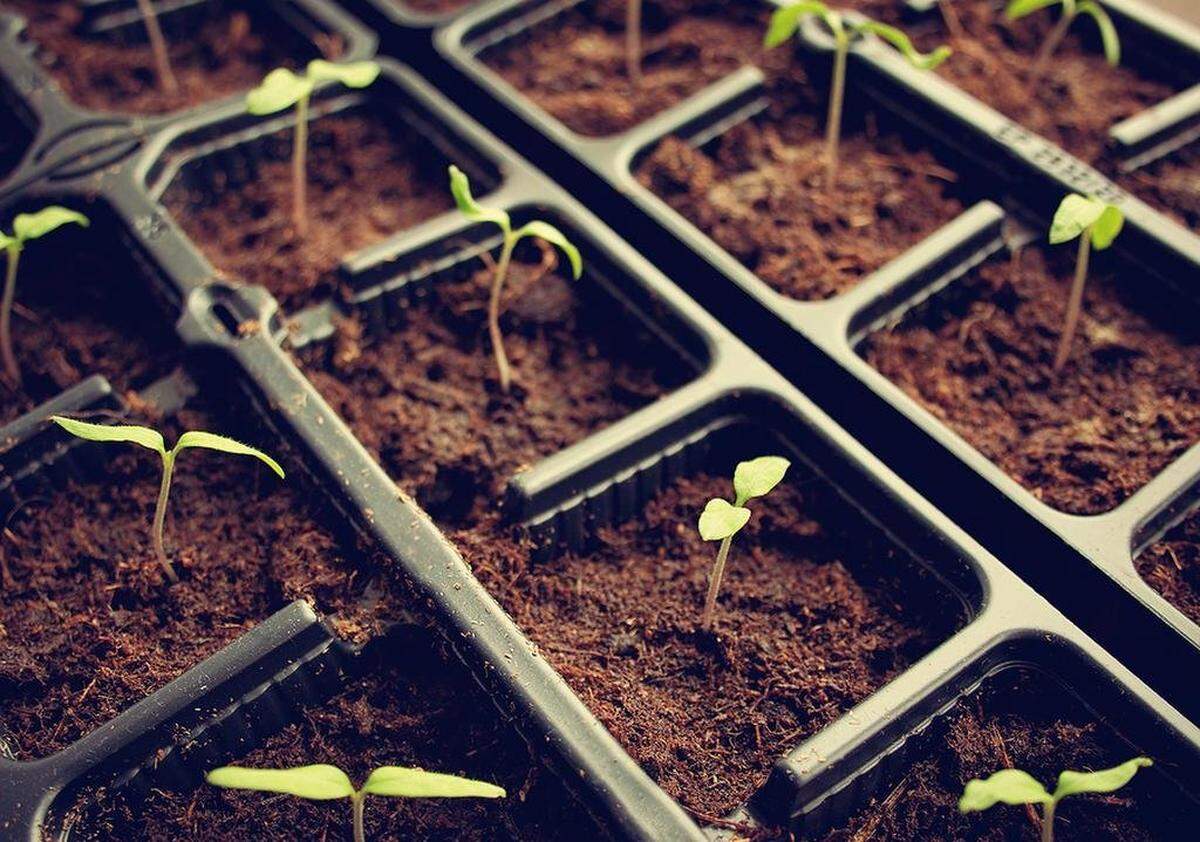
▪ Seed trays: Seed trays look like giant egg cartons. Each cell in the tray will be a temporary home to a seedling, which will be nurtured well enough to become a full-grown plant (outside) with time.
▪ Potting soil: You won’t use soil from the ground for this. Seed starting mix, which you can get at a big box store or a garden center, is needed to encourage oxygen circulation and give the roots room to stretch and grow.
▪ Grow lamp: The expensive version isn’t necessary. You can use LED utility lights, which are flat and long as well, to get the job done.
“I use an old bookshelf,” Baumgart said. “It’s easy to attach the lights to the shelves, and the light is usually very close to the soil, where you want it.”
▪ Heat mat: Since the soil might be too cold to promote germination, the heat map will fake a hot summer day, prompting the seeds to sprout.
(Note: You don’t necessarily need a heat mat, Clemons said, but it helps.)
▪ Covers: The seeds require a lot of moisture and humidity when they’re first planted, so you’ll need something to make the space resemble a greenhouse as much as possible. This can be a plastic cover that you purchase, or you can reuse yogurt containers, cups, the bottoms of water bottles or other dome-shaped things to trap that water.
▪ Water: A misting device will come in handy for delicate seedlings, but an alternative is to only water the bottom of the trays. (For misting, you can reuse an old spray bottle, but make sure it’s clean.)
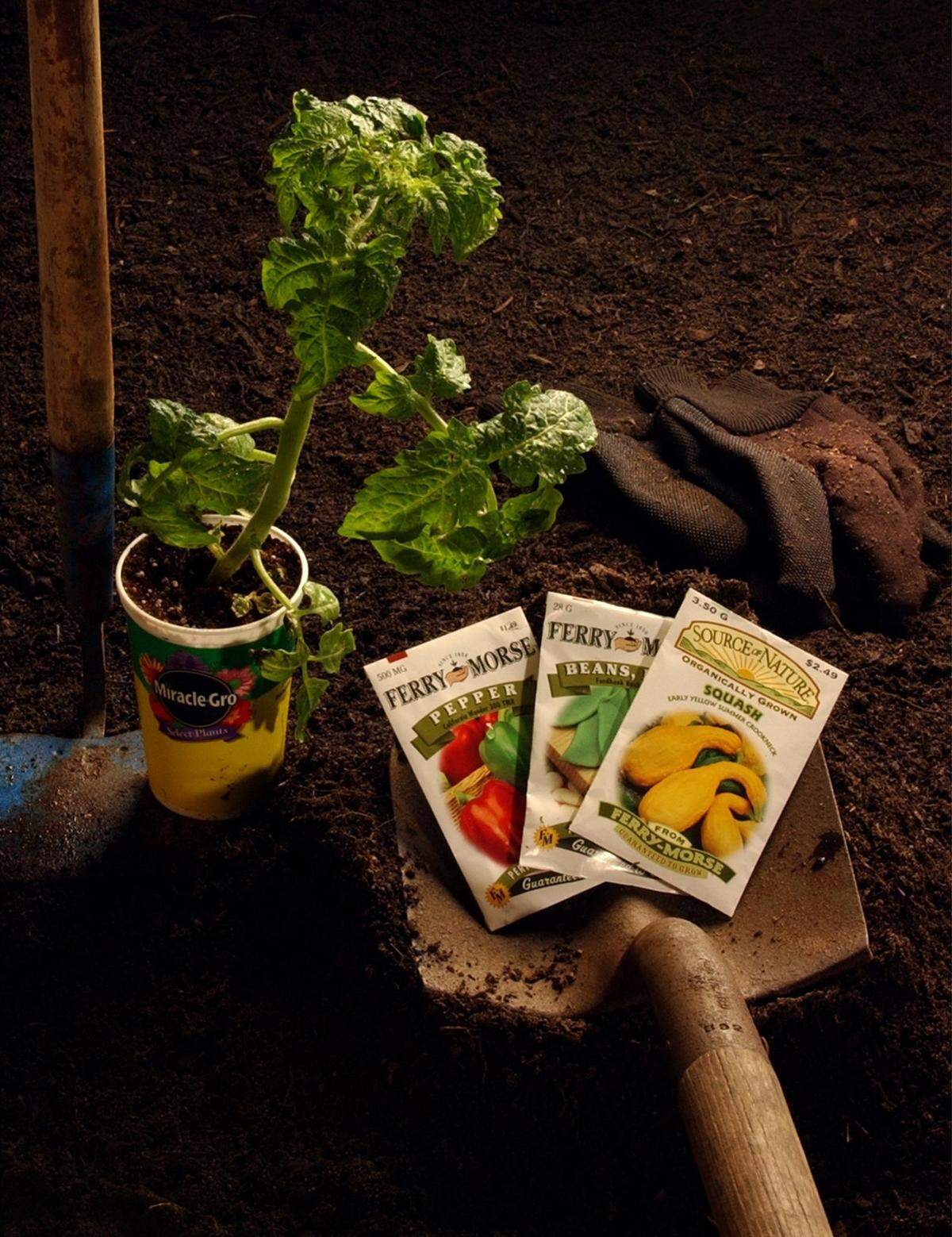
▪ Seeds: You can get these from a seed catalog, local gardening or hardware stores, or even big box stores like Lowe’s, Home Depot, Walmart or Target.
“Surprisingly enough, the seed varieties these stores select are the ones that grow best here in our area,” Baumgart said of big box stores. “They generally have the recommended brands on those little racks.”
How to grow plants from seeds indoors
Here’s how you grow plants from seed.
▪ Get your materials: See above.
▪ Fill your seed trays with soil: But don’t pack the soil in. You’re looking to use fluffy, airy soil so the plants have room to stretch. Soil that’s too tight will stress the seed, and it won’t perform best.
“A beginner’s mistake is to pack your seed trays with soil. You need to keep that loose,” Allen said. “Decreased oxygen flow will impact the root base of your plants, and it’s important to keep those healthy.”
▪ Add a hole: Read the back of your seed packets to get this information, but know that the depth of each hole varies for different kinds of seeds. A large zucchini seed will require a much deeper hole than a tiny, delicate lettuce seed, which barely requires a hole at all.
“A few seeds like light to germinate, like lettuce, “Clemons said. “You can really just sprinkle lettuce seeds on top of the soil.”
▪ Sprinkle your seeds: You’ll add more than one seed to each cell. Sometimes you’ll add two, sometimes you’ll add four or five. Again, the back of your seed packet should give you that information.
▪ Water slightly: A common mistake is to overwater and drown your plants. Especially when first planting your seeds, overwatering can shift the seed out of place, sometimes making the seed slide out of the cell. Gently water, and this is where your misting bottle can come in handy.
“It’s best to water from the bottom up versus the top once the seed has germinated,” Allen said. “Also, water very infrequently. The top might dry out,but as long as the bottom isn’t dried out, it’s OK. Beginner gardeners water whenever they see a dry spot, but being dry on top is OK — it’s the roots that need the moisture.”
▪ Cover your plants: This will trap the moisture, and you won’t need to water again until your seeds have sprouted.
There isn’t a set time that this takes, since all plants are different. The germination time is usually on the back of the seed packet. But it could be anywhere from three days to a couple of weeks, Baumgart said.
▪ Turn on your heat mat: You’re looking for your soil to be between 65 and 75 degrees F. Consistent heat is necessary for germination.
▪ After sprouting, add your light: When the seeds are covered, they don’t need light (since the seeds are still under the soil). But when they sprout, remove the covers and make sure the light is extremely close to the seedling – between one and two inches away.
If the light is further away, the plants will reach for it, making the plants leggy, thin and weak, Allen said. The LED lights won’t emit heat, so you don’t need to worry about burning the plants. Keep this light on between 12 and 14 hours every day.
▪ Adjust the light with time: As the plants grow taller and stronger, you’ll move the light up with the growth of the plants so the light is consistently one or two inches overhead. Continue keeping the light on 12 to 14 hours a day, and continue keeping the heat map on (and at the same temperature) all the time.
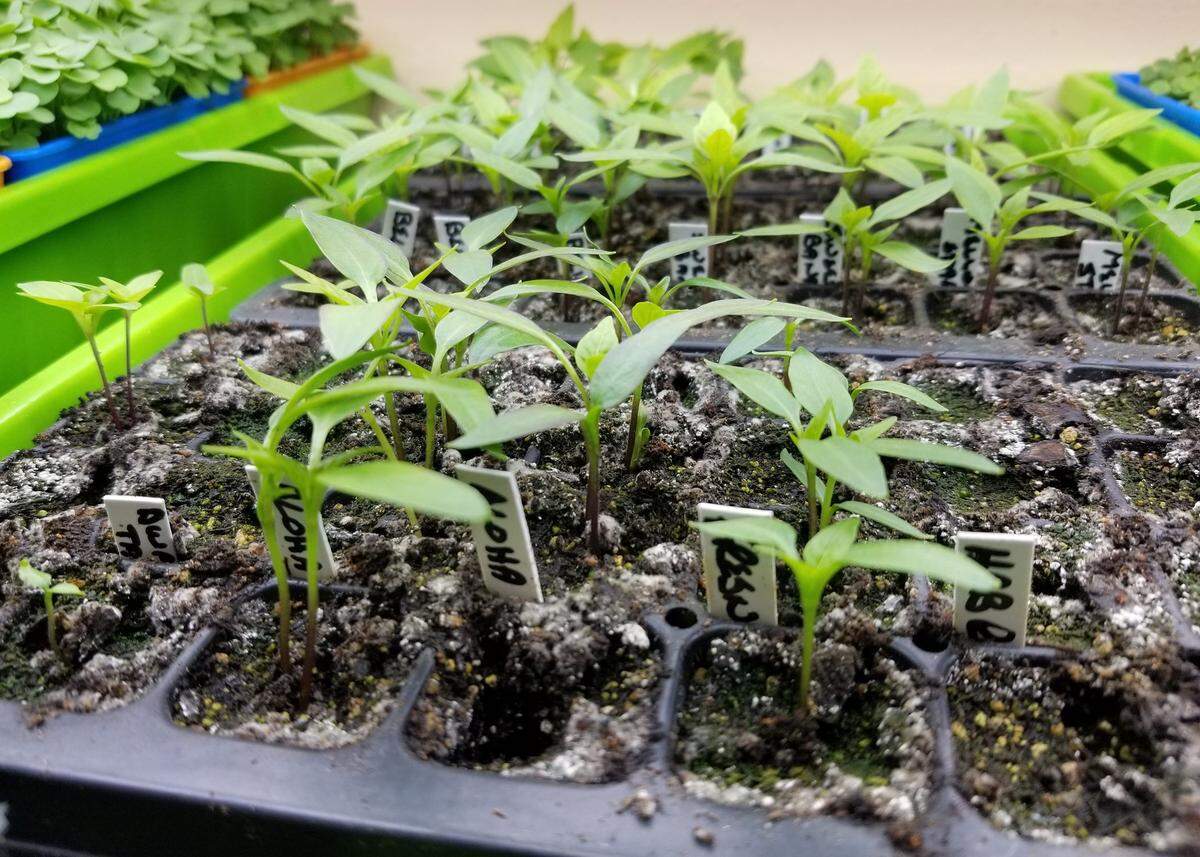
▪ Snip the weak ones: Determine which sprouts look the healthiest. Since you put a few seeds in each cell, you might have a few seedlings popping through the soil.
When they’re an inch or two tall, figure out which ones you will keep and which ones you will eliminate. To eliminate the weaker seedlings, take a scissor and cut the plant at the surface of the soil, removing its leaves and stem. Now, only one seedling will remain in each cell.
▪ Begin “hardening off:” This is the process of getting your plants acclimated to your outdoor garden, where temperatures are colder, wind gusts shake the plants and the sun shines brightly. Transferring immediately from inside all the time to outdoors all the time will shock the plants, making them vulnerable to disease and other hardship. To harden off the plants, start by keeping them outside for a few hours every day in the shade.
“I take about 10 days to completely harden off some plants, like peppers and tomatoes, outside,” Clemons said. “I increase time in the sun by about 30 minutes a day.”
▪ Continue “hardening off:” Each day, move the plants closer to a full-sun area, and keep them outside a little longer. They’ll need more and more exposure before they’re outside full time.
“No more than two or three hours each day, building up to all day over a two week period,” Baumgart said.
▪ Mark your garden for comfortable spacing: Before moving your plants from their seed trays to the garden, you’ll need to make sure you have adequate spacing. Seed packets might have information about this.
The NC State Extension office also has great information on spacing out the plants in your garden. Check out the Central North Carolina Planting Calendar for Annual Vegetables, Fruits, and Herbs: content.ces.ncsu.edu
▪ Be patient: If you put your plants outside too early, all you’ll do is stress them, lessening their yield and making them more susceptible to diseases.
“If you go too early you’re starting them off stressed, and they won’t do as well because they’re struggling to stay alive and combat the cold. They won’t be a total failure, but they won’t be as good as they could be,” Baumgart said.
“If you took two tomato plants the same size, you put one in the garden two weeks early and one in the garden on time, the tomato plant you put in first is going to be weeks behind. The first one will struggle, the second will take off. Putting in early won’t buy you anything,” she said.
▪ Transplant: Transplanting is the process of taking the baby plant, grown in a separate container, to your garden. You’ll only do this when the soil temperature outside is warm enough (between 65 and 75 deg F) for the plant to thrive.
“Even in the transplant process, there’s some shock involved because you’re disrupting the environment,” Allen said. “You want to minimize that with exposure beforehand. If they go through more severe shock, it’ll take a lot longer to recover, and that can impact the plants because they’ll be in an unhealthy state, they are more susceptible to diseases and pests and more things in the environment.”
▪ Troubleshoot from the garden: These plants will go into a small state of shock (called “transplant shock”) once they’re fully outside, and you’ll need to take necessary steps to ensure they are nursed back to health. Sunburn will likely be the main culprit, so prepare to shade accordingly.
▪ Water regularly: Your plants are in the garden! Water and care for your plants regularly, and make sure they’re healthy to produce good fruit and vegetables when harvest time comes around.
For a guide from NC State Extension, visit ee.ces.ncsu.edu/2020/03/starting-a-garden-from-seeds.
Frequently asked questions (and answers) when starting plants from seeds in NC
Here’s how the experts answered some frequently asked questions.
▪ When should I begin my seeds, if indoors?
Early to mid-March. Since the average frost date ends mid-April, you’re looking to have some of your plants in your garden in May, giving you six to eight weeks to go from seed inside to baby plant outside.
▪ When should I begin my seeds, if starting outdoors?
At the end of the last average frost date, which is mid-April. The seeds will only begin germinating with warm soil.
If you put them in earlier, they won’t begin their germination process until the soil warms more, and they may be susceptible to root rot.
▪ How long does it take to harden off plants?
About two weeks. Begin with your plants in a fully shaded environment (like the side of your house) for a few hours the first day, and slowly move the plants closer and closer to full sun, leaving them outside a little bit longer each day.
▪ When do I know my plants are ready for transplant?
Plants ready to be transplanted are six to eight inches tall, and they are still standing strong after their time outdoors. Usually, they will have been in seed trays for six to eight weeks, with two of those weeks spent with at least some time (not always full days) outside.
▪ I need help! Who can help me?
Master Garden Volunteers like Clemons and Baumgart can! NC State Extension’s Garden Help Directory can help you contact the best person for your needs. For more information, visit emgv.ces.ncsu.edu/need-gardening-help.
Questions about backyard gardening?
Do you have questions about your backyard garden? Any stories you’d like to see about gardening topics? Tell us here! Or email kcataudella@newsobserver.com.
This story was originally published March 19, 2022 at 9:02 AM with the headline "Gardening Guide: How to use seeds to start growing a warm-weather garden."