Love Language: Celebrating multicultural relationships in the Triangle
CORRECTION: A story about multicultural relationships published online and in print on Monday incorrectly stated where Alvin and Omelia Garner, of Orange County, got married. They exchanged their vows in the parsonage of St. Joseph’s Christian Methodist Church in Chapel Hill, because the pastor had concerns over racial tensions at the time. Their eldest daughter’s name is spelled “LaShell.”
The latest U.S. Census shows, like much of the country, North Carolina is more diverse than it was in 2010.
And the more racially and ethnically diverse the state’s people become, so, too, do its married couples.
The percentage of married-couple households that are interracial or interethnic grew across the United States from nearly 8% to 10% over the last two decades, according to a report from the U.S. Census Bureau.
For Valentine’s Day, we spoke with people in the Triangle married to someone from another culture.
Alvin and Omelia
The odds were likely against Alvin Garner and Omelia Farrington when they met at The Goody Shop, a former restaurant on East Franklin Street in Chapel Hill. It was September 1967, a little over three years after Congress had enacted the Civil Rights Act of 1964.
“The manager, he decided to hire me and he took me around and introduced me to all the staff,” Garner said. “When he got to Omelia, he said, ‘Anything you need to know, ask Omelia.’”
And that he did.
So much that they became very fond of each other.
Farrington was a 30-year-old divorcee with three daughters; Garner, a 21-year-old college junior at UNC. She was Black. He, white.
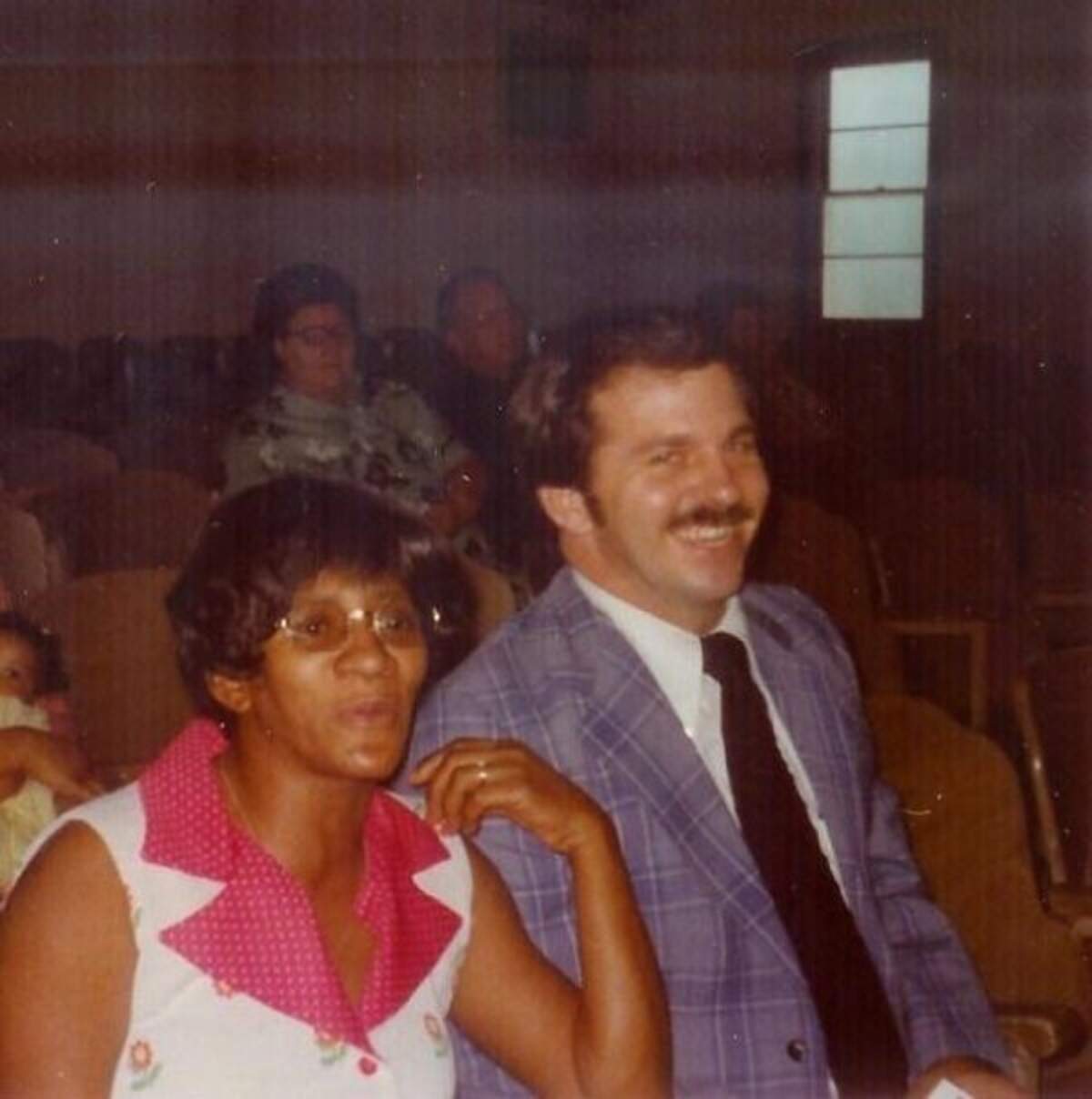
It never affected his feelings about her, Garner said.
“I asked her — I guess, towards the end of October — what she wanted for Christmas. She said a friendship ring,” Garner said. “I couldn’t find one I liked, so I asked her if a diamond would work.”
Come December, that friendship ring became an engagement ring, even though Interracial marriage had only recently become legal in the United States. It still wasn’t socially acceptable.
Farrington’s family had reservations but welcomed Garner and the relationship.
But when Garner told his family that he was engaged to a Black woman, “it set off fireworks,” he said.
“My dad stood up and looked at me, hollered and walked out the door,” he said. “My mother just kind of looked at me with her mouth wide open.”
Garner’s parents were so ashamed, his father tried to change their annual Christmas visit to his family in Eastern North Carolina and instead travel to Garner’s mother’s relatives in Indiana.
“He didn’t want to face his family with what I said,” he said.
Garner didn’t fully lose contact with his family, despite his father’s many attempts to talk him out of getting married, including sending his hometown pastor as messenger.
Racial tensions were so high, the couple’s Plan B was to get married in Tennessee by a minister who supported interracial marriage.
But Farrington and Garner married on June 23, 1968, at St. Joseph’s Christian Methodist Church in Chapel Hill, becoming the first interracial couple to obtain a marriage license in Orange County.
When the couple walked out of the church, Garner says, there was a crowd waiting for them.
He says he doesn’t remember if they were there to protest or celebrate with them, but it didn’t matter. They were off to their reception in Carrboro.
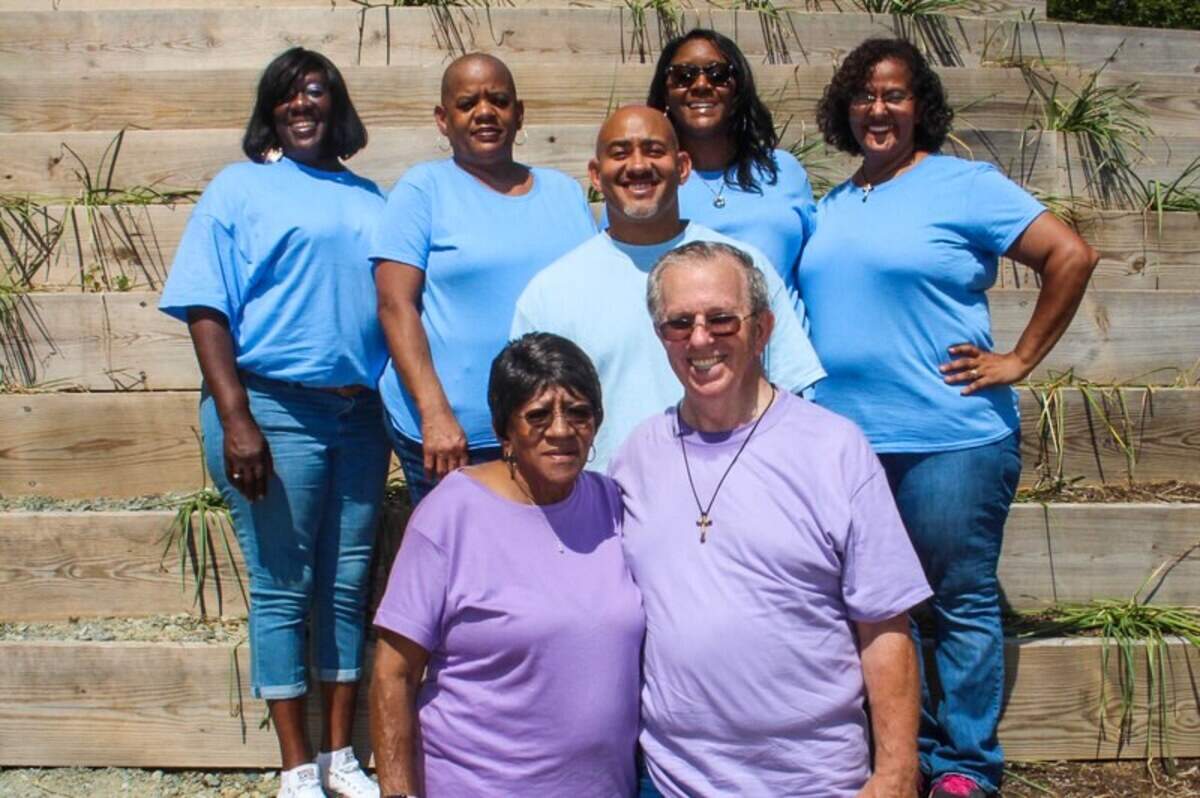
Garner helped Farrington raise her three girls, LaShell, Pam and Vera, who still call him “Daddy.” The couple had two children of their own, Alvin Van II and Amy.
Valentine’s Day wasn’t as big a celebration as their anniversary, Garner says. But his daughters say he never missed one and always gifted their mom, and each of his children, chocolates and flowers.
“I think the last one I got (from him) might have been when I was 41 or 42,” LaShell, the eldest, said.
To celebrate their 40th anniversary, the Garners renewed their vows in 2008.

The two spent another 11 years together before she died on Jan. 3, 2020, from renal failure. She took her last breath holding her husband’s hand.
When asked if he still misses her, Garner said, “Every day,” and held up his left hand, his wedding ring still on.
Justiss and Shanee
Food has always played an important role in Justiss Boyer and Shanee Cowland’s relationship. Having grown up in a white Southern family meant there would be lots of firsts for Boyer.
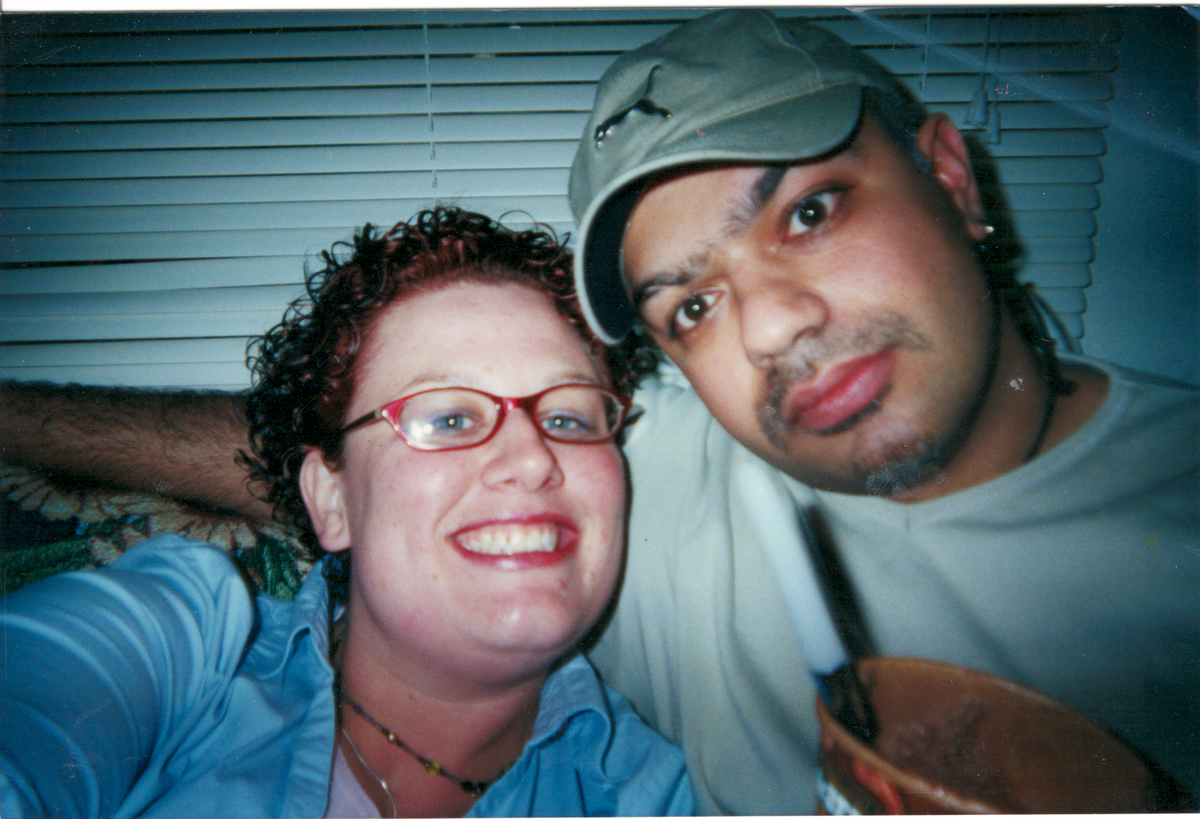
After meeting online in 1994, Cowland and Boyer reconnected and started a long-distance relationship in 2001.
He introduced her to his Pakistani family in 2002 when she visited his hometown of Peterborough in East England. His grandfather had died and they were gathered at his home to keep his wife, Cowland’s step-grandmother, company. In Islam, “iddah” is a time when a widow must stay home in mourning, as outlined in the Quran, except for important errands.
“All they wanted to do was feed me,” she said. “It smelled so good!”
Cowland’s family had made a special eggplant curry with a fragrant scent that filled every space of the home, Boyer said.
“I wanted to, like, take that smell with me … I can still smell it!” she said.
What she couldn’t smell was the punch-packing heat simmered in the dish.
“All of a sudden my mouth is on fire,” she said and laughed, as Cowland laughed in the background. “I cannot talk, like, everything’s on fire.”
Boyer remembers the family trying to help her cool down as they all laughed at and with each other.
“I just felt so at home – completely,” she said.
The welcoming process was a little different for Cowland when meeting Boyer’s family, and just living in the United States overall.
After the September 11 attacks, the U.S. saw an uptick in anti-Muslim sentiment which affected many people of Arab and South Asian descent, like Cowland.
He remembers “feeling ‘othered’ as a brown man,” he said, especially when he traveled back and forth between the United Kingdom and the U.S. early on in their relationship.
“That made me, you know, look suspicious. And when I say other people, I mean, that included Justiss’s mom,” a science teacher, said Cowland.
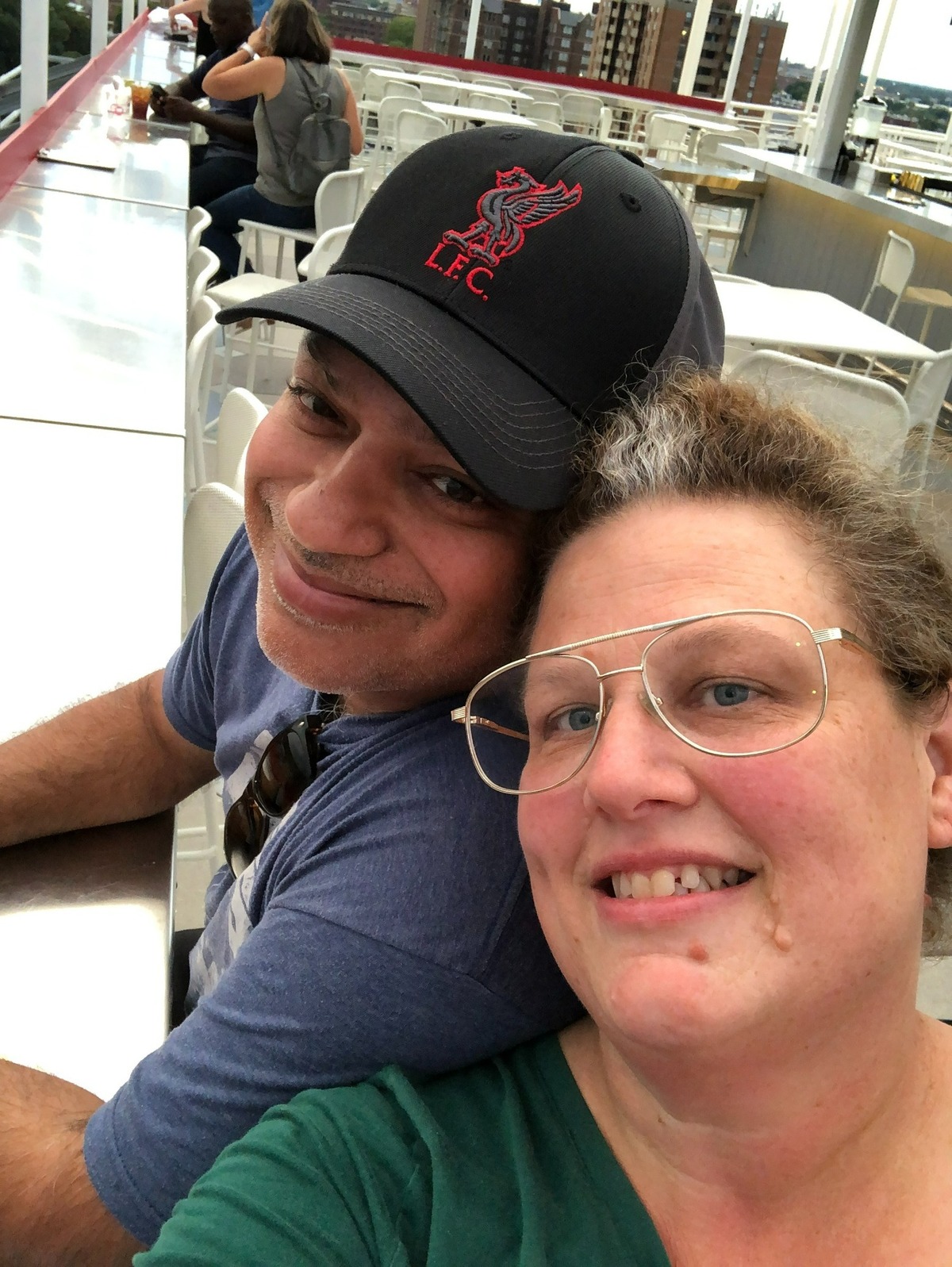
Regardless of family opinions, he says mutual acceptance of each other’s differences and never using them to hurt each other have been essential.
“I don’t think there has ever been an incident where race has ever sort of been thrown at the other person,” he said. “It’s always very easy to sort of use something against someone else to hurt them. And that’s never been the case, either towards or from Justiss.”
When it comes to how they celebrate Valentine’s Day, Cowland says the two sometimes exchange cards but mostly see it as “a Hallmark holiday.” Instead, their way of showing affection toward each other is more tactile, which he gets from his own family.
“My mom would always give me a kiss goodnight, and I would always come say “goodnight” to her. I’d always give her a kiss before I went to school every day without fail,” he said. “Doesn’t matter how angry you were at someone, you never went to bed, you never left the house without getting a kiss.”
“I think as his partner I can see, like, how well he was brought up as a person by his own family because he takes such good care of us — myself and my son, who isn’t even biologically his,” she added.
Boyer, who owns a gender-neutral hair salon in Mebane, recently made her husband a curry for dinner for the first time.
“I just put all my love into it,” she said. “Because in his culture feeding your family is an act of love.”
“I have to admit, she makes better Indian food than I do,” he said.
Azul and Erica
“Poster children for love in the modern age.”
That’s how Azul Zapata and Erica Rogers described themselves in an interview with The News & Observer, only slightly joking.
“Where did we meet? On Bumble. What are we? Two women from completely different cultures,” Zapata said.
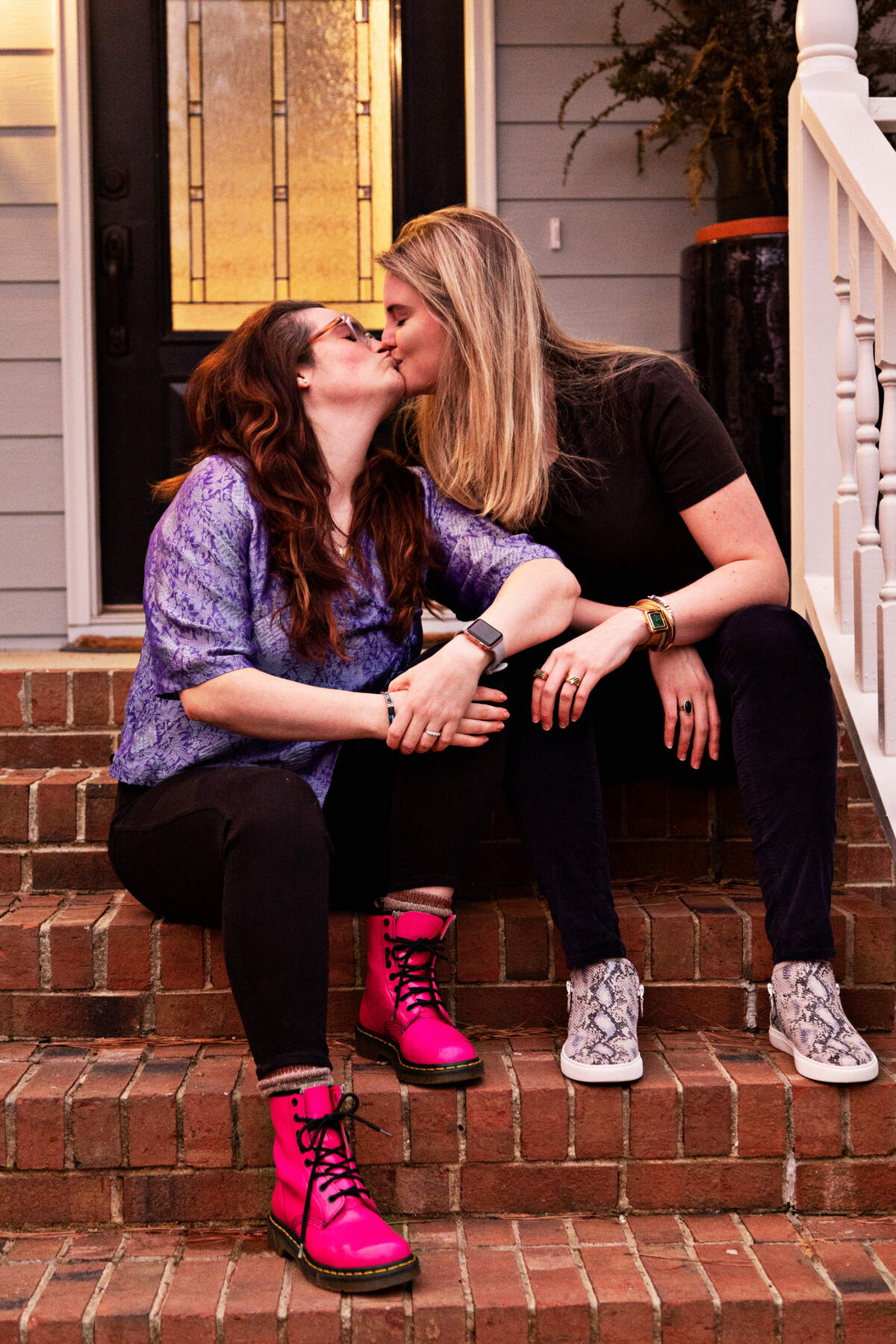
Zapata was born and raised in the Andean town of San Carlos de Bariloche, also just known as Bariloche, in Argentina. Her family moved to Statesville, North Carolina, when she was in middle school.
Rogers was born in Canada to an English father and a mother of Dutch descent, but moved to Cary, where she grew up, in the late 1990s.
She’s now an intellectual property attorney at a firm in Raleigh. The legal scene wasn’t exactly where she wanted to find love, so she tried Bumble, an online dating app.
“What appealed to me about Azul is that she was a musician and that was obvious from her Bumble,” Rogers said. “A musician and international — even just her name (‘Azul’ means blue in Spanish) — and so that instantly caught my attention.”
“She was a piano performance major (in college),” Zapata said. “That is the reason we have a sound studio downstairs.”
Even though Rogers is white and was born and raised in North America, she does identify with parts of the immigrant experience as a second-generation immigrant.
“But I also have a lot of privilege because no one would know, right?” she said. “But at the same time, yes.”
Zapata says her immigrant experience was much different. As a native Spanish speaker she had to overcome language barriers as a newcomer, for one. And while she acknowledges being a white Latina, there are certain aspects of her identity that are completely different from that of a white American.
“There’s a, like, umbrella of the immigrant experience,’‘ she said. “I think that was something that we (discussed) a lot in the first year of our relationship.”
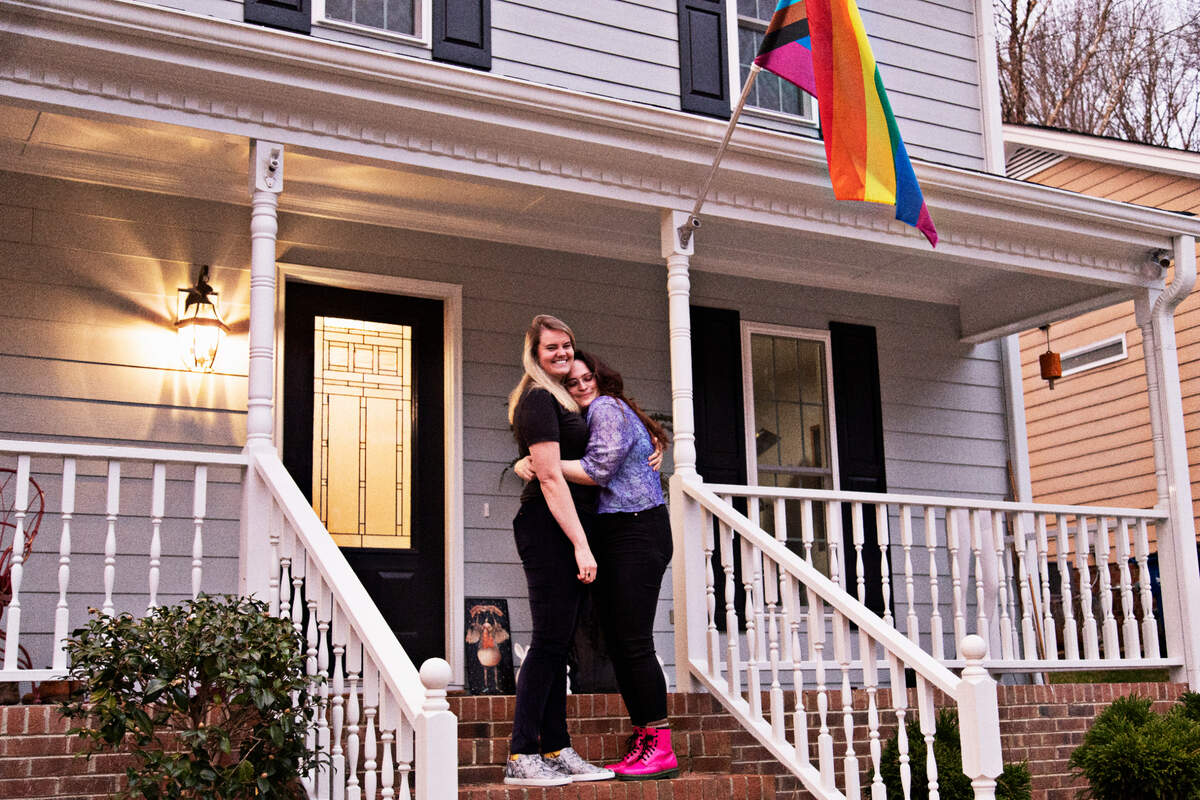
Among the similarities they share include their love of family.
“When you date someone, you date their family,” Zapata said, Rogers nodding next to her.
“I think it was hard for Azul to understand why, like, in the family group, everyone’s opinion needs to be considered,” Rogers said. But Zapata actually thinks her Argentine roots and culture made it easier for her to understand the importance of family in everything.
“I think maybe most people would have been overwhelmed in that scenario because it is a lot of people,” she said. “I’m used to being in, like, a big thing, and if I still lived in Argentina, I know for a fact that I would be hanging out with my cousins, and my aunts, and my uncles, and just having that kind of familiarity.”
But Valentine’s Day is just for the two of them.
Every year since they started dating, Zapata and Rogers dress up for a fancy breakfast at a local boutique hotel.
“It’s an underrated idea to just go out on Valentine’s Day and have breakfast,” Rogers said.
“We never make a dinner appointment,” Zapata added. “I make dinner!”
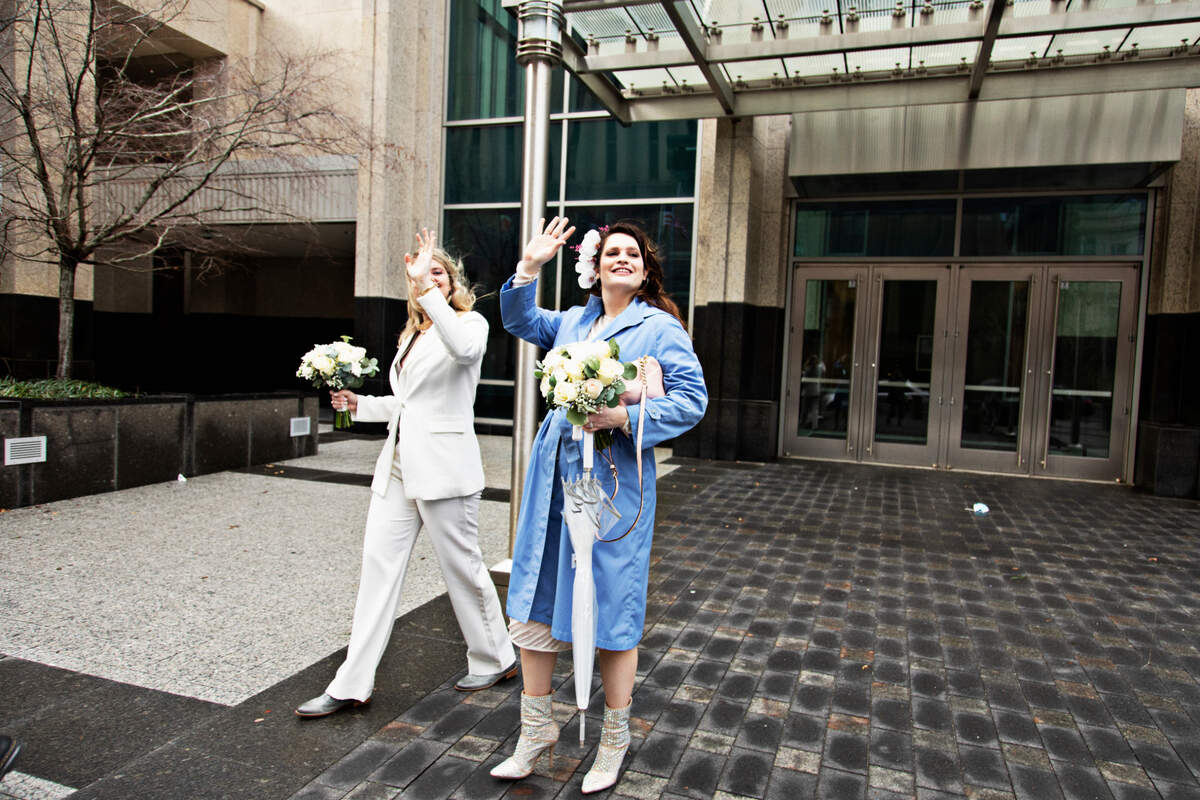
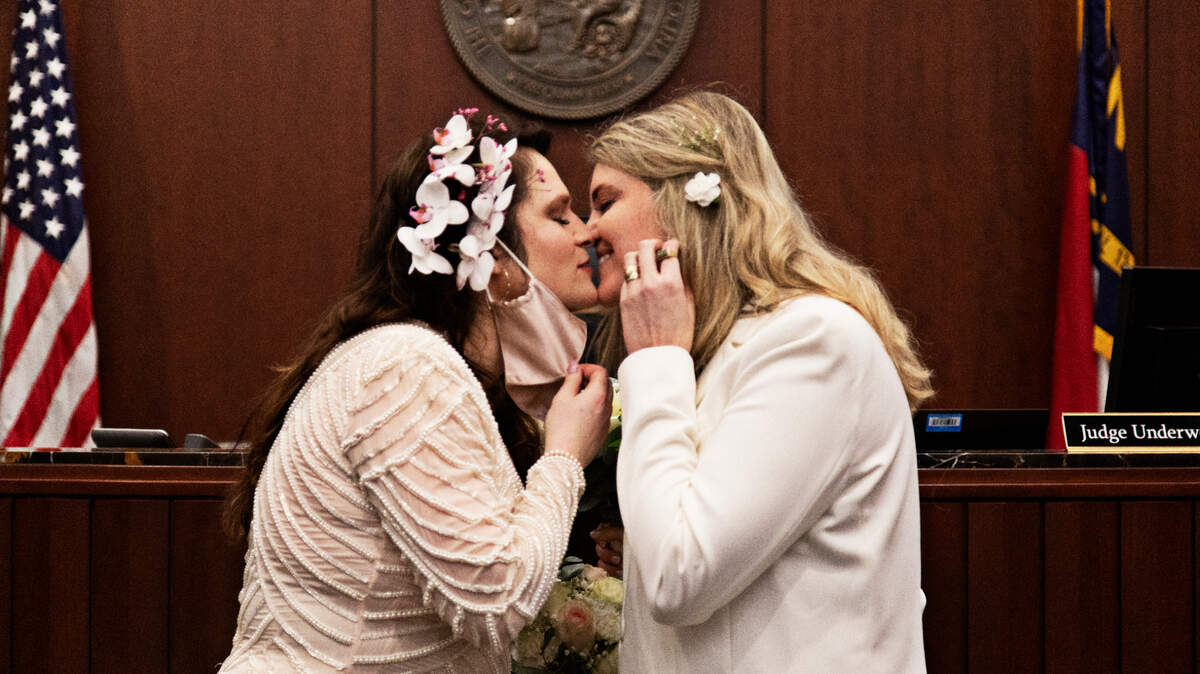
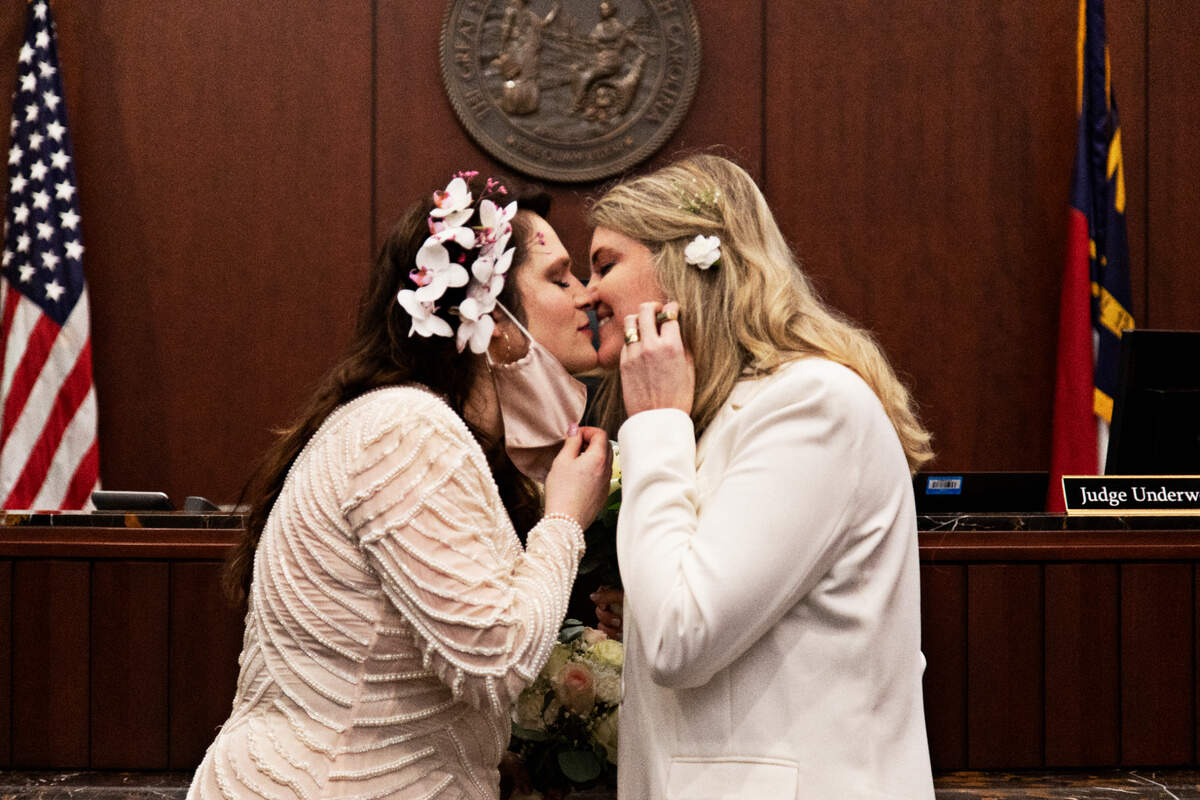
This Valentine’s Day will be their first as each other’s wife. The couple exchanged vows at the Wake County Justice Center in Raleigh on Feb. 4 and had an intimate reception with their closest family and friends. A bigger celebration is scheduled for the summer.
Mirella and Saif
Mirella Ledesma, a Mexican Catholic, and Saif Rahman, a Bangladeshi Muslim, are more similar than they sound.
The couple, who have been married for 11 years, met on a Salsa Night at the former Red Room Lounge on Glenwood Avenue in downtown Raleigh. He knew he wanted to marry her from the start.

“He had already told his friends, like, we’re dating,” Ledesma said. “And that was not true. I didn’t even know who he was!”
Even though she wasn’t immediately attracted to him, she was intrigued. They continued seeing each other over the following weeks.
“He was very different and he loved cooking,” she said. “We were not even (officially) dating, and then he just told me, ‘So I’m gonna marry you.’”
Put off by his extreme confidence, she broke off the relationship. But they rekindled shortly after and dated for three years before Rahman asked her to marry him again.
“I proposed to her in the Rockefeller Center,” he said. “She didn’t know what was happening. She was, like, ‘What? Are you crazy?’”
Ledesma accepted. But through their engagement, something troubled her.
“When he proposed and (we) got married, I knew right away, of course, it was going to be hard for his family,” she said. “I was like, even though they might not accept me, they will eventually accept me.”
It wasn’t until the couple’s fifth wedding anniversary that Ledesma was invited by Rahman’s mother to visit her and his father at their home.
It went better than she had expected.
“She gave me gifts, a traditional dress that a bride would wear in their country — a sari — with a gold necklace. She gave me jewelry. … It was like a welcome,” she said. “It was very emotional for her and for me.”
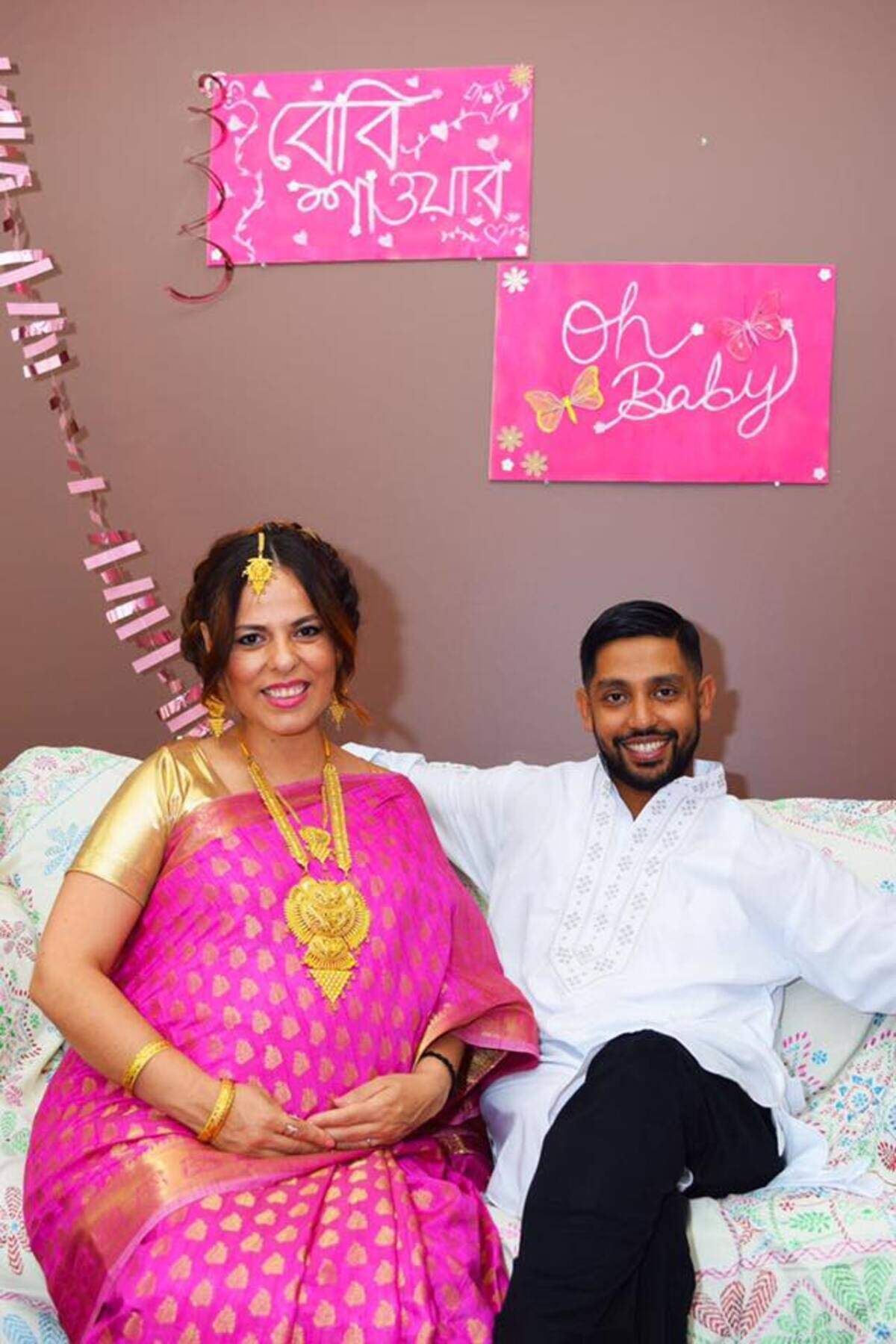
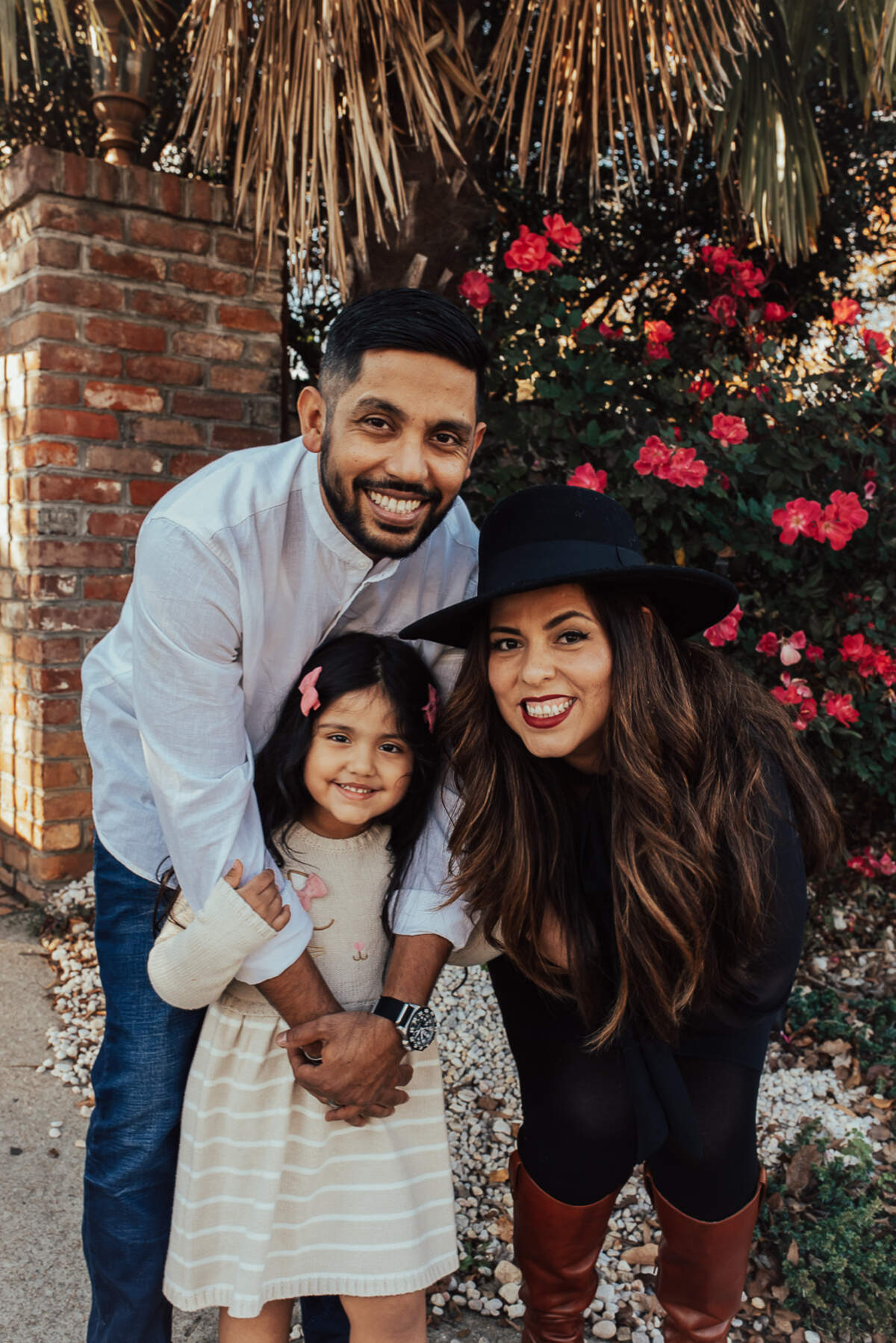
Rahman goes to Sunday mass with Ledesma and their 4-year-old daughter, Maya. And they both join Rahman at his mosque on Fridays and for Muslim holidays.
“We have decided that Maya is going to learn both religions,” Ledesma said. “She does her prayers at night, both in Arabic and Spanish.”
Raising a child in a multicultural, multilingual and multifaith home is important to the couple, but they say, when Maya grows up, they will let her decide what she wants to practice and live by.
On one condition …
“There are some things that we always thought were important from day one to make sure we were clear about,” Ledesma said. “One of them was Maya not eating pork — respecting the fact that Maya was not going to eat pork — because it was important for him and his family.”
Rahman, who is an award-winning chef at Vidrio in downtown Raleigh, says the similarities between both of their cultures’ food are uncanny.
“We (Bangladeshi people) cannot eat food if there’s no cilantro, chili or limón (lime in Spanish),” he said. “Same with Mexican food, right?
“Same thing with tortillas, right? Like we eat roti all the time,” he said, referring to a typical South Asian flatbread made out of rice flour and often shaped similarly to Mexican corn and wheat flour tortillas.
Ledesma and Rahman both agree that the best way to make a multicultural relationship work is by finding similarities in each other’s differences and learning more about them to avoid stereotypes.
“It is very important for us to celebrate our cultures,” Rahman said.
“At the end of the day, if you’re not killing, if you’re not a bad person, if you know what’s good and what’s bad,” Ledesma explained. “Go by that matrix of being a good human. That’s what matters the most.”
You won’t find Ledesma and Rahman celebrating on Valentine’s Day.
For one, it is not traditionally celebrated in Bangladesh. It’s also one of the busiest weeks of the year at his restaurant as people wine and dine their loved ones, Rahman said.
That’s why Ledesma tends to spend it with her closest friends, sisters, nieces, and of course, little Maya. In Mexico, the holiday is celebrated and known as el Día del Amor y la Amistad, or the day of love and friendship.
“But he always comes (home) with flowers,” she said with a grin.
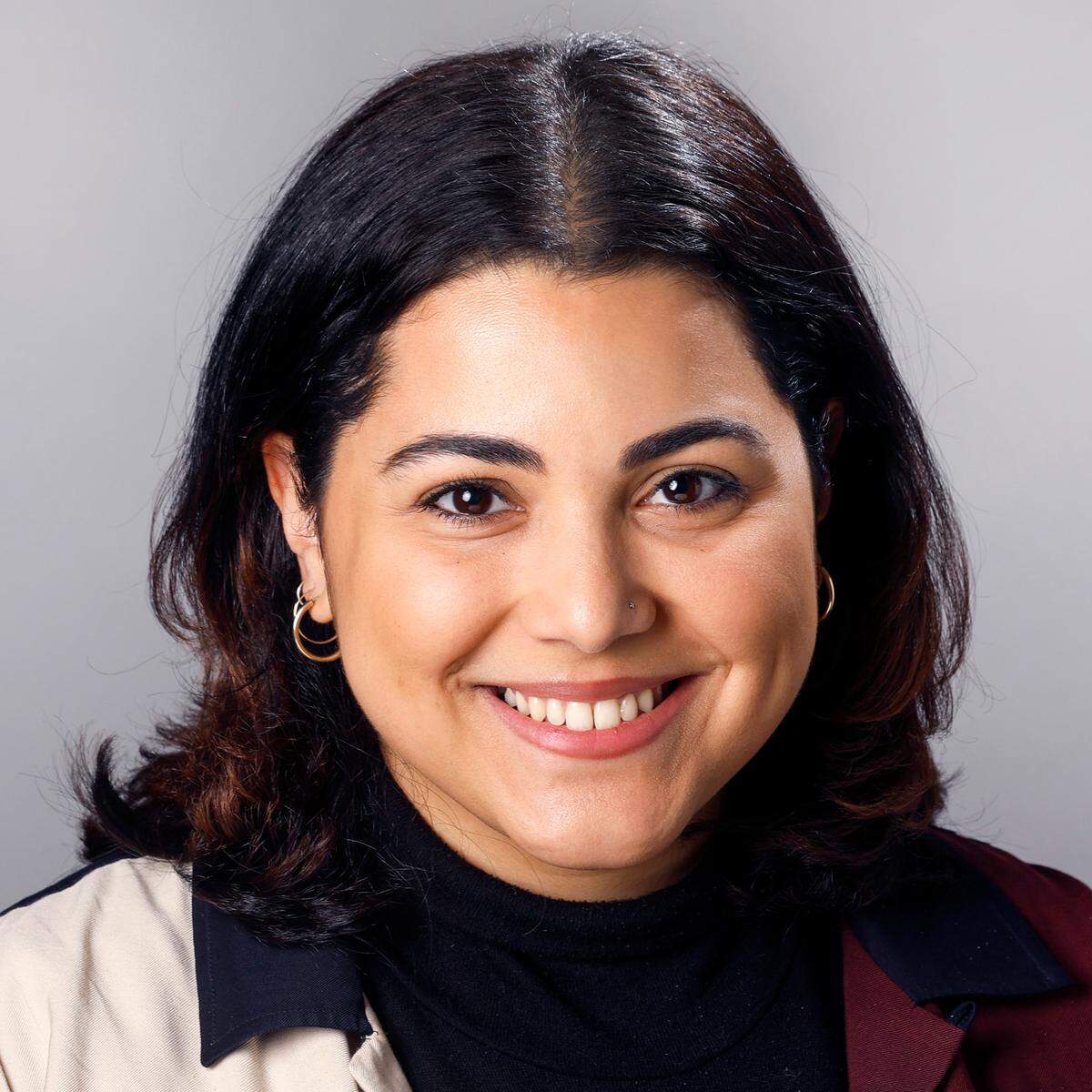
Laura Brache is a Report for America corps member and covers the Triangle’s diverse communities for The News & Observer.
This story was originally published February 13, 2022 at 8:00 AM with the headline "Love Language: Celebrating multicultural relationships in the Triangle."