
Open Source: NC-bound startup is about to fly supersonic. We asked pilots what it’s like.
I’m Brian Gordon, tech reporter for The News & Observer, and this is Open Source, a weekly newsletter on business, labor and technology in North Carolina.
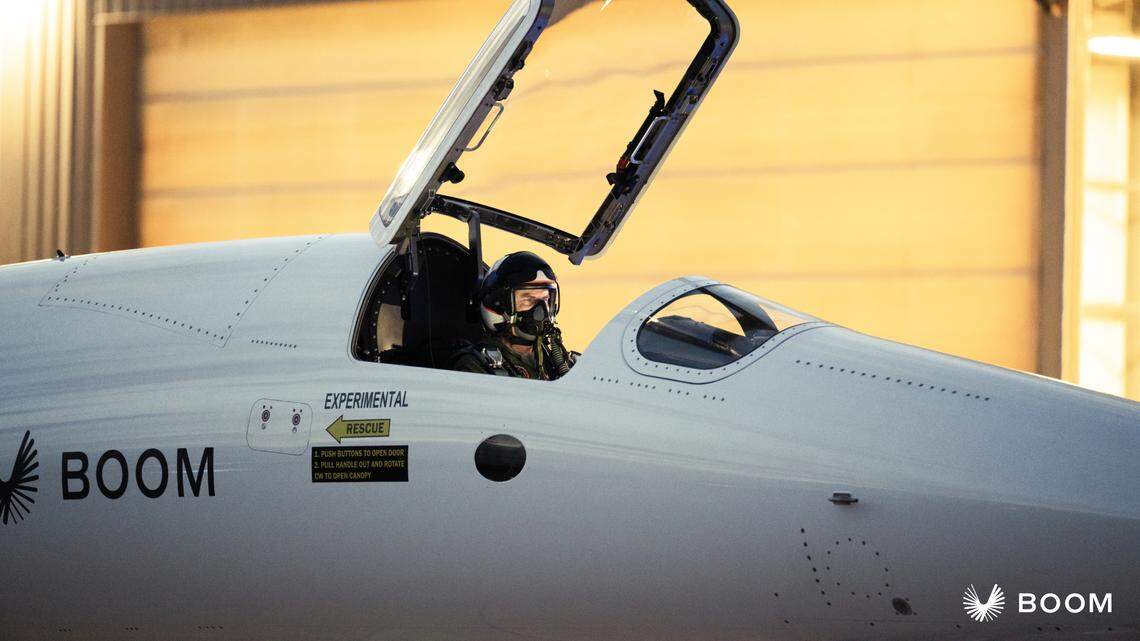
Boom Supersonic expects to break the sound barrier for the first time Tuesday, the company confirmed, as the jet startup building a North Carolina superfactory readies its next test flight. Much still needs to happen before Boom begins constructing passenger airplanes in Greenboro (for one, it has to make an engine), but going supersonic for a company called Boom Supersonic is an important milestone.
Will Boom Supersonic fulfill the dream of the Concorde and shuttle people across the sky at up to 60,000 feet? Will enough people pay thousands of dollars for faster flight times? Can Boom meet its environmental sustainability goals? Will the company open its North Carolina plant on time and eventually employ more than 1,700 workers in the Piedmont region?
There aren’t answers to these questions today.
But what is it like to fly supersonic? That is something people can answer. To find out, I connected with two Air Force veterans who have each flown hundreds of times at above Mach 1.
If you want tales of harrowing conditions, I suggest renting “Top Gun: Maverick.”
“Actually, it’s a smooth transition going through the speed of sound,” said Lt. Col. Tony Bevacqua, who first went supersonic in 1957 near the height of the Cold War. Bevacqua piloted the high-altitude U-2 jet, and later, the SR-71. His early missions, he said, involved “collecting atomic particles” in the air. At 91, he is a link to Air Force history, having crossed paths with Chuck Yeager, the first person to break the sound barrier.
He compared supersonic flight, or any flight really, to driving a car.
“You’re looking straight ahead,” he said. “Doesn’t matter what speed you’re doing, if you look sideways, you see all those telephone poles going by. That shows your speed. In the sky, you can tell your speed by the clouds.”
Col. Thomas Drake, too, has never flown supersonic commercially, but has broken the sound barrier in five different fighter aircraft during his military career (1971 to 1991). As a plane approaches Mach 1, he said, shock waves begin to form and the rate of acceleration slows down a bit. But nothing major.
“The experience was virtually the same in each and every one of (the flights),” he said. “And the two words I would use to describe it were uneventful and unimpressive. I know for an article it might be better to say it was some life-changing event that brought you closer to God or something. It’s not.”
Passengers, he said, wouldn’t know they’ve broken the sound barrier unless they’re told (The Concorde displayed a “Mach Meter” in the cabin to inform passengers when they reached supersonic speeds.) No one inside the plane hears the sonic boom.
One unique aspect of supersonic flight has nothing to do with speed, but instead altitude. Up around 50,000 feet, Drake said he could see the curvature of the earth. At closer to 60,000 feet, where Boom hopes to fly, this curvature becomes even more pronounced.
Boom Supersonic will live stream its first supersonic test flight on Jan. 28
Should EPA employees have to report to RTP campus?
On his first day in office, President Donald Trump signed an executive order calling for the end of remote work arrangements for federal employees. This marks a considerable change for many who report to the U.S. Environmental Protection Agency air quality campus in Research Triangle Park. Under a previous rule, eligible EPA employees could work from home up to 80% of the time.
“Everybody’s curious what’s going to happen,” one local EPA employee said. “Do we have to go into work now? Managers have told us to just wait for an official email.”
Telework at the EPA has been common since the pandemic, with the agency’s union contract praising it for helping recruit and retain staff. In a statement to The N&O this week, the agency said it is “working to diligently implement” Trump’s executive orders, some of which touched on broader EPA policies.
.jpg "IMG_5455 (1).jpg")
Clearing my cache
- The drug manufacturer Amgen is cutting the ribbon today on its substance production plant in Holly Springs. The California company says it’s already hired 250 workers at the site, roughly a third of its promised eventual headcount. During the same ceremony Friday, Amgen will also break ground on a $1 billion expansion of the Wake County facility.
- Rocket League, a popular video game that blends soccer and vehicles, announced dates for its annual Raleigh Major. The event will be held June 26 to June 29 at the Lenovo Center. Sixteen teams will compete for a prize pool of $350,000. Cary-based Epic Games owns Rocket League though its 2019 acquisition of the gaming company Psyonix.
- Forge Battery secured $100 million from the U.S. Department of Energy earlier this month to support its future lithium-ion battery factory in Morrisville. The company said it plans to begin construction on the Triangle plant early this year.
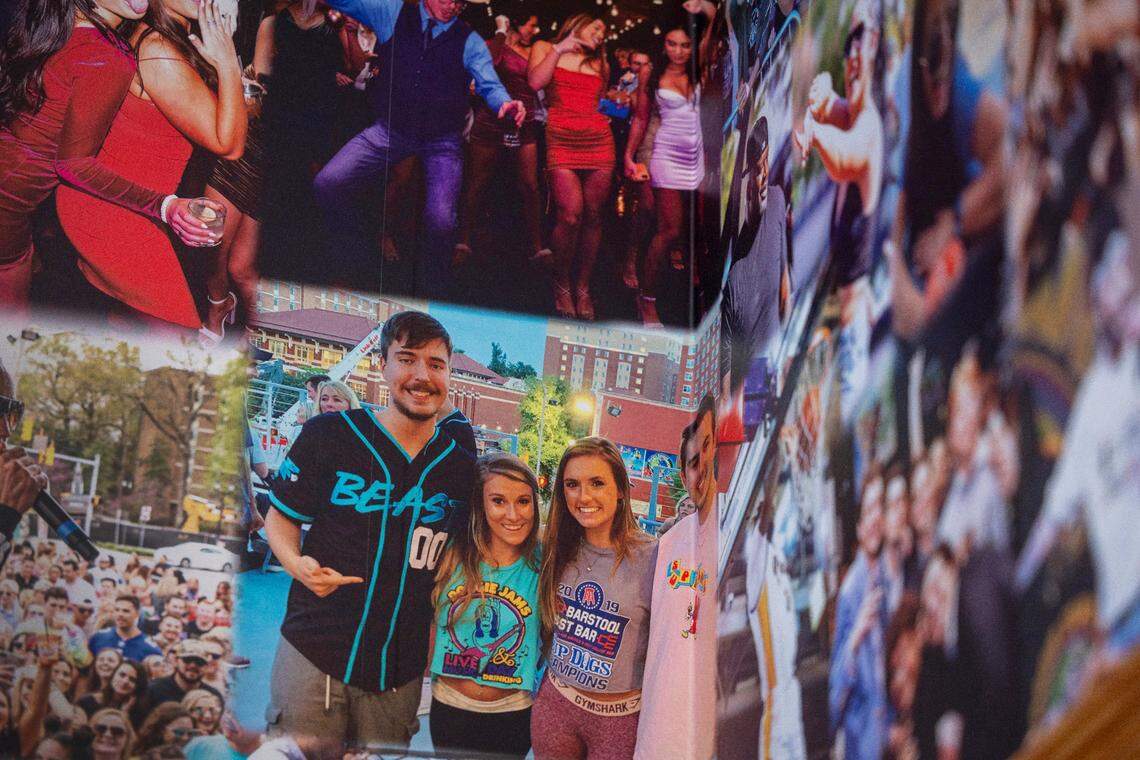
- Is MrBeast serious about buying TikTok? Judging by his own words last week, yes. But judging by a statement his representative made to The Associated Press this week, perhaps not.
National Tech Happenings
- Speaking of TikTok, it is currently not banned. President Trump signed an executive order giving the short-form video app 75 days before the bipartisan ban is enforced. Though it appears major app providers are wary of TikTok’s legal status: As of Thursday, Apple and Google did not offer TikTok on their respective app stores.
- Trump has pardoned Ross Ulbricht, founder of the dark-web marketplace Silk Road, who was serving a double-life sentence for drug trafficking charges. (Prosecutors also alleged Ulbricht tried to have people killed, though that wasn’t part of his charges.) Pardoning Ulbricht was supported by many cryptocurrency advocates and libertarians.
- Netflix and (dollar) bill. Netflix stock is at an all-time high as the streaming platform added close to 19 million subscribers over the holiday period. Broadcasting its first NFL game helped, as did having Beyoncé perform at halftime.
Thanks for reading!
This story was originally published January 24, 2025 at 6:00 AM with the headline "Open Source: NC-bound startup is about to fly supersonic. We asked pilots what it’s like.."
