
These 3 Triangle police departments have LGBTQ+ liaisons. Why is only one position filled?
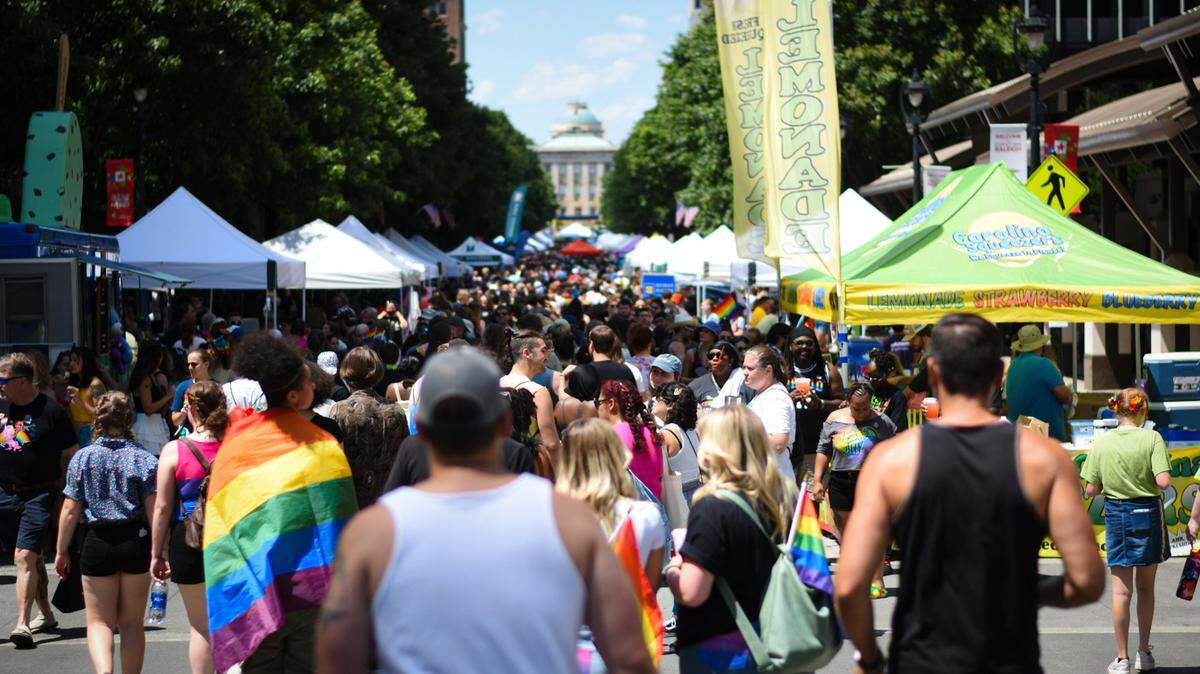
DeAnna Conrad was thrilled to host Apex’s first Pride Month event three years ago.
She meticulously planned a picnic in Hunter Street Park, eager to provide her suburban hometown with a celebration of the queer community.
But as her planning progressed, Conrad became the target of anti-LGBTQ+ sentiment.
One morning, she noticed an unfamiliar car parked outside her house. The driver was eventually joined and replaced by other cars and drivers, all staring at her house.
She quickly learned from a friend at Apex Town Hall that someone had heard about the upcoming Pride picnic and had asked to see the event permits she had filed, which contained her home address.
Her address was then shared in a Facebook group rife with anti-LGBTQ+ rhetoric, she said. Soon after, the cars began showing up outside her house.
“While those things are scary, logically I know it’s for intimidation,” said Conrad, a local business owner who designs and manufactures signs.
Conrad’s experience is just one of a growing number of anti-LGBTQ+ threats, attacks and intimidation tactics. According to the Campaign for Southern Equality, 76% of queer people in North Carolina have experienced emotional abuse or harassment and 21% have experienced physical violence because of their sexual orientation or gender identity.
“An alarming number of LGBTQ+ North Carolinians reported victimization across a wide swath of social institutions,” said the most recent report on the experience of LGBTQ+ southerners.
Response from Triangle police to LGBTQ+ issues
As North Carolina cities grapple with anti-LGBTQ+ crime and violence, police departments in the Triangle have appointed liaisons, dedicated to connecting with and addressing problems unique to the community.
Durham police created a position in 2016, and Chapel Hill followed in 2018. In 2021, Raleigh police announced they would also be hiring a liaison.
Raleigh City Council member Johnathan Melton, one of the first two openly gay people to serve on the council, said he and the queer community in Raleigh had asked for the position to be created for years. When the job finally came to fruition in 2021, Melton said he saw it as a positive step forward for police relations with LGBTQ+ people.
“That relationship hasn’t always been great, and the liaison is meant to be a conduit for the community,” Melton said.
However, Raleigh’s liaison position has been vacant since mid-May, and Durham’s has been vacant for a year and a half.
Chapel Hill is the only city of the three to currently staff its LGBTQ+ liaison position.
According to a statement from Durham police, Officer Rut Avila of the liaisons unit has been sharing some of the responsibilities of the position, but the liaison role remains vacant.
Melton and Raleigh police spokesperson Lt. Jason Borneo said the Raleigh police department is actively hiring and recruiting for the position.
“I hope the next person who fills this role continues to expand it,” Melton said.
It is currently unclear when these positions will be filled as vacancies are widespread in both the Durham and Raleigh police departments.
Last month, Raleigh Police Chief Estella Patterson announced there are currently 100 vacancies in the department of nearly 800 positions. Similarly in Durham, there are 139 vacancies out of 674 positions.
In addition to the liaison roles created in Raleigh, Durham and Chapel Hill, smaller police departments across the Triangle are also making an effort to engage with the LGBTQ+ community.
In Apex, Conrad has developed a close working relationship with local government. The police have been extremely helpful and respectful when navigating the unique challenges facing the LGBTQ+ community, she said, such as delicately handling security for the increasingly popular Apex Pride events with a combination of uniformed and plain clothes officers patrolling.
“I acknowledge that we are very fortunate in Apex, but I recognize it’s not that way everywhere, and it’s not that way everywhere in Wake County,” she said.
Still, Conrad believes there are limits to law enforcement’s power in certain situations.
She said the people parking outside her house are a perfect example. Police can’t arrest people for legally parking on a public street, even if they are trying to intimidate someone, she said.
“There’s a lot of gray area legally,” Conrad said.
In situations like this, Conrad thinks there is room for improvement in how police navigate issues of free speech and the safety concerns of the queer community and their allies across Wake County.
Chapel Hill’s LGBTQ+ liaison
While Raleigh and Durham had sworn officers in the liaison role, Chapel Hill police have a trained social worker as their liaison.
Sarah Belcher, head of the Chapel Hill Police Crisis Unit, is also the department’s current LGBTQ+ liaison.
Belcher said her day-to-day work often consists of working with queer victims of domestic violence or people experiencing mental health crises, often related to their gender or sexual identity.
Since accepting the position last July, Belcher has developed a “growing network of community partners:” nonprofits and groups that support those in crisis. Before she directs anyone to these resources, she says she spends months vetting and building relationships with the nonprofits she works with.
“I always ask ‘how do they practice inclusivity,’ because the last thing I want to do is connect someone to a resource that harms more than it helps,” Belcher said.
Conrad thinks Chapel Hill’s model could be extremely helpful in communities across Wake County, especially in situations when traditional law enforcement officers’ power is limited.
“I think it would improve police performance for all people of marginalized communities to have more social workers in the police department,” Conrad said.
Belcher is not a member of the LGBTQ+ community, but her co-worker Alex Carrasquillo, a gay man, said he has never doubted her ability to connect with and stand up for the queer community.
“It takes a special person to be in that role, and I feel safe and confident that you can do that,” Carrasquillo said to Belcher in an interview with The News & Observer.
This year, the department began reviewing some of its internal policies on personal appearance and grooming. Belcher successfully advocated for replacing gendered language, setting specific standards for men and women with more gender-neutral guidelines.
Despite successes like that, Belcher said she views herself as a life-long learner. She views every interaction with an LGBTQ+ person in need as an exercise to show empathy and an opportunity to learn from someone in the community.
“I may be bringing something to the table, but I am constantly walking away with something too,” Belcher said.
This Pride Month, Belcher and Carrasquillo want to encourage community members to seek help from the department by stopping by in person or contacting Belcher with concerns.
“We want to be highlighting accessibility to everyone,” Belcher said.
“We’re here on the bad days, and we’re here even on a good day. We’re out there on Franklin Street,” Carrasquillo said
Anti-LGBTQ+ efforts in North Carolina
Conrad said allyship is even more important as the queer community becomes increasingly susceptible to attacks.
In late November, 45,000 people were left without power after a power substation was damaged in an intentional shooting in Moore County. Local queer activists like Naomi Dix could not ignore the timing of the attack on the substation and efforts to stop a nearby drag show.
Last year, North Carolina tied for first place in a list of states with the most attacks against drag events, according to the Gay and Lesbian Alliance Against Defamation (GLAAD).
This session, several anti-LGBT+ bills have been proposed in the North Carolina legislature.
Senate Bill 639, The Youth Health Protection Act prohibits giving puberty blockers and cross sex hormones to minors. It also prohibits surgeries such as mastectomies or genital construction that alter the appearance of a minor if that appearance is inconsistent with the person’s sex.
Senate Bill 636, The Sports Transparency bill, says athletic eligibility in youth sports will be based on “biological participation requirements.”
This month, the town of Holly Springs issued its first-ever Pride proclamation. However, the proclamation made no mention of sexual orientation. Local organizers felt this was intentional as Holly Springs is one of the few towns in Wake County that has not adopted a non-discrimination policy.
Actions like this in North Carolina and beyond lead The Human Rights Campaign to declare a state of emergency for LGBTQ+ people in the U.S. this week.
“At the point of conflict, people are abandoning the LGBT+ community,” Conrad said.
As a staunch ally, Conrad said she is saddened to see the rise of anti-LGBTQ+ rhetoric and violence. But she remains hopeful that community members, local organizations and the LGBT community will prevail against threats.
“There’s safety in numbers. There’s safety in community,” Conrad said.
Despite the legal gray area, Conrad refuses to let those who oppose the LGBTQ+ community intimidate her. She has continued to plan Apex Pride events for the past three years, attracting over 10,000 people at her most recent celebration.
When anti-LGBTQ+ people continued to park outside her house and stare at her and her family, Conrad said she chose to drink her coffee on her front porch — and stare right back.
This story was originally published June 15, 2023 at 8:26 AM with the headline "These 3 Triangle police departments have LGBTQ+ liaisons. Why is only one position filled?."