Oral history: How Rainbow Kitten Surprise went from playing App State dorms to NC arenas
It’s been 10 years since Rachael McKinney looked the members of Rainbow Kitten Surprise in the eyes and — as the Boone-based indie folk-rock band’s brand-new booking agent at the time — gave them the bad news:
“We have to change this name,” McKinney, then an Appalachian State University senior, told the group consisting of five musical artists who’d joined forces after meeting as freshmen living on campus in Bowie Hall. “It’s not happening. We cannot do this. No one’s gonna take us seriously.
“We have to change it.”
Then they gave her some bad news right back: “It’s too late,” one of them replied, matter-of-factly. “People already know us too well for us to change the name.”
A decade later, it is happening. They can do this. Save for the people who just haven’t been paying attention, the vast majority of the music industry — and the thoughtful music fans who appreciate their emotionally raw lyrics — are taking RKS plenty seriously.
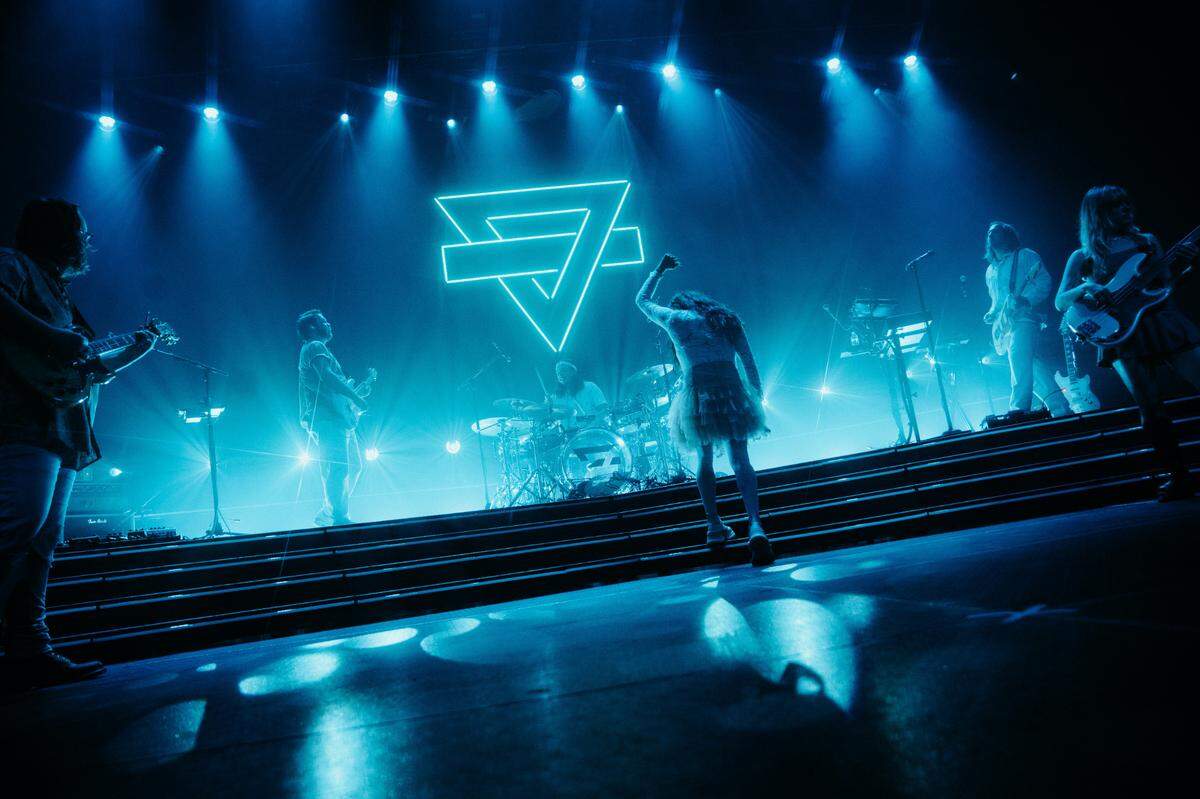
And on Oct. 25 and 26, the Mountaineers-turned-Nashvillians-turned darlings of major festivals like Bonnaroo and Lollapalooza will perform energetic back-to-back concerts at Spectrum Center in Charlotte and Lenovo Center in Raleigh, the largest indoor venues they’ve ever headlined in their former home state.
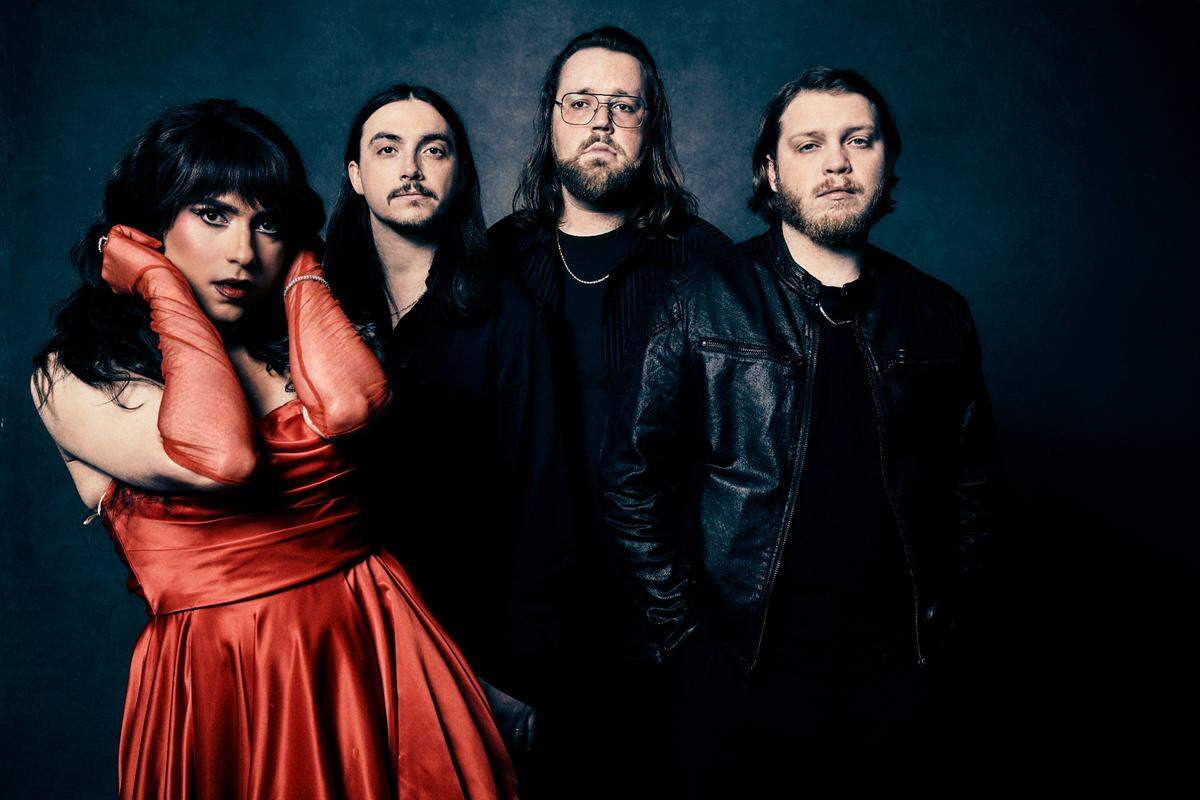
McKinney, who has been with the band ever since and is now its tour manager, can’t help but laugh at memories of that debate, given how everything panned out for lead singer Ela Melo, guitarists Darrick “Bozzy” Keller and Ethan Goodpaster, and drummer Jess Haney.
“I appreciated that confidence in it, but I also just thought it was silly,” she says of their original discussion about the name. “And looking back, I was wrong. Half the time, people, they hear the name, and their original thought is, ‘What the hell is that?’ And then their second thought is, ‘I have to listen to that so I can understand the context.’ Because some people think people think it’s, like, EDM; some people think it’s a kids band. You know, all those things. But I definitely did try to tell them.
“But then you have bands like, what, Diarrhea Planet, and it’s like, At least we didn’t have that name. I love them, don’t get me wrong. But at least we didn’t pick that name.”
Over the summer, we spoke to McKinney, Melo, Keller, Goodpaster; people who booked them in Boone; and multiple members of their inner circle back at App State, including — in his first mainstream-media interview ever — the man who came up with the name while high on morphine.
Those conversations (lightly edited for clarity and brevity) make up our exclusive oral history of Rainbow Kitten Surprise.
Note: All interviews for this story were completed prior to Hurricane Helene’s arrival in Western North Carolina in late September. After the storm, Rainbow Kitten Surprise posted the following message on its Facebook page: “We’re heartbroken to see the devastation left behind by Hurricane Helene. Our beloved home of North Carolina needs our help right now.” The band listed a variety of ways its fans could help victims. And this month, RKS pledged to donate $50,000 raised through its fall concert-ticket sales to recovery efforts related to Helene.
‘Hanging out, smoking cigarettes, playing songs’
As App State freshmen in the fall of 2012, Melo, Keller, Goodpaster, Haney, and Charlie Holt (the band’s original bassist, who parted ways with RKS last winter) all were assigned to the old Bowie Hall dorm. The only ones who knew each other prior to college were Goodpaster and Haney, fellow Robbinsville, N.C. natives who throughout high school were in multiple bands together that mostly just played in Haney’s basement.
Ela Melo: I had a lot of things on the list of what I wanted to do with my life, but I wasn’t quite sure about any of it. One thing that I did know is I did want to make music that people could get down to, people enjoyed. I had been doing that for years already, in my hometown of Albemarle, just chilling, had a band with some friends there. That didn’t pan out. So I came onto the campus with a mantra, almost.
Darrick “Bozzy” Keller: I was definitely a shy kid growing up. But I remember going in for the first week of college and being like, Man, this feels like summer camp. This is never gonna end. I really stepped out of my comfort zone and would try to take my guitar and go jam with people and make friends. ... We played on the steps of the dorm. But it wasn’t like a big event or anything. We were just all friends — hanging out, smoking cigarettes, playing songs. We met a lot of people that way; people would just come down and chill, go back up to their room whenever. We had this little community built around it.
Ethan Goodpaster: When I wasn’t going to class, I was playing guitar, finding someone to play something with. There was a lot of jamming happening in our dorm.
Melo: College was a magical time, at least for me. It was like Bonnaroo or something — it’s just, like, serendipity everywhere. You end up running into people and stuff, and forming relationships really quickly.
Keller: I knew Ela was a musician, but she was so humble about everything. ... She had seen me at an open-mic night play a couple original songs. I was like, “That’s really nice of you for coming.” Later that night, I bumped into her, and she was like, “Can I show you a song I wrote?” She showed me “All That and More (Sailboat).” And I was just like, “Dude, you have to get this out into the world. This is the best song I’ve ever heard in my life.”
Melo: I played it one time, and he went and got his guitar. He was like, “Show me what you’re playing. I want to play it with you.” But Bozz was writing, too. So after, he was like, “Well, check my stuff out.”
Keller: Until I met Ela, I didn’t really know anyone else who wrote songs. I mean, I definitely thought mine were OK. But I definitely wasn’t on the caliber of Ela.
Matthew Clonch, who lived in the dorm and became part of their inner circle: Then they started playing together just for fun.
Ethan Goodpaster: Ela and Bozz were always sitting out there in front of Bowie or in the lobby playing, singing Modest Mouse songs, or Bon Iver songs, things like that.
Clonch: And the first show they ever did was an open-mic night at the college. They were just like, “Hey, this could be fun. We should do it.”
Keller: That was the birth of RKS.
‘What do you think it should be called?’
It was October of the fall semester of their freshman year when Melo and Keller decided to sign up as an acoustic-guitar duo for the open-mic night hosted at Crossroads Coffee House at the Student Union on campus. But they needed to register with the name of their act — and they didn’t have one.
Keller: Maybe a week or so before, our friend Noah Toomey got meningitis right after coming back from fall break. And he was really, really sick.
Noah Toomey: It progressed to a point that Matt — my roommate freshman year — literally had to carry me down the stairs of our dorm to get into a friend’s car to get me to the hospital. Then once I got to the hospital, for the next 72 hours, absolutely nothing. I’m completely out of it. Then 72 hours later I remember people coming in and out, but nothing too specific until the meds started actually working for me, and I was starting to feel better. That’s when they came to me with the question about their open-mic night. It was Bozzy, Matt and Ela.
Keller: To see him like that, it was tough. And Ela was just like, “You can name the band. What do you think it should be called?”
Toomey: I remember doing hand gestures, maybe? And, well, I mean, I love the internet. And there’s that cat that has, like, the Pop-Tart body. It’s called Nyan Cat. That’s kinda what was going through my head. I’m sure I did repeat it quite a bit.
Clonch: I said, “‘Rainbow Kitten Surprise?’ That’s ridiculous.” And it was — then they did it anyway.
Keller: My initial reaction was: pretty cool. But we kept telling ourselves, “Ohhh, maybe we should change it.”
Toomey, who says the only other time that he’s talked about naming the band was when a friend interviewed him for a journalism class: If I could go back, it’s always like, Would I have wished the name on them? Because it’s a blessing and a curse. I was so morphined up at the time that it sounded like a great idea.
The open-mic night at Crossroads was a success, but after that performance, Melo and Keller focused exclusively on writing and recording music. They wanted, they say, to figure out what they were doing before getting back onto a real stage in front of real crowds. So they returned to using the dorm as their workshop.
Melo: I remember working on stuff over Thanksgiving and working on stuff for Christmas break. And then we were playing some of these songs for people in the lobby. It was kind of a thing at some point. I would write one and come down to play it for everybody, then figure out what the other parts were between me and Bozz. I was working on the mixes of stuff for months — until it was ready to release. The second I was done mixing, we just uploaded it onto Bandcamp. We put out (the three-song EP) “Mary” on May 5th of 2013. And we got a thousand streams the first night.
We knew then; it was like, “Dude, we released this at 10 o’clock at night, and we have a thousand streams overnight.” We thought that was success at that point. Like, OK, this is going somewhere!
Toomey: But there’s no way that even someone not in that state could have known the heights that they were gonna go to.
‘Oh my God, this is actually incredible’
Melo and Keller continued writing and recording at Bowie Hall through the spring and into the summer of 2013.
Melo: Ethan would hang out sometimes, and we would play sometimes. He would bring his amp down. I played acoustic, and Bozz played acoustic, but Ethan would play electric — more, like, metal stuff. Something a little different. But Ethan can rock whatever the style is.
So we came back over summer break, going into sophomore year, and we’re like, “OK, we gotta play some shows or something. But we need more people, ’cause we don’t have enough hands for all these parts.” We tracked Ethan down, and had him do kind of an audition. He learned all the songs the night before, but he knew ’em. It was just like, “All right, you’re in the band, dude. You don’t even need us to tell you how to play this stuff.”
Keller: And we were working on the album “Seven” — which, musically, was just a bigger sound.
Goodpaster: So eventually they asked to borrow my roommate’s cajón to record some drums on it. My roommate was actually Jess (who would become the band’s drummer). Then, when we were looking for a drummer, we actually auditioned one guy before Jess. But he wasn’t the fit. So I was like, “Hey, my roommate plays drums a little bit, played drums in band in high school. We should see if he wants to.”
Keller: We added them during the process of Ela recording and writing that album. So by the time that album released, we were a full-band kind of thing.
Goodpaster: But Jess had only agreed to play one show with us.
That one show was at the old Galileo’s bar and cafe in Boone, on Oct. 26, 2013.
Keller: When we first started, I booked all the shows. I was our agent, and Ethan did a lot of the social media and business management. It was very DIY and self-sufficient. We did everything ourselves.
Mark Dixon, former owner of now-closed Galileo’s in Boone: I think, at first, everybody was like, “Rainbow Kitten Surprise? What is this? Are they serious?” But they took their music more seriously than their name, I guess. ... We were their first “out” show — like, not at a house party. I remember they were good dudes. They were nice guys. That’s not always the case when you’re booking college bands. They showed up on time. They handled everything professionally.
When you’re booking local groups like that, you want bands that are willing to put themselves out there and promote, and call everybody they know, and get everybody to come in. And it was clear very early on that they were good at promoting themselves. So I think they got pretty close to packing us out the first time they played. And then it became apparent real quick — ’cause we were a very small room — that they were gonna have to move on to a bigger room. People liked them so much. They were growing so fast.
Goodpaster: And Jess — even though he said, “I’ll just do one show” — kept playing with us.
Rachael McKinney, who would become their booking agent and eventually their tour manager: So they did that, then they played Espresso News, another coffee shop, in December 2013. Then they did a Beech Mountain show, a Montreat College thing, Appalachian Mountain Brewery. In June 2014, they did VH1’s (reality-competition show) “Make A Band Famous,” then Galileo’s again — they did Galileo’s about four times — then Parthenon Cafe, then Harvest Boone Festival. But that was all before I met them.
The first time I ever even heard of them was when I was on the APPS (Appalachian Popular Programming Society) Council. We were looking for openers for a show with Hunter Hunted back in 2014, and we were sitting in a meeting, and at the beginning of meetings, we would let people play, like, Oh, here’s this band I’ve been listening to, they’re local, or they’re smaller ... I just want you guys to hear them. Somebody put on the “Devil Like Me” music video. And I was such a judgmental little hipster college kid. I was like, Rainbow Kitten Surprise, what a terrible name. This is gonna be some dumb punk band. Then I heard the music — and I was like, Oh my God, this is actually incredible.
‘They had the audience in their hip pocket’
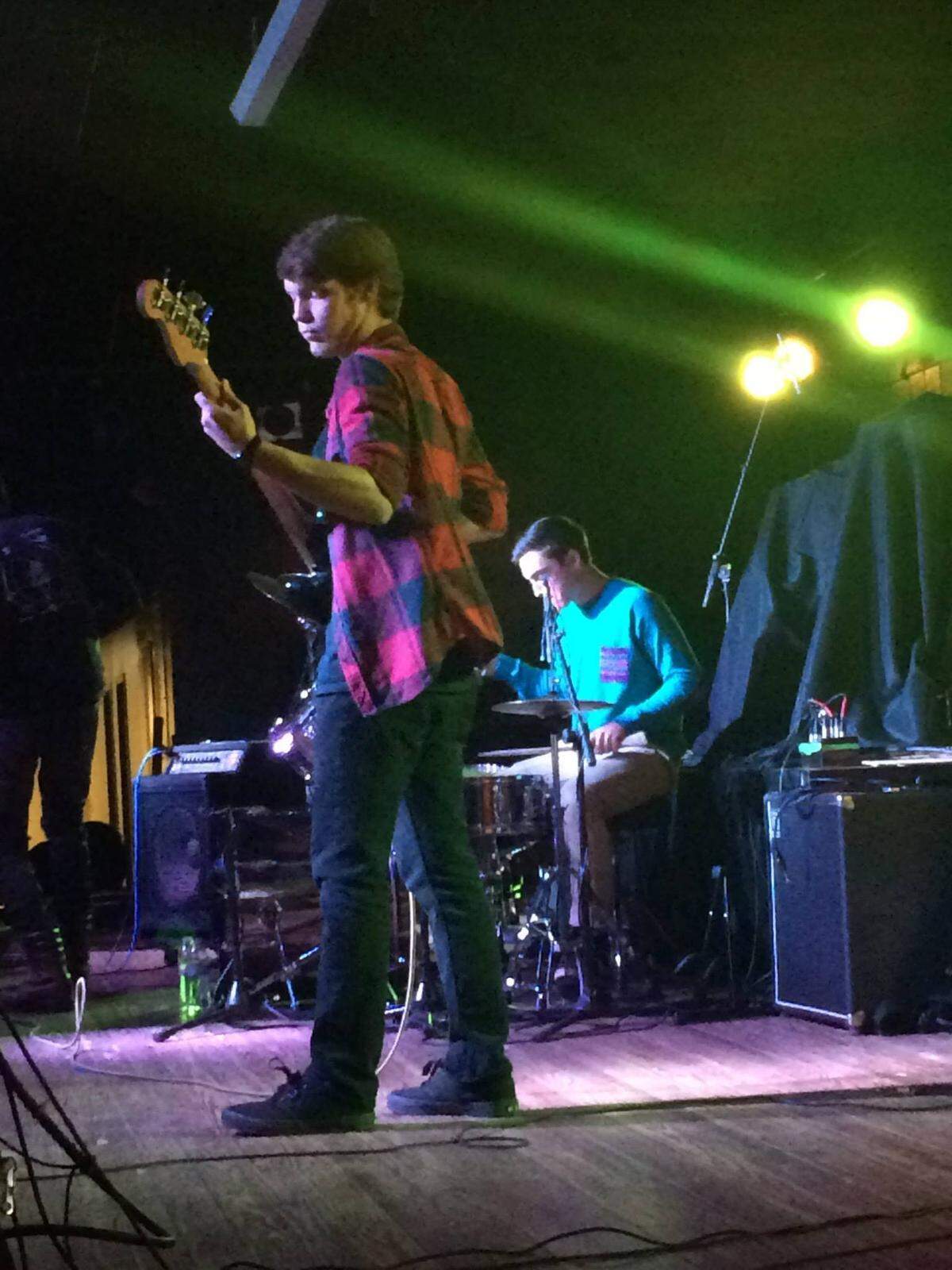
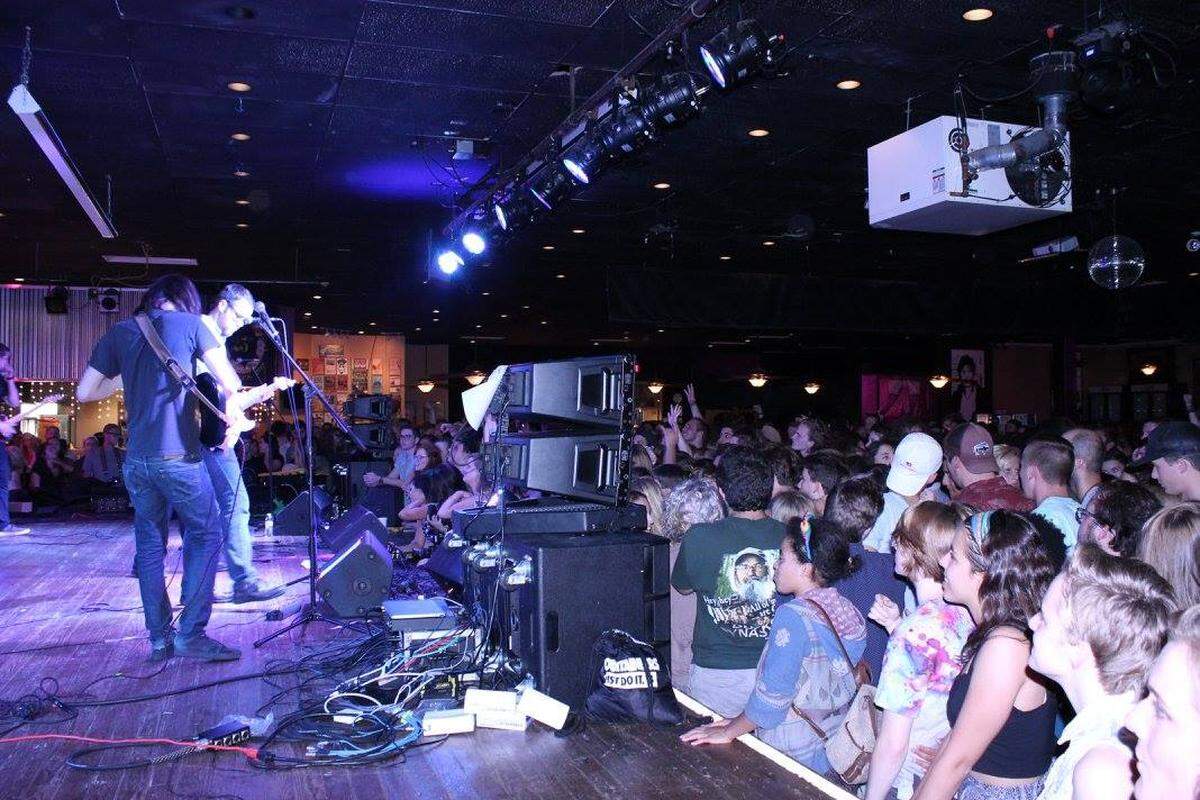
From there — with bassist Charlie Holt having been added to the mix by Melo, Keller, Goodpaster and Haney — Rainbow Kitten Surprise continued turning heads on campus. After the fivesome opened for Hunter Hunted in November 2014 at App State’s storied Legends nightclub, that winter the band signed with the university’s student-run record label, Split Rail Records. In March 2015 it played for 300-plus concertgoers on “the small stage” at Legends; then in August, RKS booked “the big stage” — and drew a sellout crowd of 950.
Goodpaster: We started getting added to these big official playlists on Spotify, and our streaming started getting more popular and more popular. But I’d say — for me, at least — when I was like, Okay, this is cool, this could be a thing was when we sold out Legends.
Keller: That was definitely a milestone for us, ’cause in the beginning, Ela and I would walk to the little gas station beside Legends to get cigarettes. And we would just look up at the sign and be like, “Dude, wouldn’t it be sick if we played there?”
Melo: The day that I saw “Rainbow Kitten Surprise” on the marquee of Legends, it was just like, This is it. This is as far as we could think to go! We didn’t know any better. It was awesome.
Randy Kelly, the now-retired longtime manager of Legends: I was so surprised — and happily so — that at their shows, everybody in the audience knew the lyrics to their songs. That’s how popular they were with the rest of their fellow students at ASU. Ela and the gang, they had the audience in their hip pocket. Ela marched back and forth across the stage, and leaned down, sang to the audience, and made them feel that there’s no place in the world she’d rather be than right there at that moment.
Goodpaster: When I looked out in the crowd when we were playing that show I was like, Oh, this isn’t just all my friends here listening to us. I don’t know anyone here, and these people paid money to come see us.
Matthew Clonch, their former dorm-mate, who would become their stage manager and to this day is one of Melo’s best friends: I remember that at that time, they played an encore. Then they were called for another encore — and they didn’t have any more songs to play. They didn’t have enough songs written. So they just played one they’d already played, ’cause they didn’t know what else to do. It was a cover of “Float On” by Modest Mouse.
McKinney: I wasn’t actually at that show. I was living in New York, working for a boutique agency at the time. But I remember Ethan sending me videos. And I was just like, What the heck is this? It was the craziest. The crowd was just so loud, the video he sent me was shaking. It was just like, Where did all these kids come from?
Kelly: I didn’t know how great they were gonna be and how far they were gonna go; but I knew, as they say, they were riding the whirlwind already.
McKinney: It’s that whole “when luck meets skill meets opportunity.” And truly — I do believe this in my heart — I think Boone is a very, very special place. It’s a different feeling when it comes to music than any other place that I’ve been. People invest themselves in the music there. And the fans — literally, you have one person that’s listening to RKS. They’re telling everyone about it. They’re not keeping that to themselves. It was word-of-mouth, how much the songwriting stands up, how the lyrics that Ela was writing were so relatable for everybody, about experiences that are hard to part into words.
And after selling out Legends and showing those videos on social media, the band kind of just, like, exploded.
Rainbow Kitten Surprise’s ‘Love Hate Music Box Tour’
When: 8 p.m. Friday, Oct. 25, at Spectrum Center, 333 E. Trade St. in Charlotte; and 8 p.m. Saturday, Oct. 26, at Lenovo Center, 1400 Edwards Mill Road in Raleigh.
Tickets: $45 and up in Charlotte and $40 and up in Raleigh, at ticketmaster.com. ($1 per ticket goes towards supporting organizations delivering mental health treatment and access to care.)
Also: Rainbow Kitten Surprise and opening act The Brook & The Bluff are broadcasting their shows in Charlotte and Raleigh on Nugs.net as a pay-per-view event, with net proceeds going to the PLUS1 Rapid Relief Fund. Details at bit.ly/3Nmyj2F.
This story was originally published October 16, 2024 at 7:00 AM with the headline "Oral history: How Rainbow Kitten Surprise went from playing App State dorms to NC arenas."