
Raleigh teen nearly quit swimming. Next year, she’ll swim the English Channel
AI-generated summary reviewed by our newsroom.
- Raleigh teen Lorelei Schmidt trains for a 2026 solo swim across the English Channel
- Open-water swims test Schmidt's endurance with distance, cold, and wildlife
- Support crews guide and feed her, but each hour-long swim remains solitary
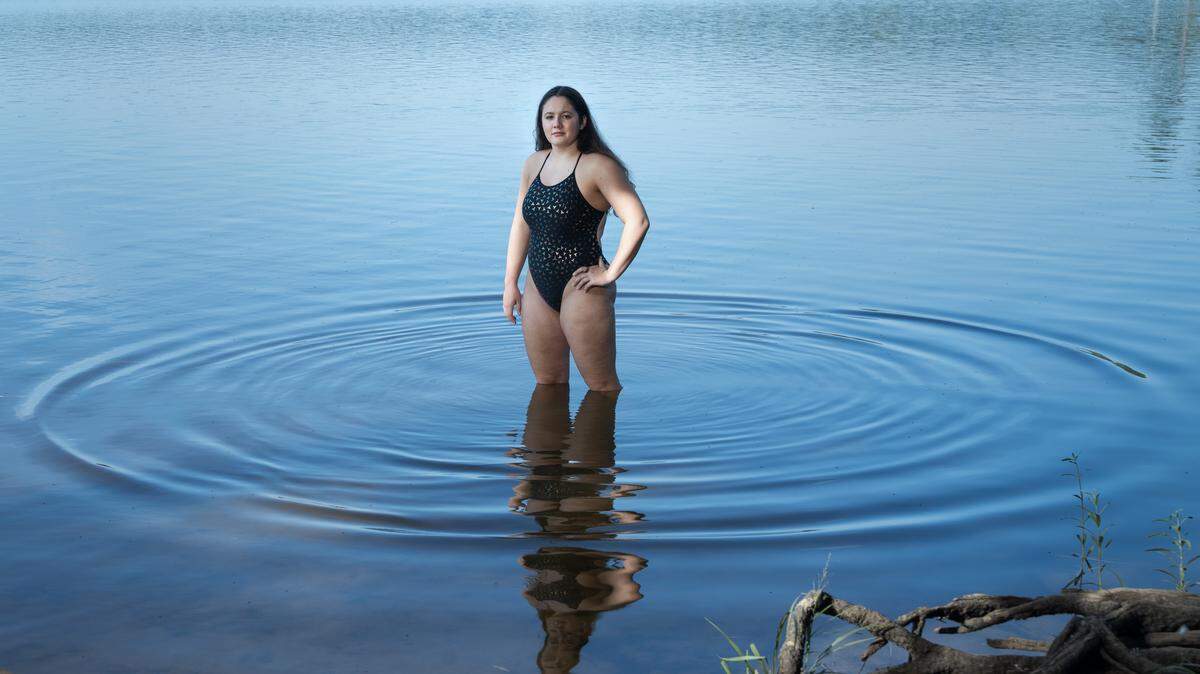
In the open water, the distances are long; the effort is exhausting. Lorelei Schmidt thinks about quitting frequently. It would be easy, expected even, considering the difficulty she faces.
The 16-year-old is small and insignificant compared to the whims of the conditions around her. The boat traffic, the marine life and the cold, unforgiving water of the ocean or lake is apathetic to her presence. Every swim, she pushes her body to its limit.
These aren’t like the laps in the Raleigh pools. Schmidt is not gliding through warm, chlorine-treated water in her 25-meter lane, racing other club teams at a swim meet and internalizing the commands of her Marlins of Raleigh coaches to move faster and faster. There are no walls confining her, no swimmers to beat. Just herself.
Her arms and legs strain to propel her through the miles and miles of rough waves and changing currents. Jellyfish maul and scar the skin underneath her colorful Speedos. Sharks loom.
The discomfort grows and the call to give up echoes louder and louder inside her head as the hours accumulate.
She doesn’t.
The safety crew, her family and coach in the kayaks and boats that follow her can only see the rise and fall of her arms cresting above the lake or ocean’s surface. They can only feed her, tell her how fast to go, and in which direction to swim. It’s up to her to occupy the time in her mind — the hours and hours of repetitive motions and scenery — as she swims from one shoreline to another.
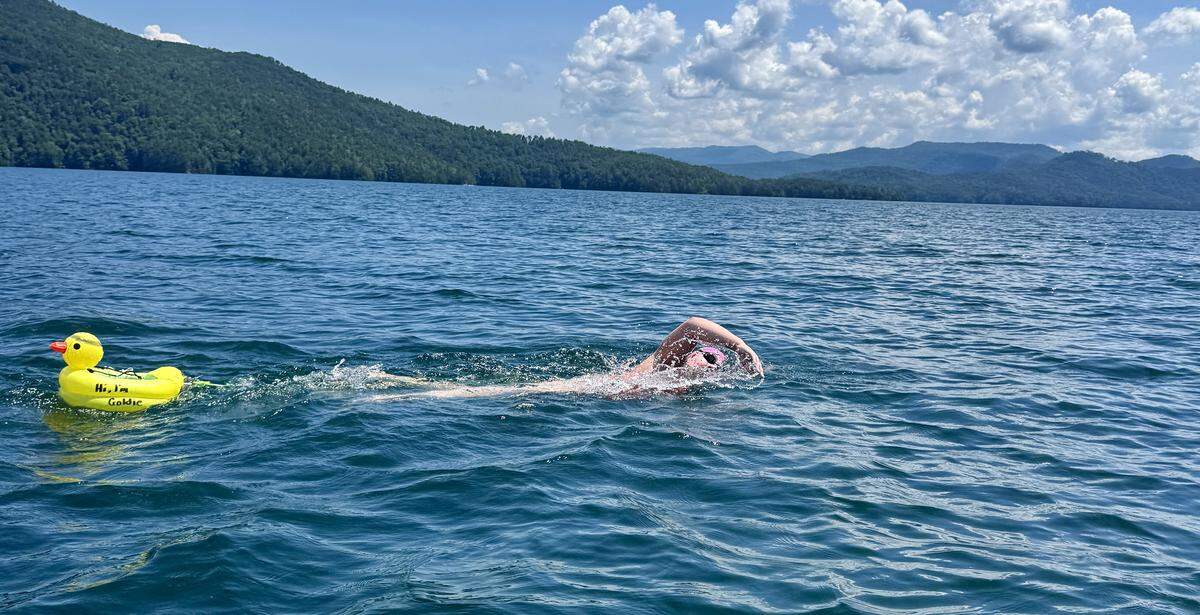
But the solitude doesn’t intimidate her. It’s what she craves. Once she’s in the open water, the weight of the world, the struggles of growing up and the pressure of competitive sport finally slip off her shoulders.
Before, those pressures made her want to give up swimming entirely. Now, it’s just her and the push to finish, to swim around a lake, to swim between two Hawaiian islands, to swim around Manhattan.
And to swim across the English Channel.
She sings songs in her head. She lets her imagination run wild. She dares to complete something that only a small fraction of the world’s population can even imagine attempting.
“The idea of following the crowd has never been my thing,” Schmidt said. “I was against it, always went off and did my own thing. I want to do these really cool swims that not many people have done.”
Schmidt swam for 20 miles across the Catalina Channel in Southern California in nine hours and six minutes last year. Months later, a 28.5-mile swim around Manhattan Island in New York City took six hours and 47 minutes. In April, she completed the nearly 28-mile crossing of the Molokai Channel between the Hawaiian islands of Molokai and Oahu in 19 hours and 38 minutes.
After finishing the Catalina Channel and Manhattan 20 Bridges swim, she needs one more crossing to secure the triple crown of the sport: the English Channel. If she finishes it, Schmidt will be one of the youngest to complete the triple crown. It’s a feat only 336 swimmers across the world have achieved.
But crossing the English Channel will test her. The average age of solo swimmers in this channel is 35. Fewer than 2,000 people have done it. Fewer people have crossed it than have climbed Everest. She’ll attempt it next August.
And there’s a long road ahead before she can even get in that treacherous water.
The journey to the triple crown
Laura Goodwin lived what Schmidt is preparing to face.
Goodwin, a Cary native who met Schmidt during a practice swim in North Carolina’s Eno River, got the call before she expected it.
Living in England at the time, the Cary native had to book a seven-day window. Then the swim she’d been dreaming about her whole life came down to chance.
Swimmers who attempt the English Channel are assigned a time slot within the window. When the weather and conditions cooperate, the pilot of the escort boat calls the swimmers out to the water.
But a weekend of bad weather could cancel the entire swim. Or a delay might push those in the last few slots out of the weather window and with it, the opportunity to cross the channel.
Even after spending two years training for it, there’s uncertainty in the English Channel no amount of preparation can avoid. Swimmers nicknamed it the “Dover Coaster” because they experience an emotional rollercoaster waiting for the call to leave from the crossing’s starting point in Dover, England.
Decent weather worked in Goodwin’s favor. The pilot called her days before the beginning of her window to ask if she was ready. She said yes at 6 p.m. and woke up at 4 a.m. the next morning. She finished it in just under 11 hours.
“Marathon swimmers do not tend to be panicky people,” Goodwin said. “They are a very laid-back group of people who take things as they come. But on the eve of the swim, I was just about as nervous as I have ever been in my life.”
Sharks and jellyfish pose a risk in the English Channel, but not as much as the cold.
The water temperature rarely rises above 60 degrees. To qualify for the 21-mile swim between Dover, England and Cap Gris-Nez in France, swimmers have to log a six-hour swim in water below 59.9 degrees within 12 calendar months. Hypothermia is a major risk, not uncommon in open-water swimming.
What kind of person would choose to endure that?
“Someone who’s crazy,” Catherine Kase, a former UNC swimmer and the 2016 U.S. Olympic open-water coach, joked. “You go through a lot of ups and downs during that time. You have to be very strong mentally. Having a mindset where you can talk to yourself and get through the highs and lows, being strong in body, mind and spirit, you’ve got to have all of that. Psychologically, you probably have to be a little bit nuts.”
A sense of calm
Schmidt says her brain never quiets. Her ADHD rarely allows for a moment of silence because her internal monologue is constant. It’s been like that as long as she can remember. Swimming as fast as she possibly can was one of the first things that helped her cope.
Schmidt started swimming competitively at 8 as a sprinter with the Gypsy Divers and later the Marlins of Raleigh. She was 11 when the COVID-19 pandemic shut down the pools, closing off her access to both exercise and her coping mechanism.
“When the pool shut down, she wasn’t getting this exercise and she just got mean,” her mother, Tammy, said. “We couldn’t stand her.”
Asthma prevents Schmidt from running, so Tammy drove her daughter to the Beaver Dam access on Falls Lake, between Durham and Wake Forest, and told her to swim until she calmed down.
Schmidt found peace. No outside noise. Just her own thoughts.
Tall trees shaded and surrounded the shoreline. Birds chirped from above. She was safely separated from the rest of the lake by dams around the access point — closed off from the outside world. Still, this wasn’t a pool. The water of the clay-bottomed lake got cloudier with every movement. Bugs tickled her skin.
And yet: “The longer the swim, the more I was able to be in my own head,” she said.
Soon after, Schmidt turned 12, and her relationship with competitive swimming changed. As she went through the changes of puberty and the stresses of hormone imbalances, she found she wasn’t as fast as she used to be in the 10-and-under age group. She wasn’t winning meets as often. She wasn’t consistently setting new personal records.
Some thoughts got a little too loud and to be a little too much.
Schmidt had “meltdowns” every other day at practice. She would either push herself to the point of collapse, or she wouldn’t be able to string together any motivation. She couldn’t pull herself out of the vicious cycle.
“A lot of swimmers go through this where maybe they get really fast younger and then they kind of plateau for it can be months, it can be years,” her coach, John McDonald, who joined the Marlins of Raleigh last summer, said. “It can be very frustrating because they’re still putting in all the hard work, and they’re not seeing the results that they feel like they should.”
Then, stress from school compounded. The pressure to be a straight-A student and always turn in the perfect assignment weighed heavily. She had panic attacks when she had to present projects to her class. Her motivation to actually complete the work slipped away, too.
“It’s safe to say she quit racing,” Tammy said. “She was doing meets, but she just sort of shut down from that. She showed up for every meet. She never missed practice. She was still all in. She just lost that competitive drive.”
It was all the intensifying manifestation of mental illness — depression, anxiety, ADHD — that would take years to diagnose and effectively treat. Eventually, medication, therapy and support groups offered relief, but she found none of them as therapeutic as being in the open water.
“I just was able to hop in and swim,” she said. “I didn’t have to worry about any different strokes or what my coach would say afterwards — if he would be disappointed or happy about a time. I could just swim and I could be free in my own head. I loved every moment of it.”
After that first swim in Falls Lake, her time in the open water lengthened and so did the distances. She built up to swimming a marathon, first swimming a 1K, then 2K, then a 5K.
When it was time to finally swim a 10K, Schmidt almost quit the sport entirely. It took 3 1/2 hours. The choppy water made swimmers seasick. Her body threatened to give up entirely. She got out of the water after the swim and said she’d never do it again.
She dove back into the lake two weeks later.
“I got really stir crazy again,” Schmidt said. “My mom’s like, ‘You know what? We’re gonna hop in, we’re gonna swim and we’ll stop, when you say we stop.’ And it ended up being three hours later, a whole 10k down.”
Just keep swimming
Fewer than 120 swimmers have crossed the Molokai Channel between the islands of Molokai and Oahu in Hawaii. Schmidt made her attempt in April.
By the 14th hour in 6-foot swells and a headwind that made her feel like she was making zero forward progress, Schmidt was over it.
Up until that point, she had retreated to her racing thoughts to pass the time. She sang Eminem songs in her head. She planned out scenes for the fantasy book she’s been writing.
But 14 hours later and a lot of thinking later, Schmidt was still a marathon away from the shoreline.
She already was five hours past the longest swim of her career. She first stepped into the water at 6 a.m. that morning, and now the sun was setting.
Her hands, the backs and bottoms of her feet had burned in the sun. The day before her crossing, another swimmer had a chunk of flesh taken out of their abdomen by a cookiecutter shark — a two-foot shark with a circular mouth that carves out round bites — while completing the same swim.
As the sky grew darker, she worried about shark encounters. She saw whales following her through the crystal-clear water at the beginning of the swim. Schools of fish, too. But by this point, late in the swim, she could see nothing. Only water and ominous darkness around her.
Schmidt didn’t register it at the time, but a man o’ war jellyfish entered her swimsuit and stung her chest badly enough to scar. The exhaustion created a sense of numbness so powerful she never felt the pain.
Give up.
All she had to do was put her hand on the boat to end the swim. She came up for feedings every 20 minutes. Her anger and frustration grew. She cursed. She ranted. She kept asking how much further to go.
But she didn’t tap out.
She swam on autopilot. She later likened it to falling asleep while still moving for three more hours. In every swim, her crew feeds her a dark-chocolate peanut-butter cup when there are 20 minutes to go. Only when she was handed that does she remember her mind snapping out of the haze.
By 1:30 a.m., more than 19 hours later, huge waves body-slammed her chest-first into the beach, dragging her across the rocks and sand to safety. But it was done. One of the hardest swims of her career completed. She didn’t quit.
“People think it’s weird and crazy, but she’s proud of it,” Tammy said. “And it’s given her a big boost in her confidence and how she handles herself.”
Where she wants to be
A rising junior at Broughton High School, Schmidt has considered swimming competitively again in college, and she’s always wanted to attend a military academy. The English Channel might be her last long swim for a while. She says she’ll return eventually, but maybe not until after college, maybe not until after five years of military service. That also depends on how long she can go without it.
In the next year, Schmidt will complete a training swim called the Round-Trip Angel Island, swimming six hours in the sub-59.9 degree water to qualify for her English Channel crossing.
It’ll either be a 10-mile swim around the island in the San Francisco Bay, or she’ll stay in the water until she logs the necessary hours. After that, she’ll be off to South Carolina to practice distance swims in the colder water of Lake Jocassee until the countdown to her trip to England begins, where more challenges await. But she’s used to that.
“So many times before these swims, or I’ve heard other people do these swims, it’s like, ‘There’s no way I can do that. How can I do that? How can any of us do it?’” Schmidt said. “And then I hop in and I do it. My body hurts, but my body still works. My body didn’t shut down on me, and it shows I can keep going. The only thing that was stopping me — that was causing me to doubt myself — was my own brain.”
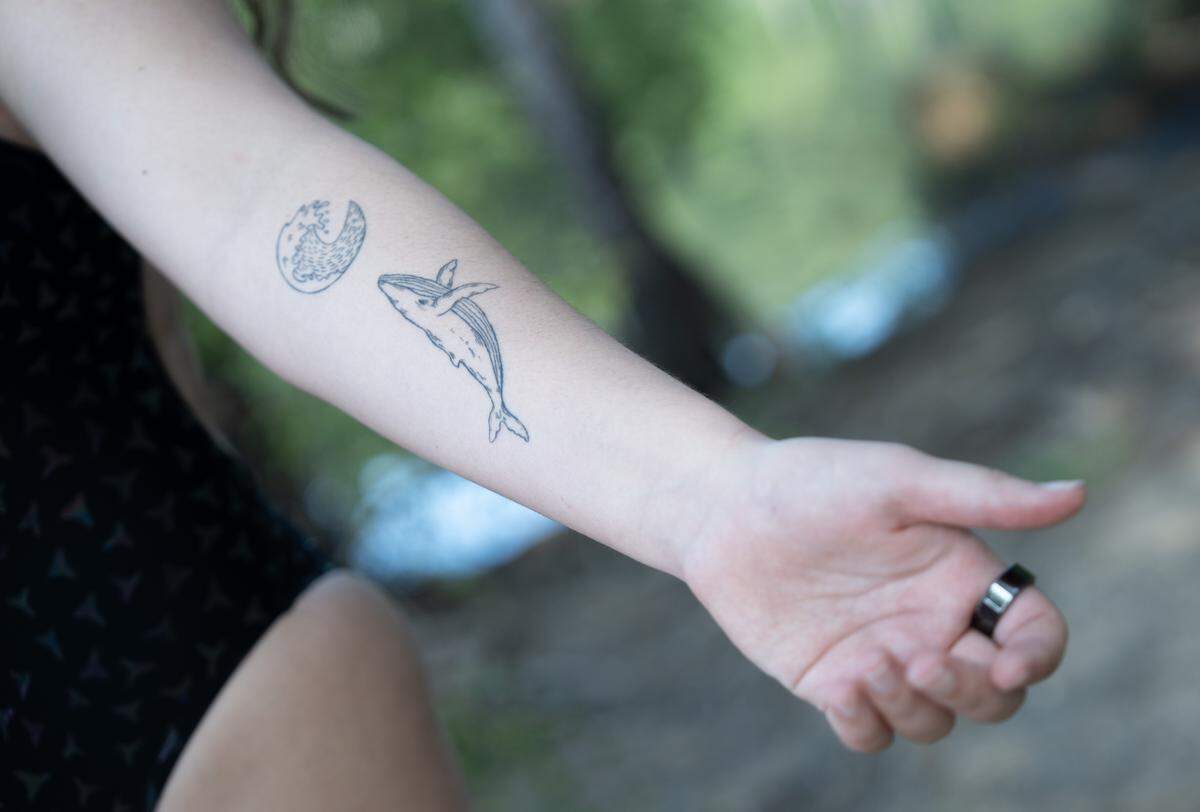
In Hawaii, Schmidt got a tattoo on the underside of her forearm: a crashing wave and a large whale.
The two marks form the shape of a semicolon, a tattoo that often represents mental health struggles and embodies a pause, rather than an ending, to someone’s journey.
Schmidt doesn’t know where her journey will take her, but in the open water, she’s exactly where she wants to be.
This story was originally published August 17, 2025 at 5:30 AM with the headline "Raleigh teen nearly quit swimming. Next year, she’ll swim the English Channel."