
Lyme disease is on the rise. See case counts for NC + how to avoid tick bites
Lyme disease is one of the most prevalent insect-borne diseases in the country, with far more cases each year than other diseases carried by mosquitoes, fleas and ticks, such as West Nile Virus.
The U.S. Centers for Disease Control’s (CDC) most recent Lyme disease data is from 2022. In 2022, there were more than 62,000 reported cases of the tick-borne disease, but the CDC estimates that because of under-reporting, the true number of cases each year could be seven times that number.
The prevalence of the disease, which is spread to people through the bite of a blacklegged tick, or a deer tick, has increased dramatically since the U.S. first began tracking the disease in 1991. While better surveillance explains part of the increase, warming climate has also made more of the country suitable for the ticks that carry the disease.
When treated early, Lyme disease symptoms can go away entirely. However, if it is not treated early, the disease can be chronic, with symptoms such as arthritis, fatigue and persistent body aches.
See how deer ticks have spread across the U.S. since 1996.
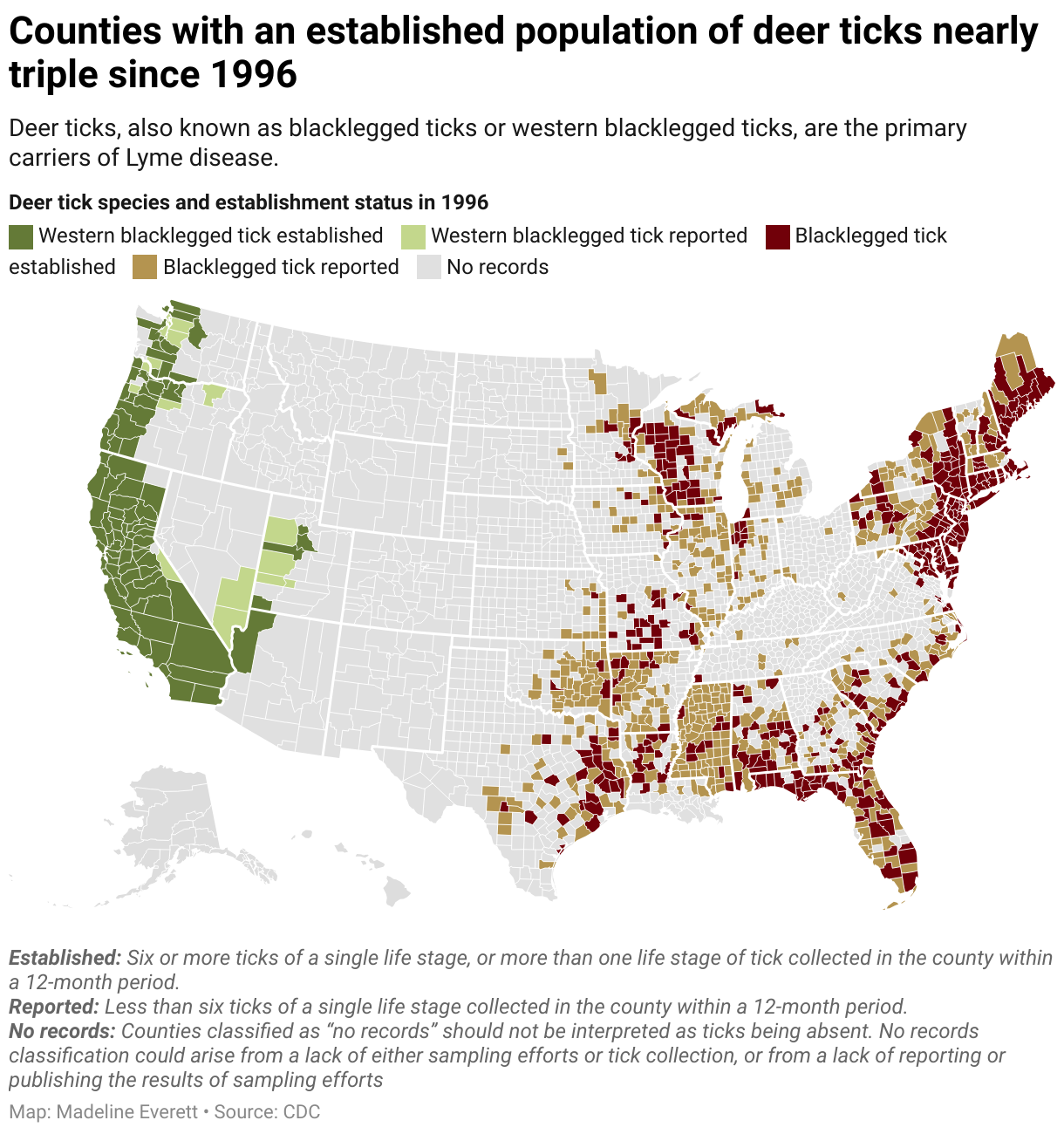
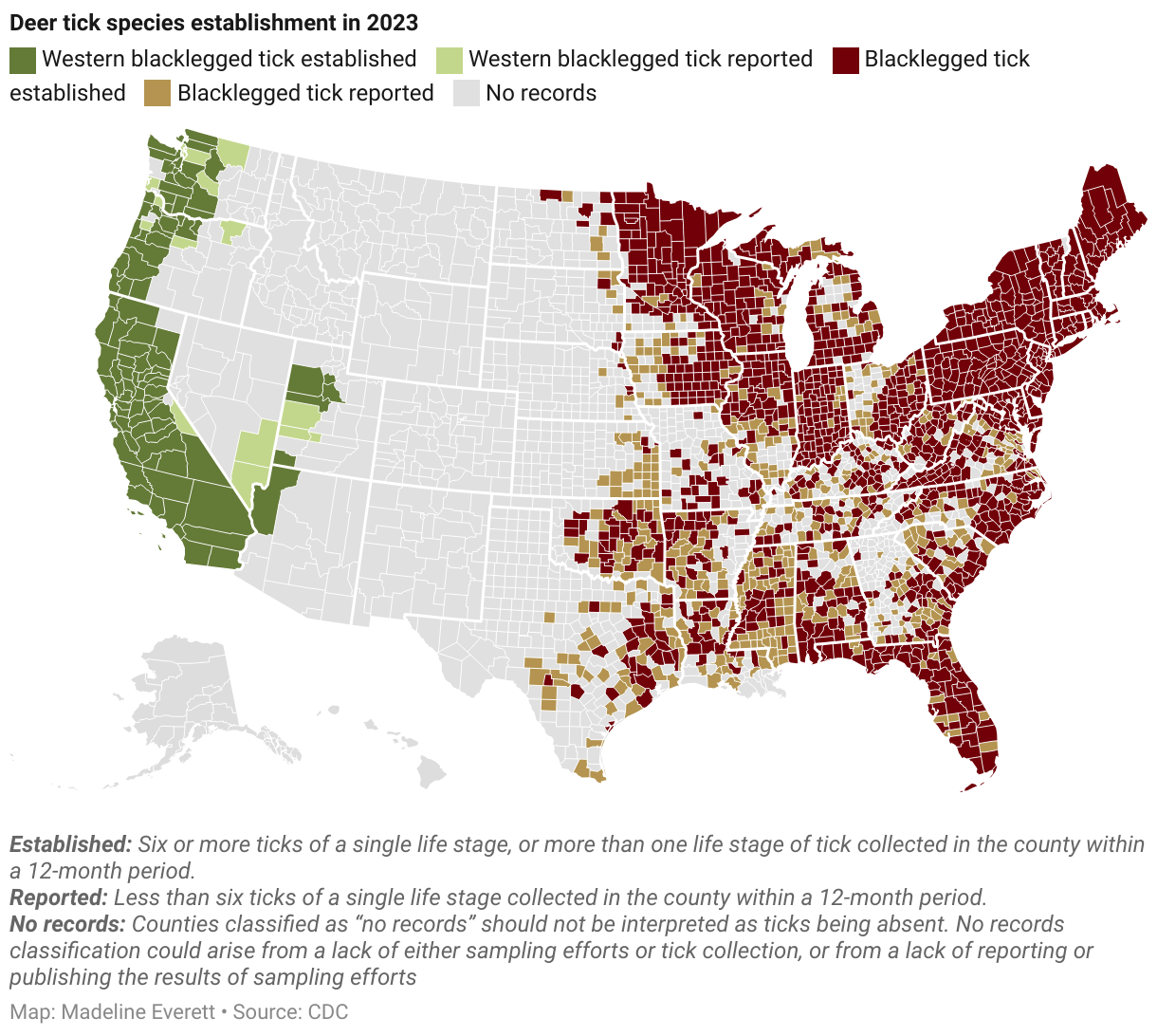
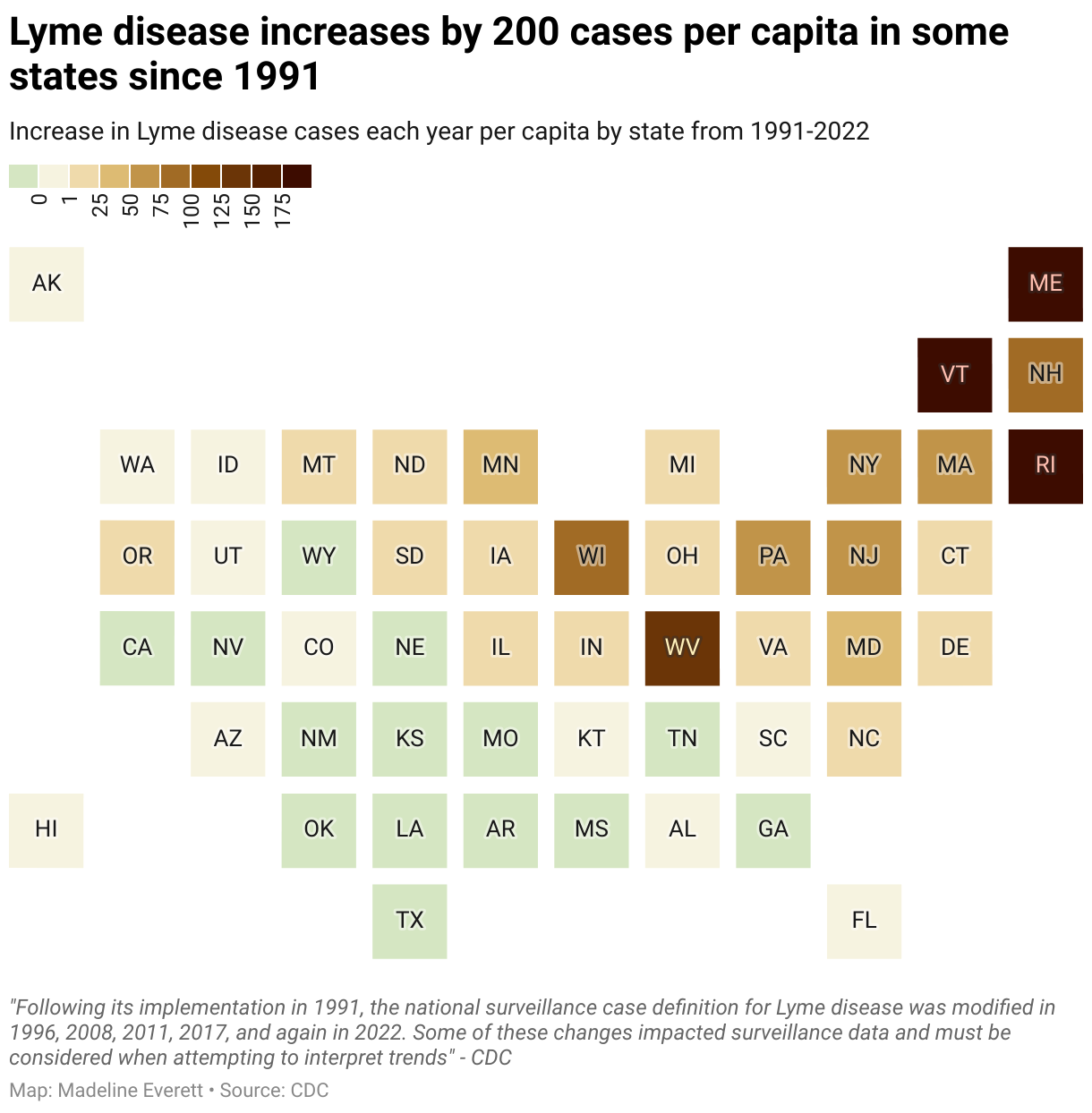
While Lyme disease is most prevalent in the northeastern United States, as ticks have spread, so has the disease. In 2022, Vermont had one of the highest numbers of cases per capita with nearly 200 cases per 100,000 people. In 1996, Vermont had only one case per 100,000 people. The Midwest has especially increased in cases.
How to avoid tick bites
The CDC advises that people wear long pants and shirts when in tick-infested areas, such as wooded areas or areas with tall grass, and to tuck pants into socks to create a barrier.
The agency advises checking sensitive areas such as armpits and behind ears after spending time outside in one of these areas.
How to identify Lyme disease after a tick bite
Lyme disease can be identified by a red, circular rash that appears at the site of a tick bite three to 30 days after being bitten, according to the CDC. The agency advises going to a health care provider immediately as soon as this type of rash is visible.
Lyme disease is most commonly reported in the spring, summer and fall, but ticks can be active at any time when the temperature is above freezing.
See how Lyme disease case counts have changed in North Carolina over time.

This story was originally published September 23, 2024 at 8:00 AM with the headline "Lyme disease is on the rise. See case counts for NC + how to avoid tick bites."