Duke Health scientists begin running clinical trials for a ‘universal flu vaccine’
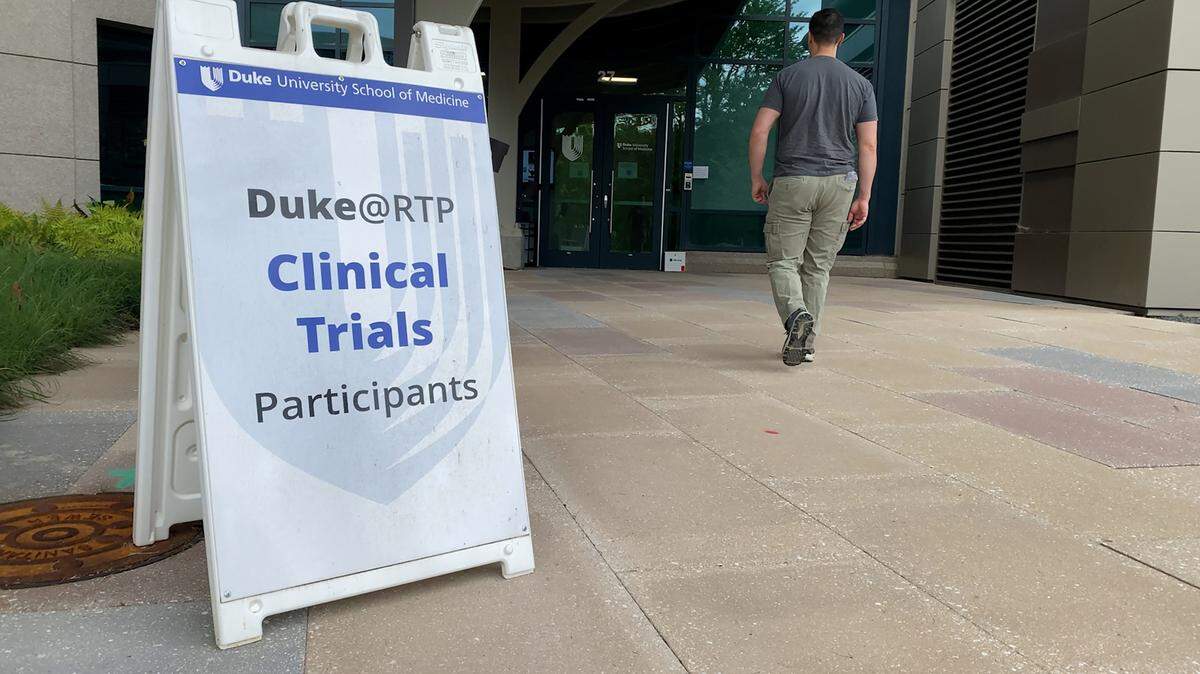
Duke researchers will begin clinical trials this summer for a “universal flu vaccine” that researchers hope will offer longer-lasting protection and target a wider range of flu viruses.
Every year, flu shots prevent thousands of deaths and tens of thousands of hospitalizations. But the vaccines are far from perfect.
The shots currently on the market are 30% to 40% effective during the average flu season, said Dr. Emmanuel Walter, director of Duke Vaccine and Trials Unit. The influenza virus quickly mutates over time, typically making vaccines less and less effective over the course of the season.
“By the time manufacturers are able to make the vaccine and get it out for use in the fall, sometimes the flu strain has already changed,” he said. “Every year they fall a little bit short of where we want them to be.”
The new vaccine takes a different approach. The model targets a protein on the surface of the virus that rarely mutates and is common among many strains of the flu virus.
The idea for this “new-generation vaccine” was developed by the Collaborative Influenza Vaccine Innovation Centers, a group funded by the National Institutes of Health, which then contracted the Duke Human Vaccine Institute to manufacture and run clinical trials.
Researchers hope this new strategy for attacking the flu virus will be more immune to virus mutations and as a result, offer boosted protection throughout the course of the flu season.
They also said this vaccine could help protect people against totally unrelated flu viruses — including strains that have the potential to set off a pandemic.
Scientists are in the early phases of testing this vaccine. Duke’s trial this summer will mainly assess the vaccine’s side effects in a total of 50 people. Researchers will test three different dosages of the vaccine — starting with the lowest dose and moving up to the highest if it is deemed safe.
They will also collect data throughout the course of a year on the participants’ immune response to gauge its effectiveness over a year. Those results will be compared to participants who received the currently available flu shot.
Results from the trial will likely be available in the summer of 2024, Walter said.
If the clinical trial is successful, more studies will be done to thoroughly evaluate whether it does a better job of protecting people from the flu than existing models.
Anyone interested in becoming a participant in the clinical trial can find more information about the trial at the NIH clinical trials website, www.clinicaltrials.gov. Search for NCT number 05755620. Study participants must be healthy and between 18 and 49 years old.
Teddy Rosenbluth covers science and health care for The News & Observer in a position funded by Duke Health and the Burroughs Wellcome Fund. The N&O maintains full editorial control of the work.
This story was originally published May 17, 2023 at 8:00 AM with the headline "Duke Health scientists begin running clinical trials for a ‘universal flu vaccine’."