Kobe Bryant’s death a lesson in mortality for UNC players who grew up idolizing him
For a long time on Sunday afternoon, nobody talked and nobody moved inside of the North Carolina basketball team’s players’ lounge. They stared in silence at the television and tried to process what they were seeing. Kobe Bryant was gone.
Roy Williams, the Tar Heels’ coach, had informed his players after practice ended. Some of them had met Bryant, and for years had carried stories of those encounters as if those stories were legends — something to be saved and passed down to the next generation. To just about every UNC player, Bryant was something like an idol, a “god of basketball,” as Shea Rush put it.
UNC played one of its fiercest annual rivalry games on Monday night, against N.C. State. Before and during the Tar Heels’ 75-65 victory, players from both teams honored Bryant in their own ways. For all of them, Bryant’s death in a Los Angeles-area helicopter crash offered a stunning lesson in mortality. An idol was gone, like that, and it didn’t feel right because to them Bryant never appeared all that mortal.
“It just really feels surreal,” said Cole Anthony, the Tar Heels’ freshman point guard.
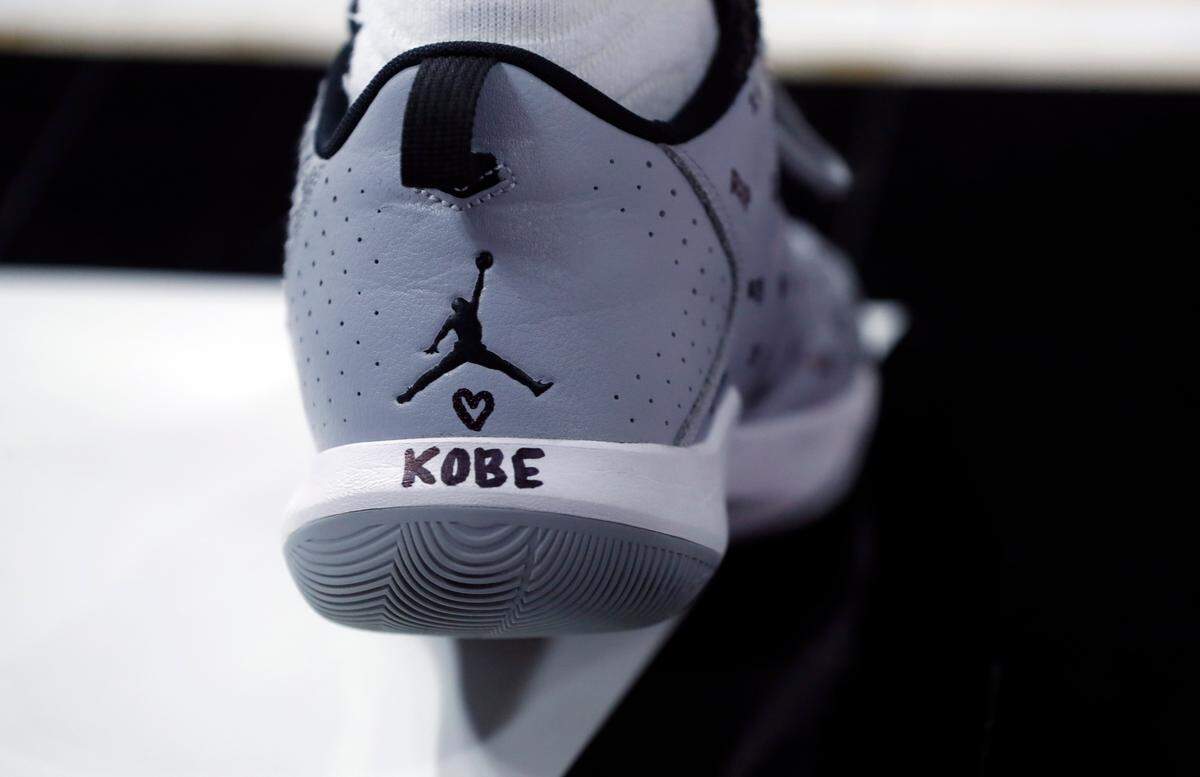
Anthony, who is recovering from knee surgery, has not played since Dec. 8. He knew he would not play on Monday night. He wore a dark suit, and complemented that suit with a colorful pair of Nike Kobe 8s, with a print of Kobe’s signature on the side. Two of his teammates wrote messages on their shoes in honor of Bryant. N.C. State’s D.J. Funderburk wore a pair of old-school Adidas sneakers that Bryant endorsed early in his NBA days.
Anthony, the son of former NBA guard Greg Anthony, grew up around professional basketball. When the younger Anthony was in seventh grade, he met Bryant at a camp. Anthony posted a picture of the meeting on his Instagram page on Sunday, a group of beaming middle schoolers huddled around a smiling Bryant — boys around their hero.
“I’ve been depressed since yesterday, since this happened,” Anthony said.
Kobe’s death especially cruel
People of different generations remember where they were when they heard Roberto Clemente died in a plane crash in 1972. Or when they learned John Lennon died from an assassin’s bullet in 1980. Sunday, and Bryant’s death, offered one of those moments, only the news of the event spread around the world in real time, through disbelieving posts on social media. Minute by minute, reality began to set in.
For young basketball players, for people who grew up idolizing Bryant because of his wizardry on the court, his death is especially cruel. It is more than the loss of an idol, but also the loss of a myth of invincibility. It is a reminder, for the youngest and strongest, that life indeed ends, and can end at any time.
Before Sunday, college players knew of no other world than one in which Bryant shared with them. They grew up with him, the way today’s high school players have grown up with LeBron James, and the way that those from the 1980s and 90s grew up with Michael Jordan. Those eras can feel like they’ll last forever, inside of them, but the mid-point of Jordan’s six NBA championships is now 25 years old.
Bryant, meanwhile, retired less than three years ago. He’d just started his second act.
“I think it just didn’t seem possible that he could die,” said Rush, the Tar Heels’ senior guard.
He wore a pair of white sneakers with “KOBE” written on the heels. He drew small hearts above the name. In college and high school gyms across the country on Monday night, how many shoes bore something similar? Like Anthony, Rush grew up around pro basketball. One of his uncles, Kareem Rush, played for the Los Angeles Lakers, alongside Bryant, in the early-to-mid 2000s.
When he was a boy, Shea Rush met Bryant several times. Now those memories carried more significance. Bryant’s death, Rush said, instantly became “the death of our generation,” the way other celebrity deaths have come to define earlier ones.
Bryant leaves a complicated legacy. To some, he is most remembered for what he did on the court, regardless of what happened off of it. Yet the discussion of his legacy isn’t complete without acknowledgment of the sexual assault allegation he faced in 2003, after an encounter with a Colorado hotel employee.
That happened 17 years ago. Enough time has passed that the college players who grew up idolizing Bryant have no memory, or very little, of one of the defining chapters of the first part of his career. They know Bryant not for the questions that surrounded him then, but for what he represented, to them, in their earliest years.
“Kobe Bryant’s the person that made me fall in love with the game,” Brandon Robinson, the UNC senior guard, said after he scored 11 points in 29 minutes on Monday. “My dad introduced me to basketball and showed me Kobe Bryant, and that made me fall in love with the game.”
Brandon Robinson’s Kobe story
Robinson did not grow up with an in to the NBA, the way that Anthony and Rush did. Still, Robinson has his own story of meeting Bryant. It happened at a high school all-star camp in California, when Robinson was a high school junior. One day during the camp, Robinson said, Bryant arrived as “a surprise.”
“It made my day, made my life, honestly,” Robinson said. “Just to meet my idol, to meet my favorite player of all time. And to get a chance to take a picture with him.”
Robinson has a printed copy of that photo back home. He keeps a digital copy on his phone. He’d looked at that picture a lot, he said, even before Sunday. The news of Bryant’s death brought him to tears, Robinson said. He routinely finds himself making the case, during debates among teammates, that Bryant is the best who ever played.
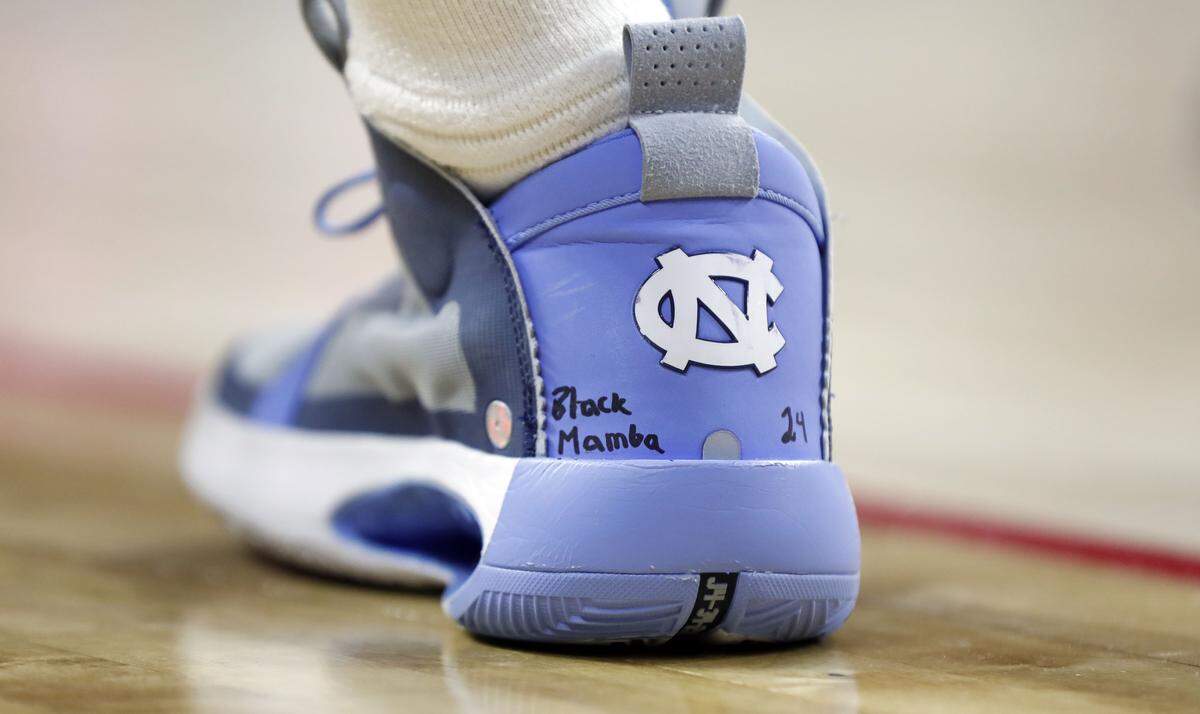
Before his team’s game against N.C. State on Monday, Robinson wrote Bryant’s No. 24, in black marker, on one of his shoes. Nearby he wrote, “Black Mamba,” in honor of Bryant’s nickname. Over the next couple of hours, Robinson played through pain. One of his ankles hurt. His ribs hurt. It wasn’t a sure thing that he’d be able to keep playing. Yet he did.
“I just kept thinking to myself, if Kobe was playing right now, would he come out the game?” Robinson said. “And all these guys in here know how much I love Kobe Bryant, so they kept on just saying, ‘Mamba mentality’ to me. That just kept me going.”
In the moments after, Robinson and his teammates still sounded as though they were processing Bryant’s death. In the first two decades of their lives, they’d never experienced anything similar, even if they’d persevered through personal tragedies of their own. This was something different, the death of a icon they thought too god-like to die.
This story was originally published January 28, 2020 at 1:09 AM with the headline "Kobe Bryant’s death a lesson in mortality for UNC players who grew up idolizing him."