
How Duke's Vic Bubas went from scorned newcomer to Blue Devils trailblazer
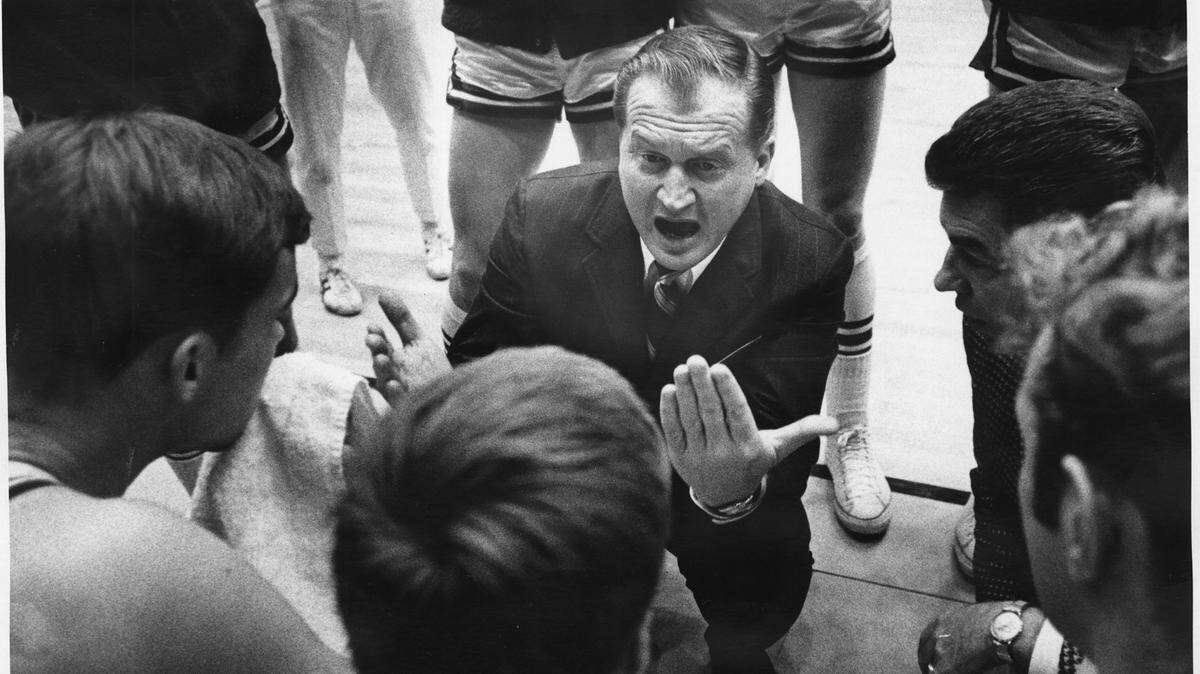
Lost amid the four ACC regular-season titles, four ACC tournament championships and three Final Four appearances during his neatly packaged and highly successful decade at Duke was the unpopularity of Vic Bubas when he arrived as the Blue Devils head basketball coach in May of 1959.
His hiring was not so much greeted as it was scorned by Duke faithful in much the same manner a young Mike Krzyzewski was questioned during his early Durham days, except that Krzyzewski at least had some head-coaching experience at Army. Bubas had none, not even at the high school level. Like Krzyzewski, Bubas lacked Blue Devil bloodlines as well. On top of that, Bubas had the great misfortune -- at least to Duke fans -- of having played and coached as an assistant for rival N.C. State.
“One of the great decisions, gutsy decisions in the 65 years of ACC history was Eddie Cameron hiring Vic Bubas,” says Bucky Waters who was recruited by Bubas to play at N.C. State, served as an assistant to Bubas at Duke and succeeded Bubas as the Blue Devils head coach.
Cameron’s gamble in hiring Bubas came without so much as conducting an interview with the 32-year-old coach. The Duke athletics director at the time screened 135 candidates and concluded that Bubas was the right man for the job, no matter that the $9,000 annual salary offered was $500 less than Bubas was making at N.C. State.
Bubas, who died Monday at age 91, would become one of the great coaches, recruiters, leaders and innovators in Duke and ACC basketball history.
It only took one season for Bubas to win over the Duke fans and another five seasons to put the Blue Devils solidly on the map of nationally prominent programs. After a 7-7 ACC regular season in 1960, Duke defeated a UNC team it had lost to by 22, 26 and 25 points during the regular season in the ACC tournament semifinals, then won the championship over a Wake Forest team it had lost to by 17 and 19 points during the regular season.
“Right then, all of the haze went away,” Waters says. “He was welcomed.”
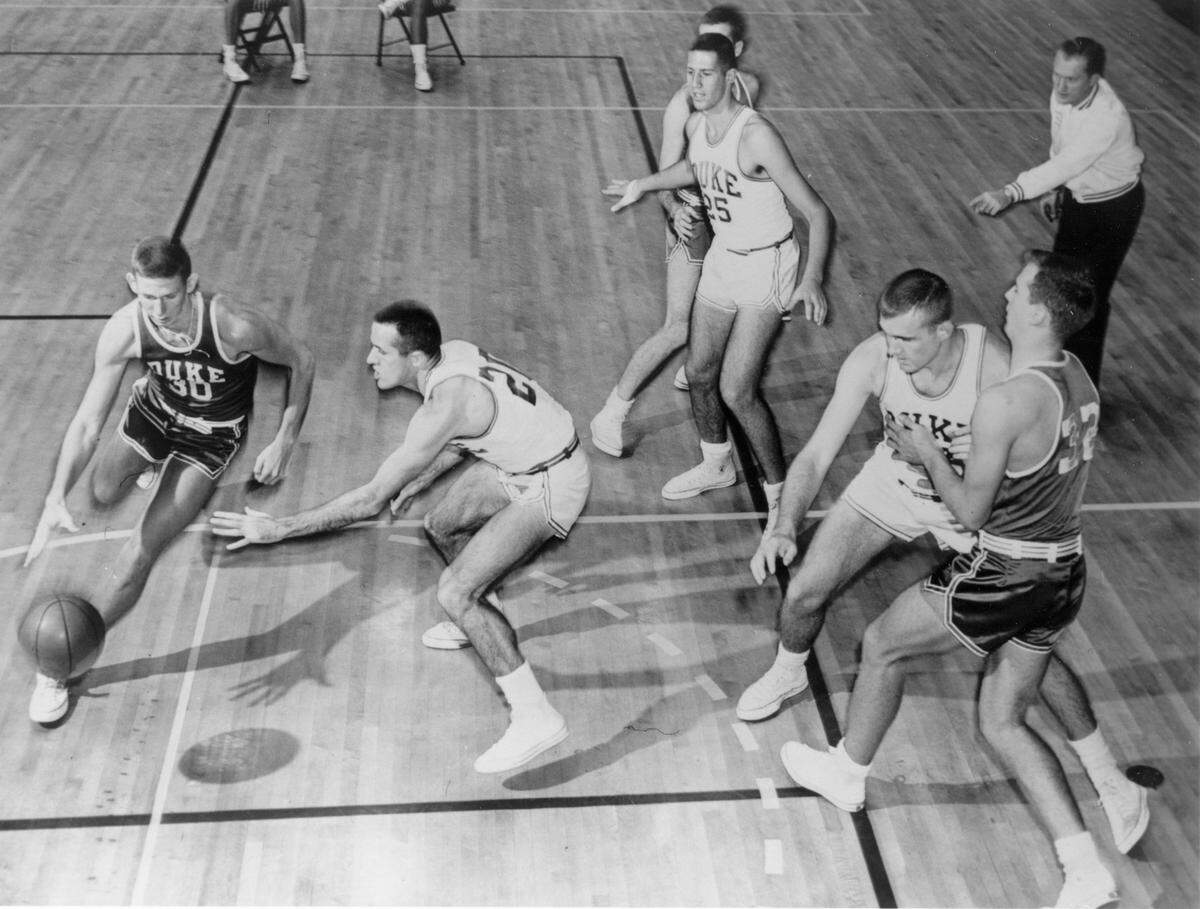
Then Bubas was celebrated as he guided Duke to Final Four in three of four seasons, losing in the semifinals in 1963 and 1966, and falling to UCLA in the 1964 championship game. Before he stepped away from coaching following the 1969 season, Bubas had compiled a 213-67 record at Duke that included a 128-38 mark against the ACC.
Yet Bubas’ influence on Duke and ACC basketball extended far beyond the championships and records. He learned more than the fast-break basketball from legendary N.C. State coach Everett Case as a two-time, all-Southern Conference player for the Wolfpack and eight-year assistant to the “Old Gray Fox.”
Case brought big-time basketball with him from Indiana and that included recognizing the sport as entertainment by adding a spotlight to pre-game introductions and a crowd meter during games. Bubas must have taken note because he was determined to score the first basket in the inaugural game played at Reynolds Coliseum in December of 1949. Bubas secured the opening tip against Washington & Lee, drove to the basket, missed his first two shot attempts, rebounded each and finally made history with a follow shot.
At Duke, he conducted clinics for women and invited them to stick around after games to meet the players and garner autographs on the court. He had female students check the garments of ticket-holders at the arena door. He instituted a family section in the end zone with season tickets sold for $10.
One season, Bubas liked what he saw of the UCLA cheerleaders on a West Coast trip and had Duke’s squad develop the same dance routines. He had the Duke pep band wear the same kind of straw hats and striped shirts that he had seen at the University of California, and the Blue Devils pep band still dons blue-and-white striped polo shirts.
Bubas also made Duke the first college team to stitch the names of the players on the back of their jerseys for the 1961 season. Only the Los Angeles Lakers in basketball and Chicago White Sox were doing the same at the time.
Bubas learned the art of salesmanship while working as a youngster in his father’s hardware store in Gary, Ind. It served him well in recruiting and he is widely credited with being the first college coach to begin targeting juniors in high school. He also was considered the first to assign his assistants to regions of the country for recruiting.
At the time, Frank McGuire had established the underground recruiting railroad from New York City to Chapel Hill, and Case had tapped into his Indiana and Pennsylvania connections for recruiting purposes. Bubas believed Duke could sell its brand anywhere and everywhere in the country.
His first big recruit he stole away from McGuire when New York power forward Art Heyman made a late-summer switch of allegiances. Soon, Bubas was landing Jeff Mullins from Lexington, Ky., Bob Verga from Sea Girt, N.J., and Mike Lewis from Missoula, Mont.
Jay Buckley was a 6-foot-10 center from Cheverly, Md., who had worked the summer before the 1964 season with NASA.
“Jay, one of these days I’ll be reading about you being the first man on the moon,” Bubas told Buckley.
“No, coach,” Buckley replied, “you’ll be there first -- looking for ballplayers.”
Bubas also lost some high-profile recruiting battles, but seemed to leave an influence, even on those who signed and played elsewhere. When future NBA star and U.S. Senator Bill Bradley of Crystal River, Mo., changed his mind from Duke to attend Princeton, the talented center sent Bubas a seven-page letter explaining his decision. Larry Miller became an All-American at UNC after rebuffing Duke. Miller kept the last letter he received from Bubas sealed for eight years before opening it to read that the Duke coach had wished him well in his college career.
The recruiting trail finally wore on Bubas and he admitted to losing enthusiasm for wooing basketball players to Duke. So, he announced he would retire following the conclusion of the 1969 season. His 12-12 squad faced a No. 2-ranked and 22-2 UNC club in Bubas’ final game at then-called Duke Indoor Stadium.
When the Blue Devils stunned the Tar Heels, the Duke players carried Bubas off the court on their shoulders. Then they tossed him into the locker room showers in celebration.
One week later, Duke lost the ACC tournament championship game to UNC and the coaching career of Vic Bubas came to an end. He left behind a legacy of having influenced the lives of the many players and coaches he came in contact with over that 10-year period.
“I hope everybody has a Vic Bubas in their life,” Waters says. “That’s a great wish. He sure fulfilled everything I could have asked of him.”
Information for this story was gleaned from Morris' 1988 book "ACC Basketball: An Illustrated History," and a story within about Bubas, written by former News and Observer sports editor Dick Herbert.
This story was originally published April 18, 2018 at 1:42 PM with the headline "How Duke's Vic Bubas went from scorned newcomer to Blue Devils trailblazer."