
Whistleblowers in North Carolina shouldn’t be punished, like I was | Opinion
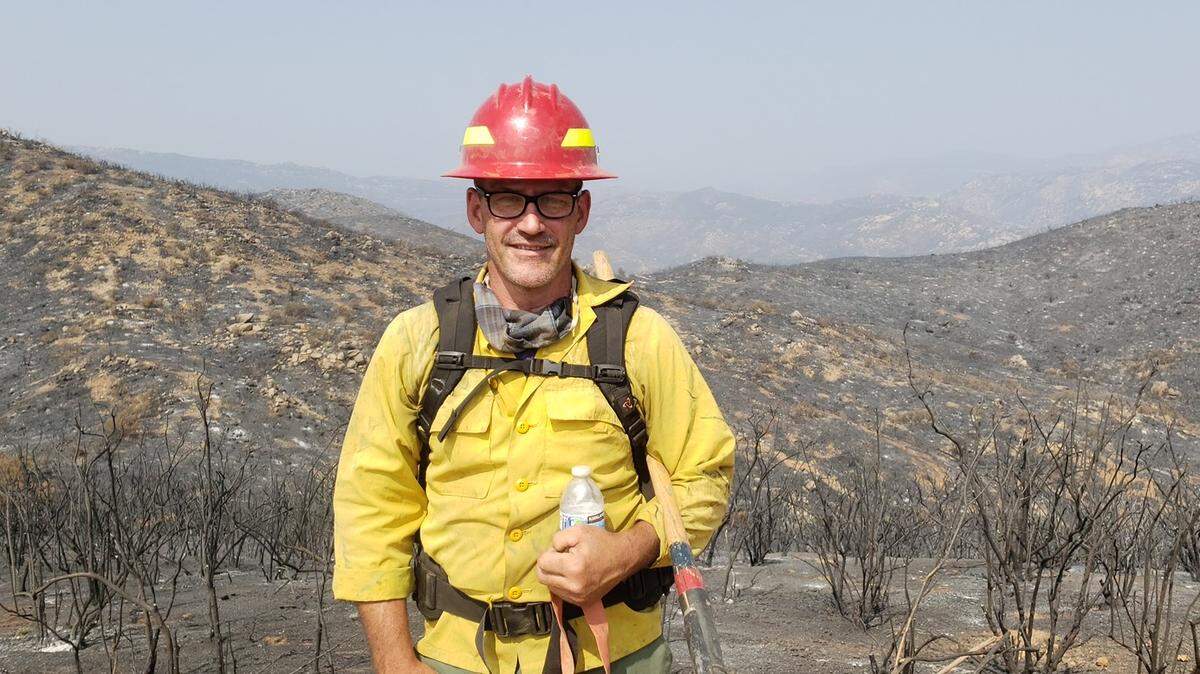
When I formally reported the U.S. Forest Service for failing to protect important Native American sites in North Carolina, I didn’t expect it to end my career and leave my family with six-figure legal debt. But that’s exactly what happened. It shouldn’t be this hard—or this expensive—to do the right thing.
If we want a government that truly serves the public interest, reforming how we treat whistleblowers may be one of the most practical and impactful changes we can make.
My whistleblowing journey began six years ago, when overwhelming archeological evidence overturned our decades-old assumption that important Native American sites were rare in upland mountainous terrain. In reality, significant ancestral sites are often concentrated in these upland areas, including burial grounds, ceremonial and religious sites, rock shelters, and large, complex quarries rich in artifacts.
For more than 50 years, the Forest Service has targeted these upland landscapes for the construction of road and trail systems, timber sales, controlled burns, and recreation infrastructure, with little to no screening for protected sites. I raised these concerns within the agency, explaining that we had spent decades failing to survey nearly 80 percent of mountainous terrain for archaeological resources. Quite simply, we do not find what we do not look for, and we have been looking in the wrong places. As a result, substantial and irreversible damage has likely occurred across countless cultural sites, both in our state and beyond it. I was not prepared for what followed.
Instead of addressing the problem, leadership chose retaliation and isolation — excluding me from meetings, removing me from fieldwork, preventing me from communicating with tribes and ultimately pushing me toward early retirement. By 2025, the Forest Service in North Carolina no longer resembled the land stewardship agency that had hired me more than three decades earlier. The longstanding policy to ignore our sloped landscapes from mandatory cultural protection persists to this day.
Since coming forward publicly as a whistleblower three years ago, my federal career has ended, and I have spent more than $100,000 on legal fees as my case has moved through the government’s bureaucracy. My family and I are deeply grateful for the roughly $14,000 raised — primarily from friends and family — to help sustain this effort. We have also been encouraged by the support of non-profits, academics, and tribal leaders.
This experience has given me a deep respect for whistleblowers, who often serve as the public’s last line of defense. Government employees are told that whistleblowing is safe, accessible and effective, but in reality, pursuing a whistleblower case requires legal representation that is prohibitively expensive for most people. Even with a lawyer, many end up forced out or worn down — not because their claims lack merit, but because they just can’t take it anymore. Faced with financial risk and long odds, many who witness wrongdoing choose not to come forward — and, based on my experience, I cannot blame them.
In criminal law, we provide a free public defender so justice is served even to those who can’t afford a lawyer. When it comes to rooting out corruption, the public interest whistleblowers are on their own.
It does not have to be this way. Lawmakers in Raleigh and Washington should establish publicly funded legal defense options for whistleblowers whose claims are credible and in the public interest. These could take the form of legal defense funds to cover private representation or independent government-appointed advocates. An ideal source of funds for this already exists: Private sector whistleblowers have helped the Department of Justice and the Securities and Exchange Commission retrieve over $90 billion in recent decades. While much of that money goes back to harmed investors and some of it rewards the whistleblowers themselves, plenty of it goes back to the government and could easily provide a free legal path to report government corruption and wrongdoing for public interest whistleblowers. It’s whistleblowers funding whistleblowers, and the public wins.
Until such reforms are enacted, private law firms should expand pro bono services to include public interest whistleblower representation, and philanthropists should increase support for whistleblower protection initiatives.
I have spent nearly six years advocating for the protection of cultural heritage in North Carolina —first as a federal employee and now as a whistleblower. It is too late for these reforms to help my family. But it is not too late to ensure that the next person who steps forward to do the right thing is not punished for it.
Scott Ashcraft is a former US Forest Service archeologist and current environmental and conservation archeology consultant in the greater Asheville area.
This story was originally published May 24, 2026 at 5:00 AM with the headline "Whistleblowers in North Carolina shouldn’t be punished, like I was | Opinion."